Menu

Storm Damage HVAC Repair in St. Louis – Same-Day Emergency Response When Every Minute Counts

When severe weather strikes St. Louis, you need more than promises. You need storm damage HVAC repair specialists who arrive fast, assess accurately, and restore your comfort before the next weather system rolls through the metro.

Slider Image 1
Slider Image 2
Slider Image 3
Slider Image 4
Slider Image 5
Slider Image 7
Slider Image 8
Slider Image 9
Slider Image 10
Slider Image 11

Storm Damage Leaves St. Louis HVAC Systems Vulnerable

St. Louis sits at the intersection of weather extremes. Summer thunderstorms with hail the size of golf balls, tornado-strength winds, and flash flooding from the Mississippi River basin create the perfect storm for HVAC destruction. When severe weather hits, your heating and cooling system takes the brunt of it.

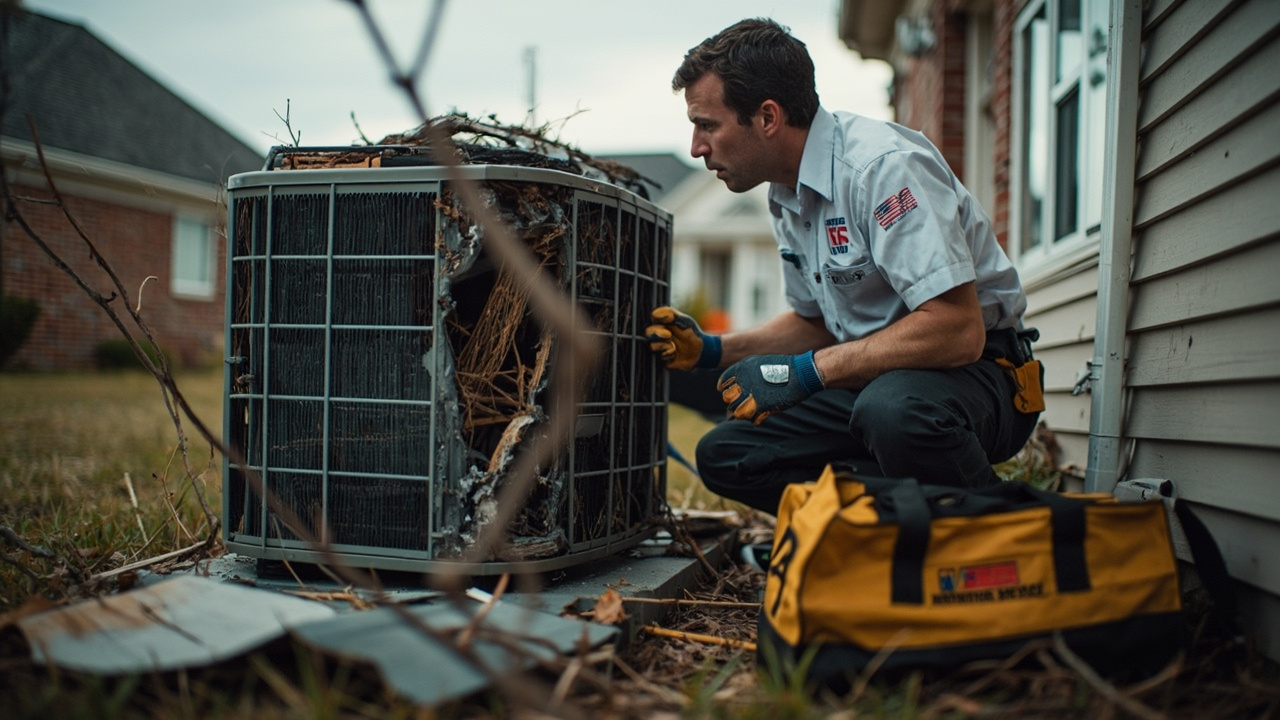
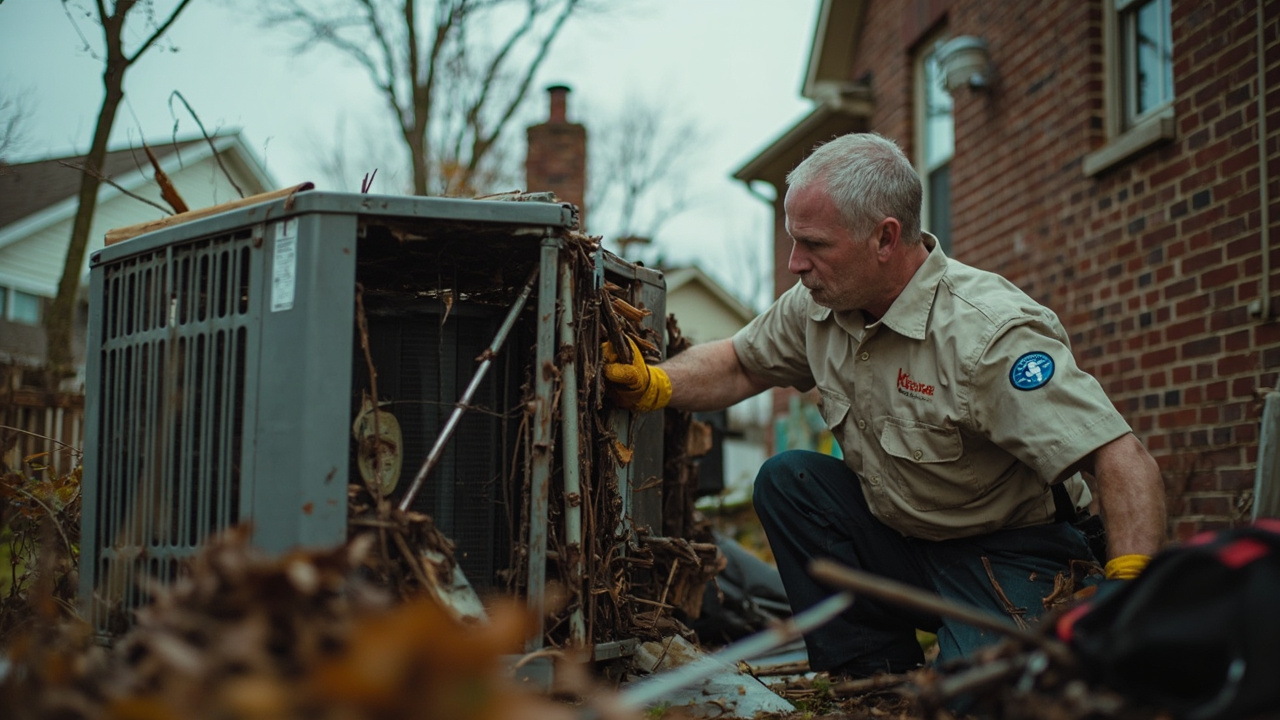
Outdoor condensers get pelted by hail, denting coils and cracking refrigerant lines. High winds rip electrical disconnects from exterior walls and send debris straight into compressor housings. Flooding in low-lying areas near the Meramec River basin submerges ground-level units, contaminating motors and circuit boards with muddy water. Inside, power surges from lightning strikes fry control boards, capacitors, and thermostats without warning.

You notice the damage immediately. Your AC stops blowing cold air. Strange grinding noises come from the outdoor unit. Water pools around the furnace in the basement. The thermostat screen stays dark. These are not problems that wait. Emergency HVAC storm repair becomes critical when temperatures climb into the 90s with 80 percent humidity, or when winter cold follows a destructive ice storm.

Storm damaged AC unit repair requires more than basic HVAC knowledge. You need technicians who understand how wind, water, and electrical surges damage specific components. HVAC storm restoration services start with rapid damage assessment and end with a system that runs as reliably as it did before the storm. Fix storm damaged HVAC system issues now, before secondary damage turns a repairable problem into a total replacement.

Storm Damage Leaves St. Louis HVAC Systems Vulnerable
Our Storm Damage Assessment and Repair Methodology

Our Storm Damage Assessment and Repair Methodology

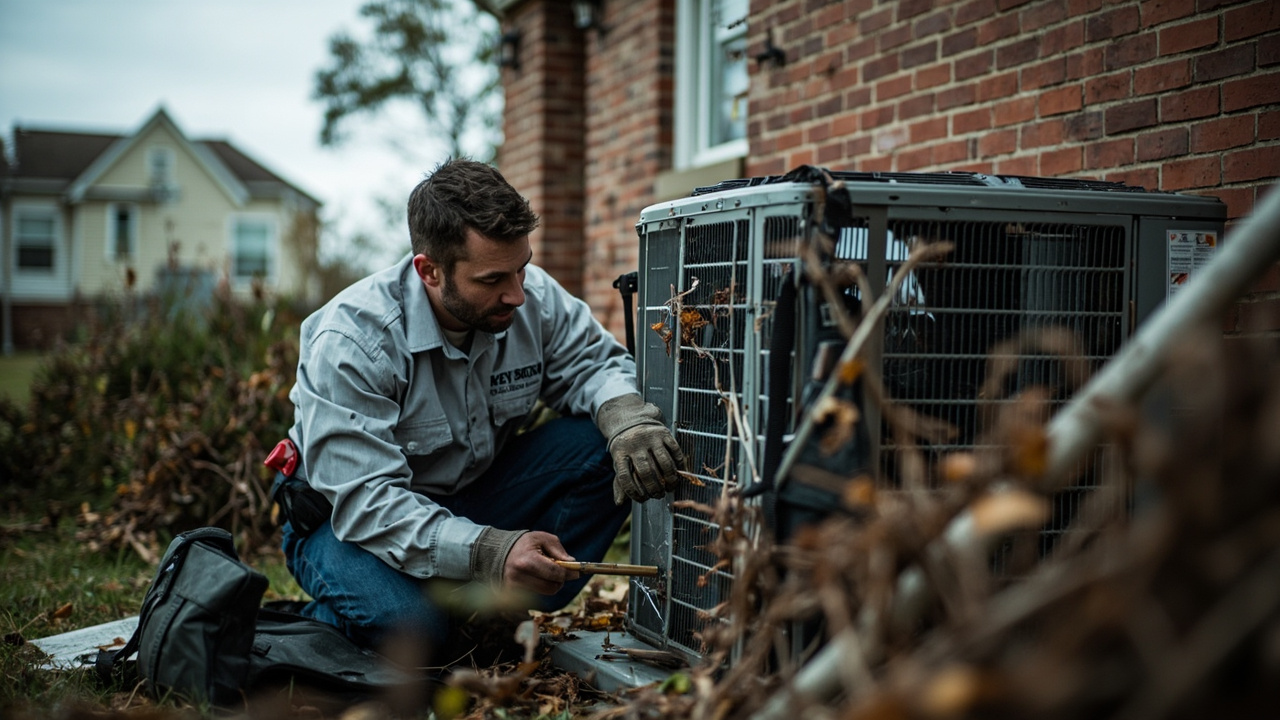
Heating and cooling storm damage repair starts with a comprehensive system inspection. We examine every component that could have been compromised. Outdoor units get checked for hail damage to condenser coils, bent fan blades, and compromised refrigerant lines. We test compressor amperage draw to detect internal damage invisible to the eye. Electrical components get metered for voltage irregularities and grounding faults caused by lightning surges.

Indoor components require equal scrutiny. Blower motors get inspected for water intrusion. Control boards get tested for blown capacitors and burnt traces. Ductwork gets examined for disconnected sections or water contamination that breeds mold. We test refrigerant pressures on both the high and low side to identify pinhole leaks that developed during impact damage.

Documentation drives everything. We photograph damage, record serial numbers, and create detailed reports for insurance claims. This evidence matters when adjusters question whether damage came from the storm or normal wear. We know what St. Louis insurance companies require because we have worked with every major carrier in the metro.

Repairs follow a priority sequence. Life safety issues get addressed first. Electrical hazards, refrigerant leaks, and gas line integrity take precedence. Next come component replacements that restore function. Finally, we address efficiency losses and preventive reinforcements.

We source OEM parts when possible, but we also understand that emergency HVAC storm repair sometimes requires adaptive solutions. When a manufacturer discontinued a control board three years ago, we know which aftermarket boards provide reliable replacements. Speed matters, but we never sacrifice quality for convenience.

Keystone HVAC St. Louis technicians carry diagnostic equipment other companies skip. Refrigerant leak detectors, megohm meters for motor testing, and thermal imaging cameras reveal damage that visual inspections miss.

What Happens During Your Storm Damage Service Call

Storm Damage HVAC Repair in St. Louis – Same-Day Emergency Response When Every Minute Counts
01

Immediate Safety Inspection

We arrive and secure the area around your damaged HVAC system. Electrical disconnects get shut off, gas valves get verified closed if applicable, and we check for refrigerant leaks using electronic detection. Water damage gets assessed to prevent electrical shock hazards. This safety-first approach protects you and our technicians before any diagnostic work begins.
02

Comprehensive Damage Documentation

Every damaged component gets photographed and cataloged. We test electrical systems with multimeters, check refrigerant pressures, and inspect ductwork integrity. Hail dents on condenser coils get measured. Water intrusion points get identified. This documentation becomes your insurance claim evidence. We provide written reports that adjusters accept without argument because we know what they need to approve claims.
03

Rapid Restoration Execution

We prioritize repairs that restore your comfort fastest. Critical components get replaced first. Refrigerant lines get pressure-tested and recharged to manufacturer specifications. Control boards get replaced and programmed. Blower assemblies get cleaned or replaced depending on contamination levels. We test the complete system under load to verify proper operation before we leave your property.

Why St. Louis Trusts Us After Storm Damage

Storm damage HVAC repair in St. Louis requires more than technical skill. You need a company that understands how local weather patterns create specific failure modes. We have restored systems after every major weather event in the metro for the past decade. The 2023 derecho that knocked out power to 200,000 homes, the 2021 hailstorm that totaled cars across West County, the flash floods that submerged equipment in Soulard and Benton Park. We responded to all of them.

Local knowledge matters when insurance claims are involved. St. Louis carriers have specific documentation requirements. State Farm wants photos from multiple angles. Allstate requires detailed parts lists with pricing. USAA needs proof that damage happened during the covered event, not from deferred maintenance. We know these requirements because we work with adjusters every week.

Our response time sets us apart. We dispatch technicians within two hours of your call. We carry common storm-damage parts on every truck. Condenser fan motors, contactors, capacitors, and control boards for the most common residential systems in St. Louis. This means we often complete repairs on the first visit instead of scheduling follow-up appointments days later.

We also understand St. Louis building codes and permit requirements. The City of St. Louis requires permits for HVAC equipment replacement. St. Louis County has different rules than St. Charles County. We handle the paperwork so you do not face compliance issues later.

Our relationships with local suppliers mean we get priority access to parts during shortage periods. When a major storm creates regional demand spikes, we still get the components you need. Other companies put you on waiting lists. We get you back online.

Keystone HVAC St. Louis is not a franchise following corporate scripts. We are local technicians who live in the neighborhoods we serve.

What You Can Expect From Our Storm Damage Service

Emergency Response Timeline

We answer emergency calls 24 hours a day, seven days a week. When you call after storm damage, you reach a technician, not an answering service. We dispatch within two hours for emergency HVAC storm repair calls anywhere in the St. Louis metro. Same-day service is our standard, not an upcharge. We understand that waiting days for service during temperature extremes is not acceptable. Our trucks carry diagnostic equipment and common repair parts so we can often restore function on the first visit.

Thorough Damage Assessment Process

Our initial assessment covers every system component. We inspect outdoor units for physical damage, test electrical systems for surge damage, and verify refrigerant system integrity. Indoor components get checked for water intrusion and control system failures. We use thermal imaging to detect hidden problems like compromised insulation or blocked airflow. You receive a written report with photographs that documents all damage. This report meets insurance company requirements without supplemental inspections that delay your claim.

Quality Restoration Standards

We restore your HVAC system to pre-storm performance levels using manufacturer-specified parts and procedures. Refrigerant charging follows EPA protocols with electronic scales, not guesswork. Electrical connections get torqued to specification and heat-shrink protected. We pressure-test all refrigerant repairs to 450 PSI for 15 minutes before releasing vacuum. Airflow gets verified with manometers to confirm proper CFM delivery. Your system will perform as efficiently as it did before the damage occurred.

Post-Repair Support and Protection

All storm damage repairs include warranty coverage on parts and labor. We provide detailed invoices that insurance companies accept without additional documentation requests. You receive maintenance recommendations to prevent future storm vulnerability, including surge protector installation and equipment anchoring options. We follow up after major repairs to verify continued proper operation. If secondary issues develop from storm damage we missed initially, we return and address them without charging additional diagnostic fees.

Frequently Asked Questions

You Have Questions,
We Have Answers

What is the $5000 rule for HVAC? +

The $5000 rule is a guideline for repair versus replacement decisions. If your HVAC system needs a repair that costs more than $5000, or if you multiply the repair cost by the age of your unit and it exceeds $5000, you should replace the system instead of repairing it. For example, a $1500 repair on a 10-year-old unit equals $15,000, so replacement makes financial sense. After severe weather in St. Louis, hail or wind damage to outdoor units can trigger this calculation quickly. Always get a full diagnostic before deciding.

Does insurance cover HVAC damage? +

Yes, homeowners insurance typically covers HVAC damage caused by sudden, covered perils like hailstorms, windstorms, or lightning strikes. If a fallen tree from a storm crushes your outdoor condenser or hail punctures your unit, your policy should cover repairs or replacement. However, insurance does not cover damage from neglect, wear and tear, or flooding without separate flood insurance. St. Louis sees frequent severe thunderstorms and hail, so document damage immediately with photos and contact your insurer fast. Your deductible applies, and you may need proof of regular maintenance.

What is the 3 minute rule for AC? +

The 3-minute rule prevents compressor damage after power loss or shutdown. You must wait at least 3 minutes before restarting your air conditioner after it turns off. This waiting period allows refrigerant pressures to equalize inside the system. During St. Louis summer storms, power outages are common. If your AC loses power from lightning or downed lines, do not rush to restart it when power returns. Modern units have built-in delay timers, but older systems need manual waiting. Ignoring this rule can burn out your compressor and turn a storm inconvenience into a $2000 repair.

Can HVAC be repaired in the rain? +

Yes, HVAC can be repaired in light rain, but technicians prioritize safety. Outdoor condenser work often continues in drizzle, but electrical panel repairs or indoor work stops if lightning threatens. After storm damage in St. Louis, emergency techs assess whether it is safe to restore your system immediately or if conditions require waiting. If your unit took hail damage or has exposed wiring from wind, you need same-day service regardless of weather. Reputable contractors will not risk electrocution but will secure your system and return when safe. Do not attempt DIY repairs in wet conditions.

How much does it cost to replace an entire HVAC system? +

Full HVAC system replacement in St. Louis ranges from $5000 to $12,000 depending on home size, equipment efficiency, and ductwork condition. A 1500 square foot home needs a smaller tonnage unit than a 3000 square foot home. High-efficiency systems cost more upfront but lower humidity better in St. Louis summers. After storm damage, insurance may cover replacement if the unit is totaled, but you pay the deductible. Age matters too. If your system is over 12 years old and storm-damaged, replacement often makes more sense than repair. Get multiple quotes fast.

How to claim HVAC tax credit 2025? +

The 2025 HVAC tax credit under the Inflation Reduction Act allows up to $2000 for qualified heat pumps or high-efficiency systems. Your new equipment must meet specific SEER2 and HSPF2 ratings. Save your manufacturer certification and installation invoice. File IRS Form 5695 with your tax return to claim the credit. If storm damage forces you to replace your system, upgrading to a qualifying high-efficiency model can offset costs. Not all equipment qualifies, so verify eligibility before purchase. Consult a tax professional for your specific situation, as income limits may apply.

What are three things that are not covered by homeowners insurance? +

Three common exclusions in homeowners insurance are flood damage, earthquake damage, and routine maintenance or wear and tear. If a flash flood from the River des Peres damages your ground-level HVAC unit, your standard policy will not cover it. You need separate flood insurance. Similarly, foundation settling that cracks refrigerant lines is not covered. Normal aging and rust are your responsibility. After storms in St. Louis, understand what your policy actually covers before assuming full replacement. Wind and hail damage are typically covered, but water intrusion from poor maintenance is not.

How much does it cost to fix a leak in your AC system? +

AC refrigerant leak repair costs $200 to $1500 depending on leak location and severity. A small leak at a valve connection costs less than a coil puncture from hail. After storms in St. Louis, outdoor units can develop leaks from flying debris or hail impacts. Technicians must locate the leak, repair it, pressure test the system, and recharge refrigerant. R-410A refrigerant prices fluctuate. If your coil has multiple leaks or severe corrosion from age, replacement becomes more cost-effective than repeated repairs. Do not ignore warm air blowing from vents. Leaks worsen fast.

What two events are not covered under homeowners insurance? +

Two major exclusions in homeowners insurance are flooding and earth movement. Flood damage requires separate NFIP or private flood insurance. In St. Louis, low-lying areas near the Mississippi River or Meramec River face flood risk that standard policies exclude. Earth movement includes earthquakes, sinkholes, and landslides. The New Madrid Seismic Zone affects Missouri, but earthquake coverage costs extra. For HVAC owners, this means storm surge flooding or ground shifting that damages your system is not covered under basic homeowners policies. Review your coverage annually and understand what requires separate riders.

How cool should my house be if it's 100 outside? +

Your AC should keep your home 15 to 20 degrees cooler than outside temperature. On a 100-degree day in St. Louis, expect indoor temps around 80 to 85 degrees if your system runs continuously. Units cannot defy thermodynamics. If your home stays warmer, check for storm damage to the outdoor condenser, clogged filters, or refrigerant leaks from hail. St. Louis humidity makes it feel hotter indoors even at 80 degrees. Close blinds, run ceiling fans, and avoid opening doors frequently. If your system struggles after recent storms, get it inspected immediately.

How St. Louis Weather Patterns Make Storm Damage HVAC Repair Essential

St. Louis sits in the transition zone between continental and subtropical climates, creating volatile weather that hammers HVAC systems year-round. Spring brings tornado-producing supercells that track northeast from Missouri River valleys into the metro. Summer thunderstorms develop rapidly when Gulf moisture collides with dry continental air, producing hail and straight-line winds exceeding 70 mph. The region averages 15 days per year with severe thunderstorm warnings. Winter ice storms coat outdoor units with inches of ice that damages fan blades and strains compressor bearings. Equipment installed on flat roofs common in South City brick buildings takes repeated hail strikes that perforate condenser coils. Storm damaged AC unit repair becomes inevitable, not occasional, in this climate.

Working with local HVAC contractors who understand St. Louis insurance requirements and building codes protects your investment. The City of St. Louis requires mechanical permits for equipment replacement, while St. Charles County allows like-for-like swaps without permits. Knowing these differences prevents code violations that complicate home sales. Local contractors maintain relationships with regional adjusters who trust our damage documentation. We understand that homes in Historic Districts like Lafayette Square require sensitive equipment placement that preserves architectural integrity. Storm damage restoration must balance modern HVAC performance with preservation standards. Companies from outside the region lack this institutional knowledge.
HVAC Services in The St. Louis Area

Our service area spans across the St. Louis metropolitan area and surrounding communities. We’re dedicated to bringing our top-quality HVAC services directly to your doorstep. Use the map to see our coverage and feel free to contact us with any questions about whether we can service your specific location. We’re always here to help you find the comfort solutions you need.

Address:
Keystone HVAC St. Louis, 4452 Manchester Ave, St. Louis, MO, 63110

Additional Services We Offer

Our news updates

Latest Articles & News from The Blogs

Does Your Maryland Heights Attic Have Enough Ventilation for the Summer Heat? Your Maryland Heights attic can reach 150°F on…

Does Your Maryland Heights Attic Have Enough Ventilation for the Summer Heat?

Does Your Maryland Heights Attic Have Enough Ventilation for the Summer Heat? Your Maryland Heights attic can reach 150°F on…

What That Strange Metallic or Burning Plastic Smell from Your Furnace Actually Means

What That Strange Metallic or Burning Plastic Smell from Your Furnace Actually Means If your furnace smells like burning plastic…

Why Closing Vents in Unused Rooms Is Actually Hurting Your Ladue Home

Many Ladue homeowners close vents in unused rooms to save money on energy bills. This common practice seems logical at…

Contact Us

Do not wait for the next heatwave or cold snap. Call Keystone HVAC St. Louis now at (314) 417-7771 for same-day emergency storm damage repair. We answer 24/7 and dispatch immediately to restore your comfort and document damage for insurance claims.