
Menu

AC Blowing Warm Air? St. Louis Emergency Repair Arrives in 60 Minutes or Less

When your air conditioner blows hot air in St. Louis's sweltering summers, you need emergency AC repair now. We dispatch certified technicians 24/7 with same day service to diagnose refrigerant leaks, compressor failures, and thermostat malfunctions before heat exhaustion becomes a medical risk.

Slider Image 1
Slider Image 2
Slider Image 3
Slider Image 4
Slider Image 5
Slider Image 7
Slider Image 8
Slider Image 9
Slider Image 10
Slider Image 11

Why Your AC Unit Blows Heat When You Need Cold Air Most

You walk into your home expecting relief from St. Louis's 95-degree heat and suffocating humidity, but your central air is blowing hot air instead. That panic is real. St. Louis summers combine extreme temperatures with 70 percent humidity, creating dangerous indoor conditions when your AC fails. Within two hours, indoor temperatures can climb above 85 degrees, putting children, elderly residents, and pets at risk for heat-related illness.

An air conditioner blowing warm air signals one of four critical failures. First, refrigerant leaks drain your system's cooling capacity. Low refrigerant causes the evaporator coil to freeze, blocking airflow. Second, compressor failure prevents refrigerant circulation entirely. The compressor is the heart of your cooling system, and when it fails, your AC becomes an expensive fan. Third, thermostat calibration errors send false temperature readings, preventing your system from cycling properly. Fourth, reversing valve malfunctions in heat pump systems literally switch your AC into heating mode.

St. Louis's fluctuating spring and fall temperatures stress HVAC components more than stable climates. When you switch between heating and cooling repeatedly, mechanical parts wear faster. The clay-heavy soil common throughout the metro area also causes foundation shifts that can crimp refrigerant lines or damage outdoor condenser units. These local factors mean emergency AC repair needs happen more frequently here than in milder regions.

When you need 24 hour AC repair for an AC blowing warm air, every minute counts. Delaying service turns a refrigerant leak into compressor failure. A small electrical issue becomes a complete system breakdown. The cost difference between emergency repair and full replacement often depends on how quickly you act.

Why Your AC Unit Blows Heat When You Need Cold Air Most
How We Diagnose and Fix Your Central Air Blowing Hot Air

How We Diagnose and Fix Your Central Air Blowing Hot Air

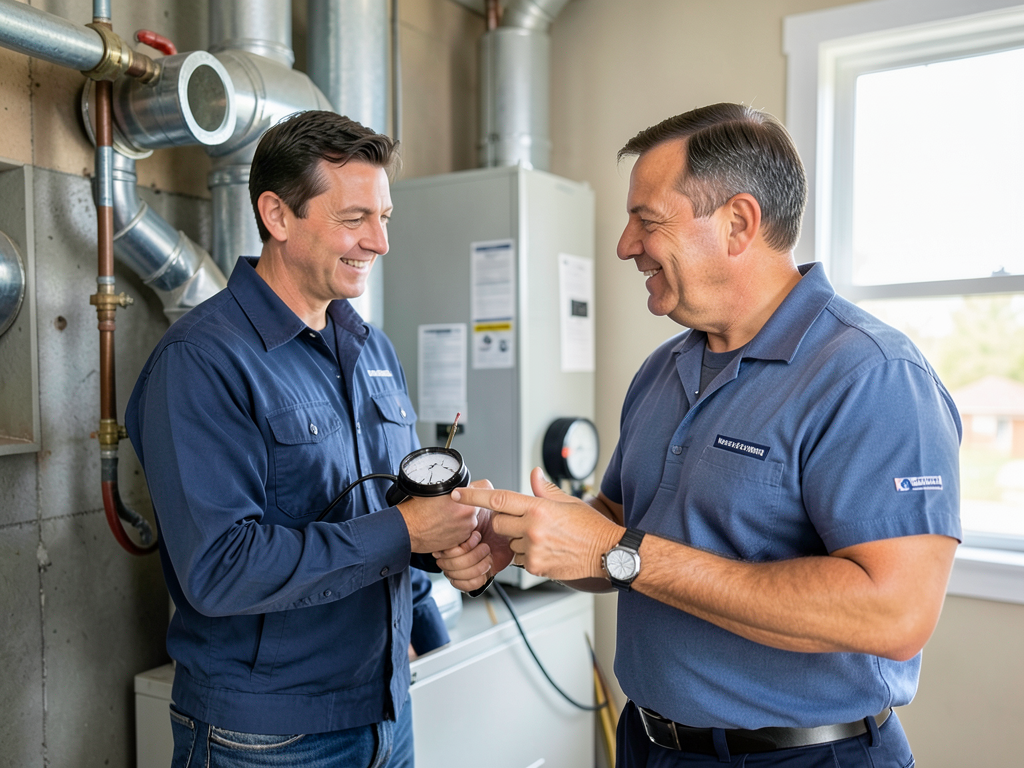
Our emergency AC repair technicians arrive with diagnostic tools that identify the exact failure point within 15 minutes. We do not guess. We measure refrigerant pressures with manifold gauges, test electrical continuity with multimeters, and verify airflow with anemometers. This eliminates the trial-and-error approach that wastes your time and money.

For refrigerant leaks, we inject nitrogen to pressurize the system, then use electronic leak detectors to pinpoint the breach. St. Louis's freeze-thaw cycles crack weak joints in copper lines, especially where they connect to the outdoor condenser. We repair the leak with brazing torches that create permanent, code-compliant seals, then evacuate moisture with vacuum pumps before recharging to manufacturer specifications. This process takes 90 minutes and prevents repeat failures.

Compressor diagnostics require checking start capacitor voltage, run capacitor microfarads, and winding resistance. A failed start capacitor mimics compressor failure but costs 40 dollars to replace instead of 1,800 dollars for a new compressor. We verify the actual problem before recommending replacement. If your compressor truly failed, we calculate whether repair or system replacement makes financial sense based on your unit's age and efficiency rating.

Thermostat failures often stem from corroded wire connections or dead backup batteries. We test millivolt signals between your thermostat and air handler to confirm communication integrity. Many newer thermostats require common wire installations that older St. Louis homes lack. We add C-wire adapters when needed to ensure reliable operation.

For air conditioner blowing warm air emergencies, we carry the 30 most common replacement parts on every truck. You get same day service without waiting for parts orders. Our goal is restoring cold air before you spend another hour in dangerous heat.

What Happens During Your Emergency AC Service Call

AC Blowing Warm Air? St. Louis Emergency Repair Arrives in 60 Minutes or Less
01

Immediate Phone Diagnosis

When you call our emergency line, our dispatcher asks targeted questions about your AC unit blowing heat. We determine if you have airflow, strange sounds, or electrical issues. This pre-arrival information helps our technician bring the right diagnostic equipment and parts. We also confirm your AC model and age, which tells us probable failure points before we arrive at your door.
02

On-Site System Testing

Our technician performs a complete system evaluation, checking refrigerant pressures at both the suction and discharge lines, measuring amp draw on the compressor and condenser fan, and testing capacitor performance under load. We inspect your evaporator coil for freeze damage and verify your condensate drain is clear. This diagnostic takes 15 to 20 minutes and identifies every component contributing to your central air blowing hot air.
03

Repair and Verification

After explaining exactly what failed and why, we complete the repair and run your system through a full cooling cycle. We measure supply air temperature at your registers to confirm you are getting 15 to 20 degree temperature drop across the evaporator coil. Before leaving, we show you the defective part and explain how to prevent the same failure. You get cold air and understanding, not just a fixed AC.

Why St. Louis Residents Trust Keystone HVAC for Urgent AC Repairs

St. Louis's climate demands HVAC technicians who understand local equipment stress patterns. We have serviced residential and commercial cooling systems through every neighborhood from Soulard to Clayton, and we know how St. Louis buildings respond to humidity and heat. Older homes in historic districts like Lafayette Square have outdated ductwork that restricts airflow, causing compressor overwork. Mid-century split-levels in Webster Groves often have undersized return air grilles that starve the system. New construction in St. Charles County uses builder-grade thermostats that fail within three years.

These local patterns inform our diagnostic approach. When we arrive for emergency AC repair, we already know the probable failure points based on your home's age and location. This speeds diagnosis and prevents unnecessary part replacement.

Our technicians train specifically on the AC brands most common in St. Louis homes. We service Trane, Carrier, Lennox, Rheem, and Goodman units daily. We stock parts for these manufacturers and know their failure patterns. When your air conditioner blowing warm air needs urgent repair, you do not want a technician learning your system on the job. You want someone who has fixed the same problem 200 times.

We also understand St. Louis building codes and permit requirements. If your repair requires electrical work or refrigerant handling beyond basic service, we pull permits and schedule inspections. This protects you from liability and ensures your homeowner's insurance remains valid. Unlicensed repairs void coverage and create hazards.

Keystone HVAC operates 24 hours because AC failures do not wait for business hours. We dispatch technicians at 2 AM on Sundays with the same response time as Tuesday afternoon. You pay standard emergency rates, not price-gouging premiums. Our goal is fixing your AC unit blowing heat before your home becomes uninhabitable, not maximizing profit during your crisis.

What to Expect During Emergency AC Repair Service

Response Time and Availability

We guarantee arrival within 60 minutes for emergency AC repair calls in the greater St. Louis metro area. Our technicians work rotating shifts to maintain 24/7 coverage, including holidays. When you call our dispatch line at (314) 417-7771, you speak to a live person who immediately assigns your service request. We text you the technician's name, photo, and estimated arrival time. If traffic delays occur, we update you every 15 minutes. Most air conditioner blowing warm air emergencies receive same day resolution. Complex repairs requiring specialized parts may need a follow-up visit, but we restore partial cooling during the first call whenever possible.

Diagnostic Process and Cost Transparency

Our diagnostic fee covers the service call and initial testing. If you approve repairs, we apply the diagnostic fee toward your total cost. Before starting any work, we explain exactly what failed, why it failed, and what the repair involves. We provide written estimates that break down parts and labor separately. You see the refrigerant cost, the replacement capacitor price, and the labor hours. We do not bundle services into vague packages that hide markups. For central air blowing hot air issues involving refrigerant leaks, we show you the leak location and explain why temporary sealants fail. You make informed decisions, not pressured choices.

Repair Quality and Performance Testing

Every AC unit blowing heat repair includes performance verification before we leave your property. We measure supply air temperature, check refrigerant subcooling and superheat, and verify proper condenser fan operation. For compressor replacements, we install hard start kits that reduce startup current and extend component life. All refrigerant work follows EPA Section 608 protocols, including mandatory evacuation and recovery. We document pre-repair and post-repair pressures so you have proof of proper service. If your system fails to reach target temperatures after our repair, we return at no additional charge to correct the issue.

Maintenance Recommendations and Prevention

After completing emergency repairs, we inspect your entire HVAC system for pending failures. We check your air filter condition, measure duct leakage at register boots, and test your condensate pump float switch. Many 24 hour AC repair calls result from deferred maintenance that turns minor issues into catastrophic failures. We explain which components show wear and provide timeline estimates for replacement. You can schedule preventive service before the next failure, or you can choose reactive repairs. We document our findings either way. For customers who want to avoid future emergencies, we offer maintenance agreements that include priority scheduling and discounted service rates.

Frequently Asked Questions

You Have Questions,
We Have Answers

Is AC blowing hot air an emergency? +

It depends on temperature and health factors. If indoor temps exceed 90 degrees during a St. Louis summer heatwave, or if you have elderly family members, infants, or pets at home, yes, treat it as urgent. High humidity here compounds the danger of heat exhaustion. If your system completely fails during peak heat, you risk serious health issues within hours. For most situations, same-day service is critical. Do not wait overnight if vulnerable people are present. Call a 24/7 HVAC tech immediately to diagnose refrigerant leaks, compressor failure, or electrical issues.

Why is my AC suddenly blowing warm air? +

Common causes include low refrigerant from a leak, a failed compressor, a stuck reversing valve, or a dirty condenser coil clogged with St. Louis cottonwood seeds and debris. Electrical issues like a blown capacitor or tripped breaker also cause warm air. If your thermostat is set correctly and the filter is clean, the problem is mechanical or refrigerant-related. St. Louis humidity accelerates coil corrosion, leading to pinhole leaks. Do not ignore this. Warm air means your system is running but not cooling, wasting energy and risking total compressor burnout.

What is the 3 minute rule for AC? +

The 3 minute rule prevents compressor damage. After your AC shuts off, wait at least 3 minutes before restarting it. This allows refrigerant pressure to equalize inside the system. Restarting too quickly forces the compressor to work against high pressure, which can burn out the motor or trip the breaker. If your St. Louis AC is short cycling or you are troubleshooting, always give it 3 full minutes between power cycles. Ignoring this rule can turn a simple fix into a costly compressor replacement.

What is the $5000 rule for AC? +

The $5000 rule is a guideline for replacement decisions. Multiply the repair cost by the age of your unit. If the total exceeds $5000, replace the system instead of repairing. For example, a $700 repair on a 10-year-old unit equals $7000, so replace it. St. Louis summers are brutal, and older systems lose efficiency fast. If your AC is over 12 years old and needs a major repair like a compressor or evaporator coil, replacement often makes more financial sense. Factor in rising energy costs and improved SEER ratings.

What is considered an emergency for AC? +

AC emergencies include complete system failure during extreme heat, refrigerant leaks causing hissing or ice buildup, electrical burning smells, or water flooding from a clogged drain line. In St. Louis, indoor temps above 90 degrees with high humidity create dangerous conditions for vulnerable residents. Compressor failure, sparking wires, or a frozen evaporator coil that suddenly thaws and floods your home also qualify. If your AC runs constantly without cooling or if you smell burning plastic, shut it down and call for emergency service immediately to prevent fire hazards or health risks.

Should I turn off the AC if it blows hot air? +

Yes, turn it off immediately to prevent further damage. Running an AC that blows hot air wastes energy and can overheat the compressor, leading to total failure. If the issue is low refrigerant, the compressor runs without lubrication, causing permanent damage. Check your thermostat settings and air filter first. If both are correct, shut the system down and call a technician. Continuing to run it in St. Louis heat will not cool your home and may turn a $300 repair into a $2000 compressor replacement. Stop the damage now.

Is hot air from AC a fire hazard? +

Hot air alone is not a fire hazard, but the underlying cause can be. Electrical failures like a shorted compressor, frayed wiring, or a blown capacitor can spark fires. If you smell burning plastic, see smoke, or hear buzzing from the outdoor unit, shut off power at the breaker immediately. St. Louis humidity can corrode electrical connections, increasing fire risk. Overheated compressors sometimes seize and smoke. Hot air is a symptom. The real danger is ignoring it. If you detect any burning odor or electrical issues, evacuate and call 911 first, then an HVAC tech.

What are signs of a failing AC compressor? +

A failing compressor makes loud grinding, clicking, or rattling noises from the outdoor unit. You may notice hard starting, where the system struggles to turn on or trips the breaker repeatedly. Warm air despite the system running is a primary sign. Look for ice on the refrigerant lines or excessive vibration. St. Louis heat stresses compressors, especially units over 10 years old. If your electric bills spike suddenly or the outdoor fan runs but the compressor stays silent, failure is imminent. Compressor replacement is expensive, so catch these signs early for diagnosis.

Why is my AC running but not cooling? +

Your AC runs but does not cool due to low refrigerant, a clogged air filter, a frozen evaporator coil, or a failed compressor. Dirty condenser coils covered in St. Louis pollen and debris block heat release. Thermostat malfunctions or a tripped breaker to the outdoor unit also cause this. Check your filter and thermostat settings first. If both are fine, the issue is mechanical. Refrigerant leaks are common in older systems. Do not let it run endlessly. Call a technician to diagnose before your compressor burns out from overwork.

How long should it take to cool a house from 85 to 70? +

A properly sized AC should drop 15 degrees in 2 to 3 hours under normal St. Louis conditions. If your home takes longer, your system is undersized, low on refrigerant, or has airflow blockages. Factors like insulation, window quality, and outdoor temperature affect cooling speed. During a 95-degree heatwave with high humidity, expect slower performance. If your AC runs nonstop for 4 hours without reaching setpoint, you have a problem. Check ductwork for leaks and replace dirty filters. If cooling remains slow, call a tech to test refrigerant levels and system capacity.

How St. Louis Humidity Accelerates AC Failures and Refrigerant Loss

St. Louis averages 70 percent relative humidity during summer months, which forces your air conditioner to work harder than units in dry climates. High humidity increases condensation on your evaporator coil, which leads to faster corrosion of copper refrigerant lines and aluminum coil fins. The Mississippi and Missouri River floodplains create persistent moisture that infiltrates crawl spaces and attics where ductwork runs. This moisture accelerates rust on metal duct joints and promotes mold growth inside air handlers. When your AC blowing warm air coincides with musty odors, you likely have biological growth blocking your evaporator coil. Emergency AC repair in St. Louis must address both the mechanical failure and the environmental factors that caused it.

Local building codes in St. Louis County and St. Charles County require specific refrigerant handling certifications that many handyman services lack. Only EPA-certified technicians can legally purchase, install, or recover refrigerants. Unlicensed repairs create environmental hazards and expose you to fines up to 37,500 dollars per violation. Keystone HVAC maintains all required certifications and pulls permits when code requires inspections. We also understand how St. Louis's transition from R-22 refrigerant to R-410A affects older systems. Many air conditioner blowing warm air emergencies stem from improper refrigerant mixing during previous repairs. We verify refrigerant purity before adding charge, which prevents compressor damage and ensures optimal cooling performance.
HVAC Services in The St. Louis Area

Our service area spans across the St. Louis metropolitan area and surrounding communities. We’re dedicated to bringing our top-quality HVAC services directly to your doorstep. Use the map to see our coverage and feel free to contact us with any questions about whether we can service your specific location. We’re always here to help you find the comfort solutions you need.

Address:
Keystone HVAC St. Louis, 4452 Manchester Ave, St. Louis, MO, 63110

Additional Services We Offer

Our news updates

Latest Articles & News from The Blogs

Does Your Maryland Heights Attic Have Enough Ventilation for the Summer Heat? Your Maryland Heights attic can reach 150°F on…

Does Your Maryland Heights Attic Have Enough Ventilation for the Summer Heat?

Does Your Maryland Heights Attic Have Enough Ventilation for the Summer Heat? Your Maryland Heights attic can reach 150°F on…

What That Strange Metallic or Burning Plastic Smell from Your Furnace Actually Means

What That Strange Metallic or Burning Plastic Smell from Your Furnace Actually Means If your furnace smells like burning plastic…

Why Closing Vents in Unused Rooms Is Actually Hurting Your Ladue Home

Many Ladue homeowners close vents in unused rooms to save money on energy bills. This common practice seems logical at…

Contact Us

Your AC blowing warm air will not fix itself. Call Keystone HVAC St. Louis at (314) 417-7771 right now for emergency service. We arrive in 60 minutes or less with the parts and expertise to restore cold air before your home becomes dangerous.