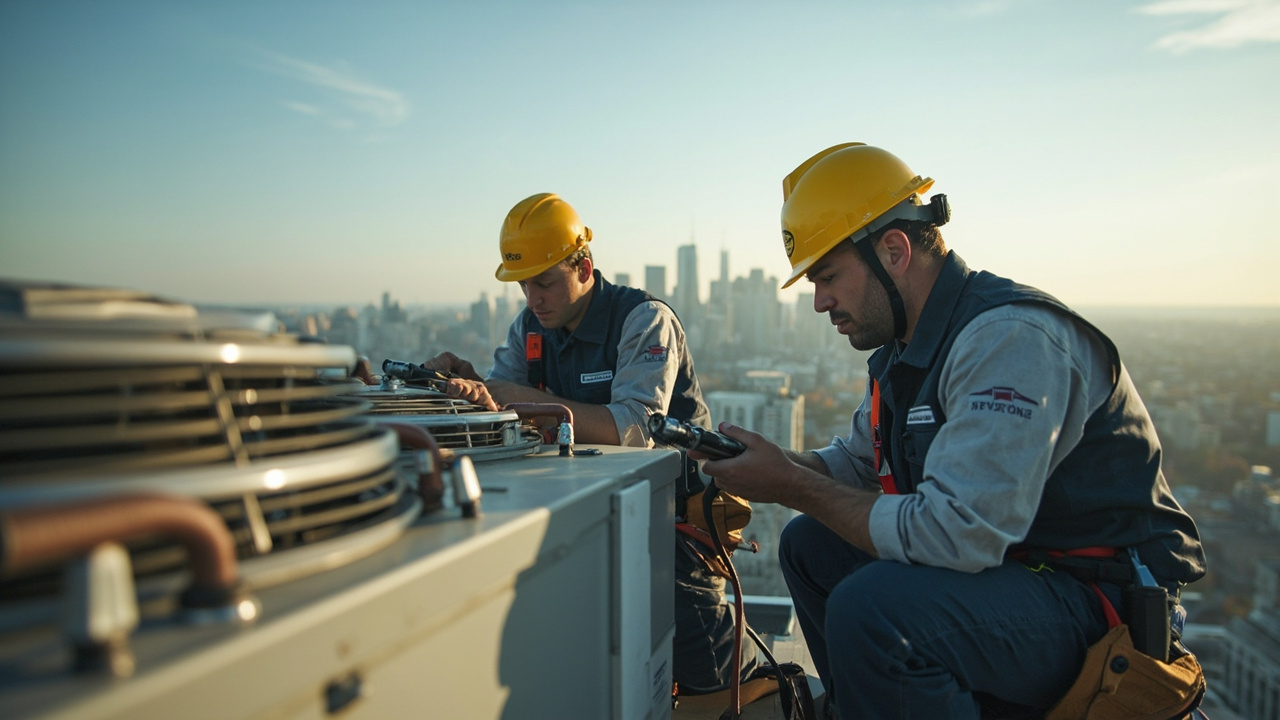
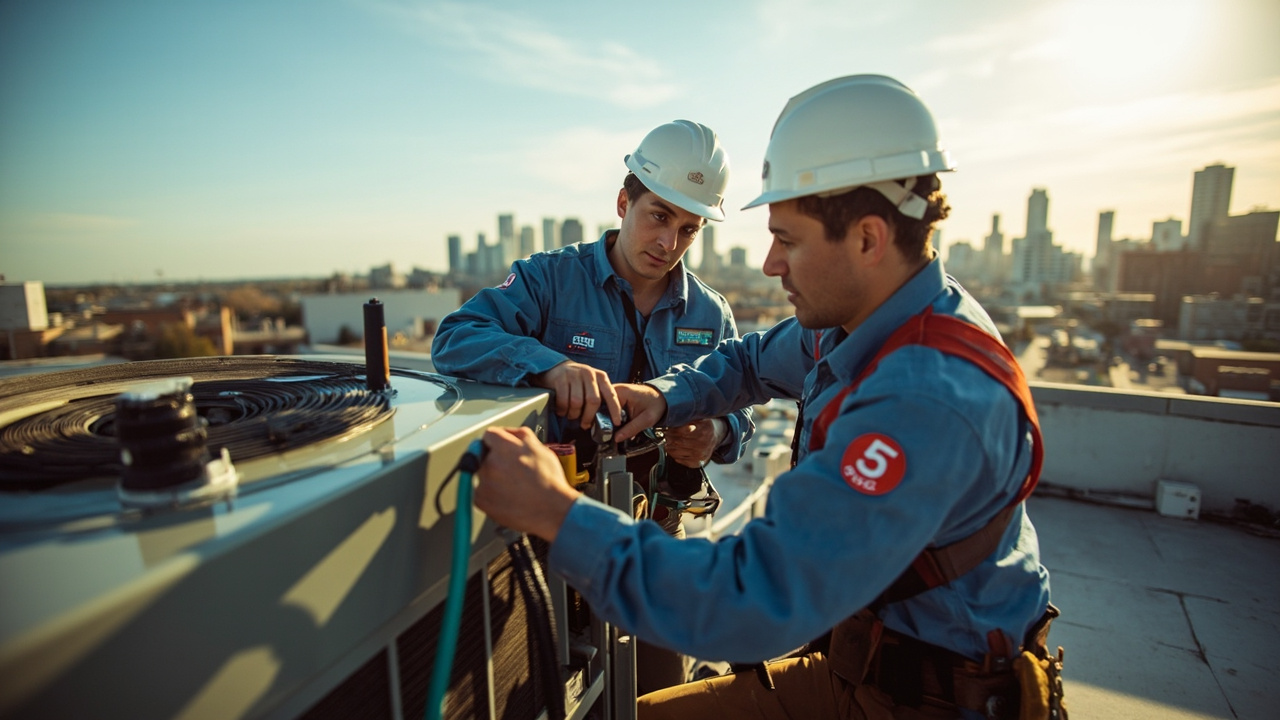
St. Louis sits at the confluence of extreme weather patterns that punish commercial HVAC systems. Summer dew points regularly hit 70 degrees, forcing cooling equipment to remove massive latent loads while maintaining space temperature. Winter cold snaps drop temps into single digits, stressing heat exchangers and creating frozen pipe risks in poorly insulated buildings. The city's aging commercial building stock compounds these challenges. Pre-war structures downtown have undersized mechanical rooms and inadequate ventilation. Post-war suburban office parks feature flat roofs with deteriorating curb mounts that leak water into rooftop units. Industrial properties near the riverfront deal with high groundwater tables that flood basement mechanical rooms during spring flooding. Commercial HVAC contractors who ignore these local factors install systems that fail during peak load.
St. Louis City and County enforce distinct mechanical codes that impact commercial installations. City permits require higher efficiency minimums for equipment replacements. County projects in unincorporated areas follow different inspection protocols. We maintain relationships with plan reviewers in both jurisdictions to expedite permit approval. Our technicians understand local code requirements for combustion air, refrigerant leak detection, and emergency shutoff accessibility. When we install a split system in Clayton or retrofit a package unit in Affton, the installation passes inspection the first time. Commercial HVAC service providers who do not understand these local nuances create delays and compliance issues that cost you time and money.