Menu

Commercial Duct Cleaning in St. Louis – Minimize Downtime with Industrial-Grade Air System Restoration

Keystone HVAC St. Louis delivers commercial ductwork cleaning designed to maintain business operations, reduce liability, and extend equipment life across warehouses, medical facilities, and industrial complexes throughout the St. Louis metro.

Slider Image 1
Slider Image 2
Slider Image 3
Slider Image 4
Slider Image 5
Slider Image 7
Slider Image 8
Slider Image 9
Slider Image 10
Slider Image 11

Why St. Louis Commercial Buildings Face Accelerated Air System Contamination

St. Louis sits at the confluence of the Mississippi and Missouri Rivers, creating year-round humidity that drives mold growth, particulate buildup, and biological contamination inside commercial HVAC systems. Manufacturing facilities along the riverfront corridor face additional challenges from industrial dust, metal particulates, and chemical residues that infiltrate air handling units and main supply trunks.

The city's aging commercial building stock, particularly in the Central West End and Downtown districts, often relies on outdated ductwork with fiber-lined interiors that trap moisture and become breeding grounds for microbial growth. When you operate a warehouse in Brentwood or a medical clinic near Barnes-Jewish, contaminated air systems compromise indoor air quality, trigger compliance failures, and force your HVAC equipment to work harder.

Commercial air vent cleaning addresses visible grilles and registers, but industrial ductwork cleaning tackles the main supply plenums, return air pathways, and vertical risers where the majority of contamination accumulates. A restaurant in Clayton dealing with grease-laden exhaust or a data center in Creve Coeur managing dust from server operations cannot afford the productivity losses and equipment failures that come from neglected air systems.

Commercial HVAC duct cleaning is not a maintenance luxury. It is a calculated business decision that protects your physical assets, reduces energy waste, and maintains the air quality standards your industry requires. The question is not whether your ductwork needs attention but how much contamination has already accumulated and what it is costing you in efficiency and risk.

Why St. Louis Commercial Buildings Face Accelerated Air System Contamination
The Industrial Air Duct Cleaning Methodology That Protects Your Operations

The Industrial Air Duct Cleaning Methodology That Protects Your Operations

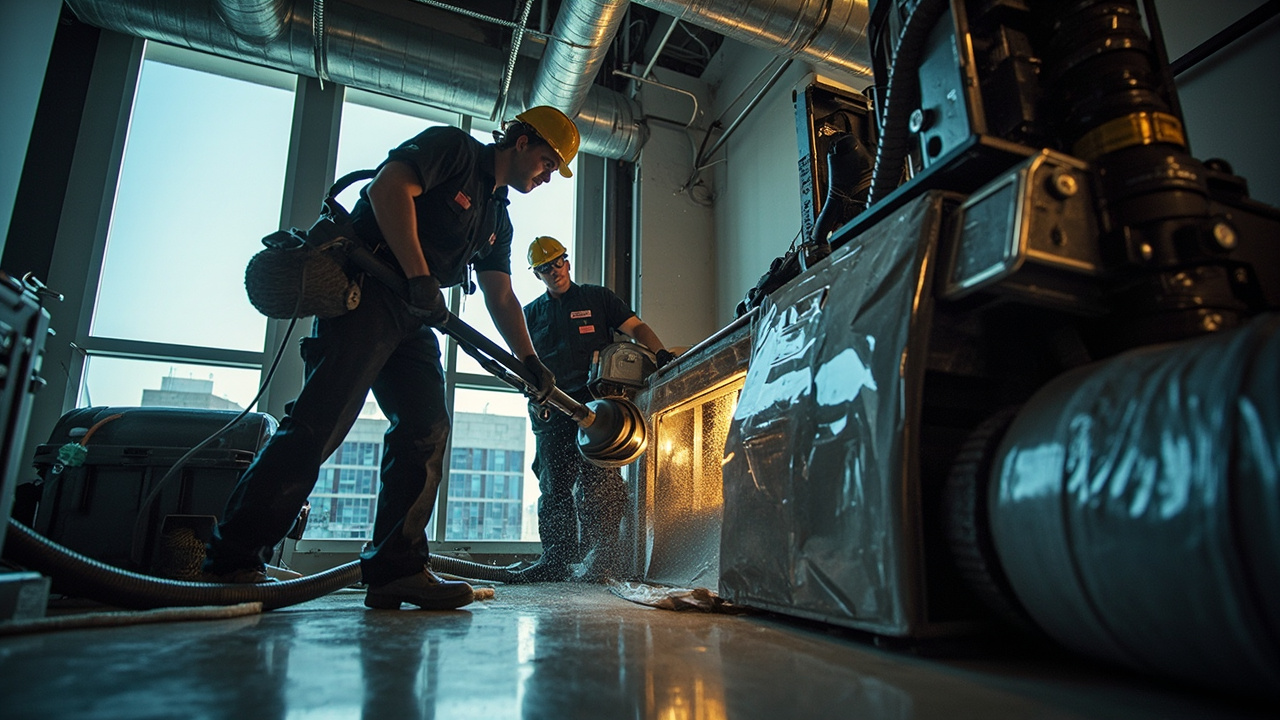
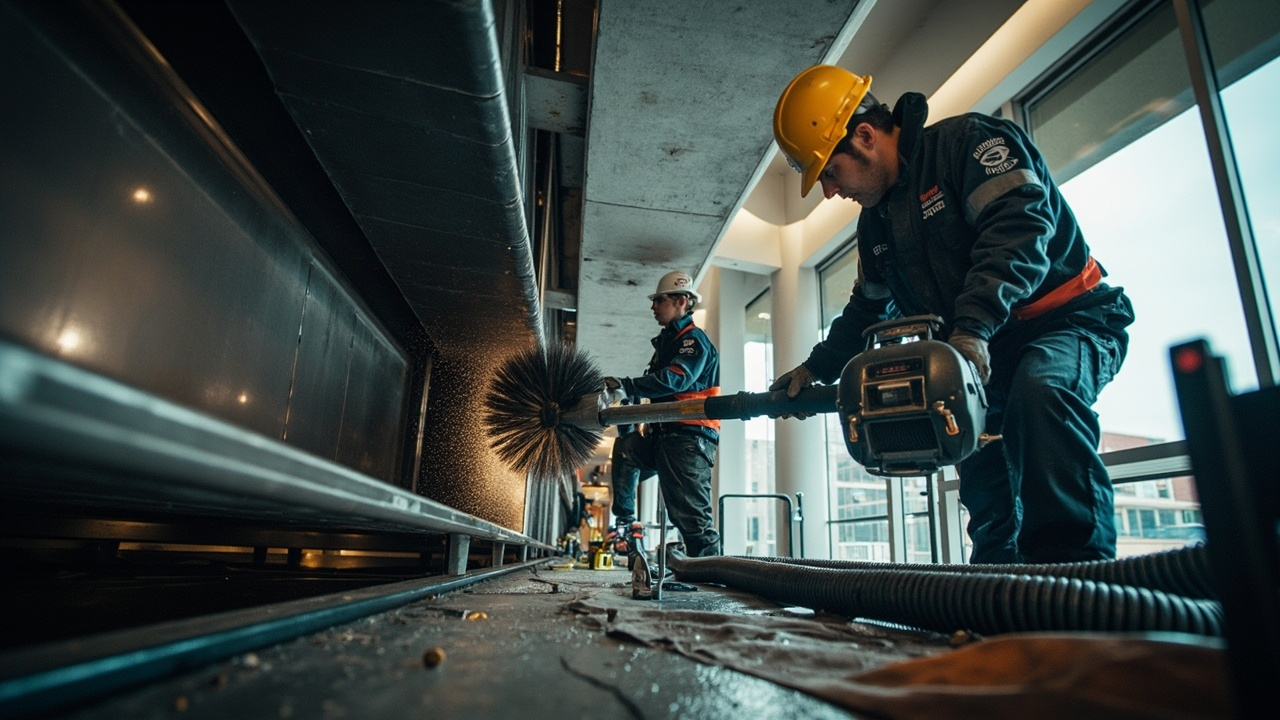
Commercial ductwork cleaning requires specialized equipment that residential contractors do not carry. We deploy truck-mounted negative air machines capable of generating 10,000 CFM suction, portable HEPA filtration units to contain particulates during extraction, and rotary brush systems designed for large-diameter commercial duct runs.

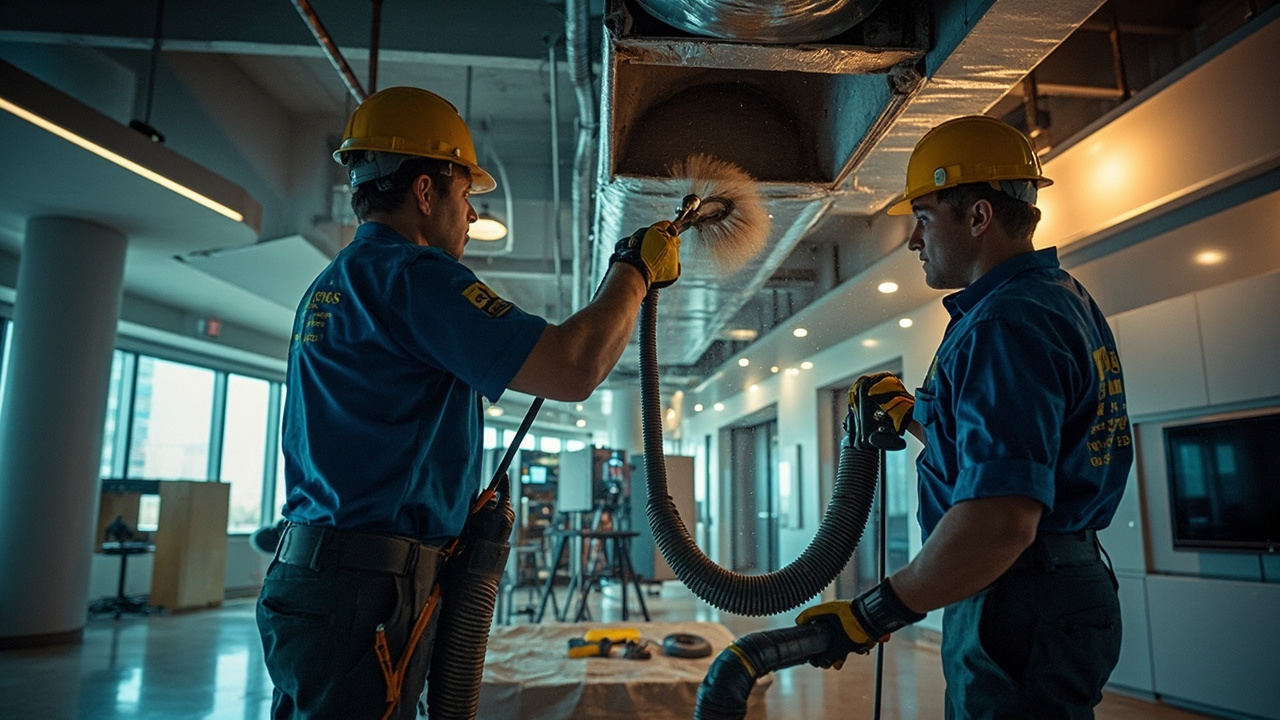
The process begins with complete system access. We create entry points at strategic locations along your main supply and return trunks, allowing us to physically clean every section rather than relying on air whips that only disturb surface debris. For facilities with coil contamination, we apply enzymatic treatments that break down biological films without damaging aluminum fins or copper tubing.

Industrial air duct cleaning in manufacturing environments demands containment protocols. We section off work areas using negative pressure barriers, preventing cross-contamination into production zones. Medical facilities receive additional pre-filtration and EPA-registered antimicrobial treatments to meet infection control standards.

Your air handling units receive component-level cleaning. We remove and clean blower assemblies, scrub drain pans, replace damaged insulation, and verify damper operation. Return air plenums, often the most contaminated section of any commercial system, get full extraction treatment using HEPA-filtered vacuums and mechanical agitation.

We document conditions before and after cleaning using borescope imaging and particulate sampling. You receive a detailed report showing contamination levels, cleaning results, and recommendations for system modifications that prevent future buildup. This is not a surface-level service. This is a complete air system restoration designed to reduce your operating costs, extend equipment life, and eliminate the liability that comes from poor indoor air quality.

How Commercial Duct Cleaning Protects Your St. Louis Facility

Commercial Duct Cleaning in St. Louis – Minimize Downtime with Industrial-Grade Air System Restoration
01

System Assessment and Access

We conduct a complete walkthrough of your facility, mapping duct runs, identifying access points, and documenting system conditions using thermal imaging and borescope cameras. You receive a detailed scope of work outlining contamination levels, required access modifications, and projected timeline. We coordinate scheduling to minimize disruption to your operations, working nights or weekends when your business demands it.
02

Mechanical Cleaning and Extraction

Our crews establish negative pressure zones using commercial air scrubbers, then systematically clean each section of ductwork using rotary brushes, compressed air tools, and HEPA vacuums. We remove debris at the source rather than pushing it through your system. All work areas are sealed using containment barriers to prevent particulate migration. Air handling units are disassembled, cleaned, and reassembled with new filters and replacement components as needed.
03

Verification and Documentation

After cleaning, we conduct post-work inspections using the same imaging equipment to verify contamination removal. You receive before-and-after photos, airflow measurements, and particulate readings that document system improvement. We provide a comprehensive report suitable for compliance audits, facility management reviews, and insurance documentation. Optional antimicrobial treatments and air quality testing are available for regulated industries requiring additional verification.

Why St. Louis Facility Managers Trust Keystone HVAC for Commercial Air System Services

St. Louis commercial buildings operate under unique environmental pressures that out-of-town contractors do not understand. We know that facilities near the river corridor deal with elevated humidity that accelerates microbial growth. We understand that manufacturing plants in North St. Louis face contamination from industrial processes that require specialized filtration and containment.

Our crews carry the equipment necessary for large-scale commercial projects. We own truck-mounted vacuum systems, not portable shop vacs. We deploy rotary brush machines designed for 24-inch diameter supply trunks, not residential flex duct tools. We maintain liability coverage and worker's compensation insurance that meets the requirements of commercial property managers and corporate facilities teams.

You need a contractor who can clean 50,000 square feet of ductwork over a weekend without disrupting Monday operations. You need documentation that satisfies OSHA inspectors, insurance auditors, and tenant complaints about air quality. You need a team that understands the difference between cleaning a retail space in the Delmar Loop and sanitizing a surgical center in Clayton.

We have cleaned ductwork in food processing facilities that cannot afford a single hour of downtime. We have restored air systems in Class A office towers where tenant complaints threatened lease renewals. We have decontaminated medical buildings where infection control protocols are non-negotiable.

Commercial duct cleaning is not about making your building smell better. It is about reducing energy costs, extending equipment life, and eliminating the liability that comes from neglected mechanical systems. The cost of professional cleaning is a fraction of what you lose in efficiency, tenant complaints, and premature equipment replacement when you ignore your air distribution system.

What Your St. Louis Business Can Expect from Professional Duct Cleaning

Scheduling and Project Timeline

We coordinate cleaning schedules around your business operations. Most commercial projects require 24 to 72 hours of work time depending on system size and contamination levels. We work nights, weekends, and holidays to minimize disruption. Larger facilities may be cleaned in phases to maintain partial HVAC operation during the project. You receive a detailed timeline during the assessment phase, and we communicate any schedule changes immediately. Rush service is available for facilities facing compliance deadlines or emergency contamination events.

Pre-Cleaning Assessment and Scope Definition

Every commercial project begins with a comprehensive system inspection. We use borescope cameras to document interior duct conditions, thermal imaging to identify airflow problems, and particulate sampling to quantify contamination levels. You receive a written proposal outlining the scope of work, access requirements, and projected costs. We identify any necessary repairs, insulation replacement, or system modifications before cleaning begins. This assessment ensures you understand exactly what work will be performed and why it is necessary.

Cleaning Results and System Performance

Professional duct cleaning restores airflow capacity, reduces static pressure, and improves temperature distribution throughout your facility. You will see measurable reductions in energy consumption as your HVAC equipment no longer struggles to move air through contaminated ductwork. Indoor air quality improves immediately as biological contaminants, dust, and particulates are removed from the air stream. Equipment life is extended because blower motors, coils, and fans operate under normal load conditions rather than fighting restriction. The return on investment appears in lower utility bills, reduced maintenance costs, and fewer tenant complaints.

Post-Cleaning Documentation and Maintenance Planning

You receive a complete project report including before-and-after photos, airflow measurements, and contamination documentation suitable for compliance reviews and facility records. We provide recommendations for filter upgrades, preventive maintenance intervals, and system modifications that reduce future contamination. Optional maintenance agreements are available for facilities requiring annual or semi-annual cleaning to maintain air quality standards. We maintain detailed service records for each facility we clean, allowing us to track system conditions over time and adjust maintenance schedules based on actual contamination rates.

Frequently Asked Questions

You Have Questions,
We Have Answers

How much does commercial duct cleaning cost? +

Commercial duct cleaning costs vary based on system size, complexity, and contamination level. Small retail spaces typically start lower, while large warehouses or multi-tenant buildings cost significantly more due to extended ductwork and multiple air handlers. St. Louis facilities with older HVAC systems or those near industrial zones often require additional debris removal, which impacts pricing. Expect quotes to include inspection, agitation, vacuuming, and sanitization. Square footage, accessibility, and whether your system requires partial shutdown during cleaning all factor into cost. Request itemized estimates from licensed contractors who understand St. Louis commercial building codes and can minimize operational disruption.

How often should commercial HVAC ducts be cleaned? +

NADCA recommends commercial duct cleaning every three to five years, but St. Louis businesses often need more frequent service. Manufacturing facilities, restaurants, medical offices, and properties near high-traffic corridors accumulate contaminants faster due to particulate exposure and humidity. Buildings with constant occupancy or sensitive equipment benefit from annual inspections. If your facility experiences pest activity, water damage, or visible mold, immediate cleaning becomes necessary regardless of schedule. Compliance requirements for healthcare and food service may dictate more frequent intervals. Monitor filter change frequency and indoor air quality complaints to determine your specific maintenance cycle and avoid costly downtime.

How much is Servpro duct cleaning? +

Servpro pricing depends on facility size, contamination severity, and regional market factors. They operate franchises across the St. Louis metro, so quotes vary between locations. Their services typically include restoration-focused cleaning after fire or water damage rather than routine maintenance. For standard commercial duct cleaning, request quotes from multiple licensed HVAC contractors who specialize in preventive maintenance. Compare scope of work, not just price. Ensure contractors use HEPA-filtered vacuums, follow NADCA standards, and provide documentation for compliance audits. Emergency restoration pricing differs significantly from scheduled maintenance, so clarify your specific needs when requesting estimates.

What is the average cost of commercial cleaning? +

Commercial cleaning encompasses janitorial services, window washing, floor care, and specialized tasks. Duct cleaning represents a separate HVAC maintenance category with distinct pricing. Average commercial cleaning contracts for office space run per square foot monthly, while duct cleaning is a periodic project billed differently. In St. Louis, factors like building age, occupancy type, and proximity to industrial areas affect both. Do not confuse routine janitorial services with mechanical system maintenance. Duct cleaning requires HVAC technicians with specific certifications, specialized equipment, and knowledge of air handling systems. Budget these as separate line items to maintain both facility appearance and system performance.

What are the drawbacks of duct cleaning? +

Improperly performed duct cleaning can dislodge contaminants without capturing them, spreading particles throughout your facility. Unlicensed contractors may damage ductwork, dislodge insulation, or leave access panels unsealed. Aggressive brushing can create holes in older metal ducts common in historic St. Louis buildings. Some companies oversell unnecessary services or apply chemical treatments that create odors. If your system lacks significant contamination, cleaning provides minimal benefit and disrupts operations. Choose NADCA-certified contractors who conduct video inspections first, use proper containment, and follow manufacturer specifications. Verify insurance coverage protects against potential system damage during the cleaning process.

How much does Stanley Steemer charge to clean air ducts? +

Stanley Steemer provides residential-focused duct cleaning with pricing that varies by market and home size. Their commercial services exist but differ from specialized HVAC contractors who focus on large-scale systems. St. Louis commercial facilities with complex air handlers, rooftop units, and extensive ductwork require contractors experienced in commercial code requirements and system-specific protocols. Request quotes from multiple vendors specializing in commercial HVAC maintenance. Compare certifications, equipment specifications, and references from similar facility types. Carpet cleaning companies expanding into duct services may lack the technical expertise needed for commercial buildings with variable air volume systems or specialized filtration requirements.

What time of year is best for duct cleaning? +

Spring and fall provide ideal conditions for commercial duct cleaning in St. Louis. Moderate temperatures allow system shutdown without compromising occupant comfort. Schedule before peak cooling season to maximize efficiency during humid St. Louis summers, or before heating season to remove accumulated dust. Avoid winter cleaning when buildings depend heavily on heating. Consider your business cycle and plan during slow periods to minimize disruption. Retail properties benefit from post-holiday cleaning, while schools should schedule during breaks. Manufacturing facilities may align cleaning with planned maintenance shutdowns. Weather stability during shoulder seasons reduces the risk of outdoor contaminants entering during the process.

What are the signs air ducts need cleaning? +

Visible dust discharge from supply registers signals contaminated ductwork. Musty odors when the system activates indicate mold growth, common in humid St. Louis climates. Increased employee respiratory complaints or allergy symptoms point to poor indoor air quality. Check registers and return grilles for dust buildup or visible debris. Uneven airflow between zones suggests blockages. Pest droppings near vents require immediate attention. Higher-than-normal filter replacement frequency means contaminants circulate through your system. Energy bills climbing without usage changes indicate restricted airflow from buildup. Commercial kitchens and medical facilities should inspect ductwork quarterly given their contamination risk and regulatory requirements.

Does homeowners insurance cover air duct cleaning? +

Homeowners insurance does not cover commercial property. Commercial property insurance rarely covers routine duct cleaning, considering it preventive maintenance. Coverage may apply if cleaning becomes necessary after a covered peril like fire, wind damage, or vandalism. Water damage from roof leaks or pipe bursts may trigger coverage if ductwork requires remediation. Review your policy's equipment breakdown and business interruption provisions. Document all damage with photos and professional assessments. St. Louis properties affected by storm damage should file claims promptly. Insurers differentiate between maintenance neglect and sudden incidents. Consult your agent about coverage specifics before assuming reimbursement for any HVAC-related cleaning expenses.

Is duct cleaning worth the price? +

Commercial duct cleaning delivers measurable ROI when systems show contamination. Improved airflow reduces energy consumption and extends equipment life. Cleaner ducts mean fewer filter changes and lower maintenance costs. For St. Louis facilities in healthcare, food service, or manufacturing, cleaning ensures regulatory compliance and protects liability exposure. Businesses with sensitive equipment benefit from reduced particulate circulation. Skip cleaning if recent inspections show minimal buildup or your system is relatively new. Value depends on contamination level, system age, and occupancy type. Request video documentation before and after to verify work quality. Properly performed cleaning pays dividends through efficiency gains and reduced breakdown risk.

How St. Louis River Humidity and Industrial Activity Impact Commercial Air Systems

The Mississippi River valley creates persistent humidity that drives condensation inside commercial duct systems, particularly during St. Louis's hot summers when indoor air temperatures drop below dew point. This moisture combines with dust and organic material to create biofilm growth on duct interiors and air handling unit components. Manufacturing facilities near the riverfront in North St. Louis and industrial parks in Hazelwood face additional contamination from airborne particulates that infiltrate air intakes and settle in horizontal duct runs. These conditions make commercial HVAC duct cleaning a recurring operational requirement rather than an occasional maintenance task.

St. Louis commercial buildings must comply with local mechanical codes and industry-specific air quality standards that vary by occupancy type. Medical facilities near the Washington University Medical Center campus follow strict infection control protocols. Food processing operations must meet FDA and health department standards. Office buildings pursuing LEED certification require documented indoor air quality management. Keystone HVAC St. Louis understands these local regulatory environments and provides the documentation necessary to satisfy inspectors, auditors, and facility management teams throughout the metro area.
HVAC Services in The St. Louis Area

Our service area spans across the St. Louis metropolitan area and surrounding communities. We’re dedicated to bringing our top-quality HVAC services directly to your doorstep. Use the map to see our coverage and feel free to contact us with any questions about whether we can service your specific location. We’re always here to help you find the comfort solutions you need.

Address:
Keystone HVAC St. Louis, 4452 Manchester Ave, St. Louis, MO, 63110

Additional Services We Offer

Our news updates

Latest Articles & News from The Blogs

Does Your Maryland Heights Attic Have Enough Ventilation for the Summer Heat? Your Maryland Heights attic can reach 150°F on…

Does Your Maryland Heights Attic Have Enough Ventilation for the Summer Heat?

Does Your Maryland Heights Attic Have Enough Ventilation for the Summer Heat? Your Maryland Heights attic can reach 150°F on…

What That Strange Metallic or Burning Plastic Smell from Your Furnace Actually Means

What That Strange Metallic or Burning Plastic Smell from Your Furnace Actually Means If your furnace smells like burning plastic…

Why Closing Vents in Unused Rooms Is Actually Hurting Your Ladue Home

Many Ladue homeowners close vents in unused rooms to save money on energy bills. This common practice seems logical at…

Contact Us

Your air system is costing you money right now in wasted energy and equipment stress. Call Keystone HVAC St. Louis at (314) 417-7771 to schedule a no-cost facility assessment. We will document your system conditions, provide a detailed cleaning proposal, and show you exactly what contamination is hiding in your ductwork.