
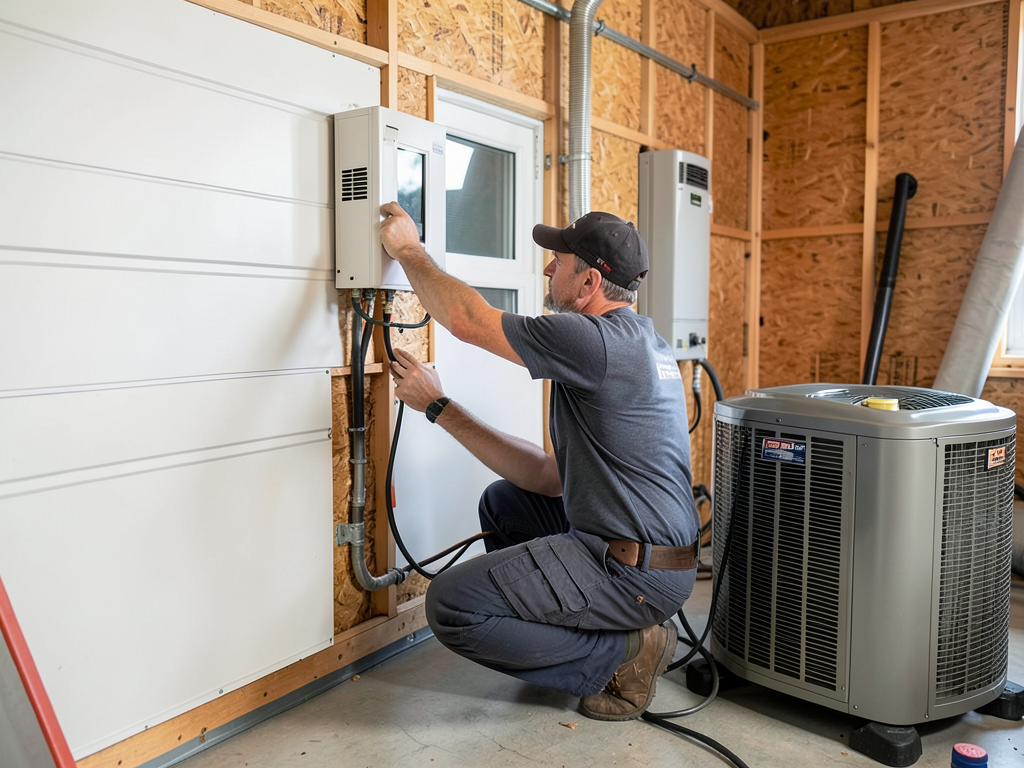
The Best Ways to Heat and Cool a Finished Garage or Workshop in Florissant
Living in Florissant means dealing with Missouri’s notorious weather swings—from humid 90-degree summers to freezing winter nights. If you’ve converted your garage into a workshop, home gym, or extra living space, you need a heating and cooling solution that handles both extremes. The right garage HVAC system keeps you comfortable while protecting your tools, equipment, and the space itself from moisture damage and temperature fluctuations. Commercial Heating Services.
Why St. Louis Homeowners Are Converting Garages into Living Spaces
Florissant residents increasingly transform garages into functional spaces—home offices, woodworking shops, yoga studios, or entertainment areas. The challenge lies in Missouri’s climate zone 4 classification, where summer humidity regularly exceeds 70% and winter temperatures drop below freezing. A standard garage with minimal insulation becomes unusable without proper climate control. The garage door itself often has an R-value of just 6-8, compared to 13-19 for exterior walls, creating massive energy loss that your HVAC system must overcome.
Top 4 Garage Heating and Cooling Solutions
Ductless Mini-Split Heat Pumps: The Gold Standard
Ductless mini-splits dominate garage HVAC installations in Florissant for good reason. These systems provide both heating and cooling through a single outdoor compressor connected to one or more indoor wall-mounted units. For a typical two-car garage, a 12,000 BTU unit handles spaces up to 500 square feet effectively. Top Rated AC Installation Companies Serving Ladue and Clayton.
Modern mini-splits operate down to -15°F while maintaining 100% heating capacity, crucial for Florissant’s occasional sub-zero nights. The inverter technology adjusts compressor speed based on demand, reducing energy consumption by 30-40% compared to traditional systems. Installation requires mounting the indoor unit, placing the outdoor condenser on a concrete pad, and running refrigerant lines through a 3-inch hole in the wall.
Cost factors: Basic DIY mini-splits start around $800-$1,200, while professional installation with electrical work runs $2,500-$4,000. Ameren Missouri offers rebates up to $300 for ENERGY STAR certified heat pumps, reducing the investment significantly.
Gas-Fired Unit Heaters: Powerful and Cost-Effective
Gas unit heaters suspend from the ceiling and blow heated air directly into the space. These work exceptionally well for large workshops or garages with high ceilings. A 30,000 BTU natural gas unit heats a two-car garage efficiently, while larger 75,000 BTU models handle three-car spaces.
The key advantage: operating costs run 40-60% lower than electric resistance heating in Missouri, where natural gas prices average $1.10 per therm. These units heat spaces rapidly—within 15-20 minutes—making them ideal for intermittent use. However, they require proper venting through the roof or wall and a dedicated 120V electrical circuit for the blower motor.
Installation considerations: Professional installation costs $1,800-$3,500, including gas line connection and venting. Spire Energy rebates occasionally apply for high-efficiency models with 90%+ AFUE ratings.
Electric Radiant Heating: Silent and Space-Saving
Electric radiant panels mount on walls or ceilings, heating objects and people directly rather than the air. This creates a comfortable environment without noisy blowers or ductwork. For a 400-square-foot garage, you’ll need 4,000-5,000 watts of radiant heat capacity.. Read more about How to Keep Your Year Round Sunroom Comfortable in Kirkwood During the Summer.
The technology shines in workshops where dust control matters—no air movement means less sawdust circulation. Operating costs run higher than gas, approximately $0.15-$0.20 per hour for a typical setup, but the silent operation and zero maintenance appeal to many Florissant homeowners.
Electrical requirements: Most radiant systems need a dedicated 240V circuit, adding $300-$500 to installation costs if your garage lacks adequate electrical service.
PTAC Units: The Hotel Room Solution
Packaged Terminal Air Conditioners (PTAC) through-the-wall units combine heating and cooling in one package. Popular in hotels, these work well for garage conversions where you want a simple, all-in-one solution. A 12,000 BTU PTAC handles most two-car garages, while 18,000 BTU models accommodate larger spaces.
The advantage: no outdoor unit means simpler installation through an exterior wall. These plug into standard 220V outlets and include built-in condensate management. However, they’re less efficient than mini-splits, with SEER ratings typically 10-12 compared to 18-22 for modern heat pumps.
Cost range: Quality PTAC units run $600-$1,200, with installation adding $800-$1,500 for wall modifications and electrical work.
Comparison Table: Cost vs. Efficiency vs. Ease of Install
| System Type | Initial Cost | Monthly Operating Cost | Installation Complexity | Best For |
|---|---|---|---|---|
| Ductless Mini-Split | $2,500-$4,000 | $30-$50 | Moderate | Year-round comfort, workshops |
| Gas Unit Heater | $1,800-$3,500 | $20-$35 | High | Large spaces, intermittent use |
| Electric Radiant | $800-$2,000 | $40-$60 | Low | Woodworking, quiet operation |
| PTAC Unit | $1,400-$2,700 | $35-$55 | Moderate | Simple installation, moderate efficiency |
Critical Factors: Insulation and Sizing (BTUs)
Before selecting any HVAC system, address your garage’s insulation. Uninsulated garage doors and walls force your system to work overtime. Adding R-13 insulation to walls and upgrading to an insulated garage door with R-12 to R-16 rating can reduce heating and cooling loads by 30-40%.
BTU sizing guidelines: Calculate your garage’s square footage and multiply by 25 for cooling, 30 for heating. A 400-square-foot garage needs approximately 10,000-12,000 BTUs for cooling and 12,000-15,000 BTUs for heating. However, Florissant’s high humidity means oversizing slightly—choose the next size up if you’re between ratings.
Ventilation requirements: According to the 2021 International Mechanical Code, any space used for workshops requires mechanical ventilation at 0.35 air changes per hour or 15 cubic feet per minute per person, whichever is greater. This prevents fume buildup from paints, solvents, or vehicle exhaust.
St. Louis Building Codes and Permit Requirements
Converting your garage requires compliance with St. Louis County mechanical codes. Any new HVAC installation needs a mechanical permit from the St. Louis County Department of Public Works. Gas-fired equipment requires additional inspections for proper venting and gas line installation.
Key code requirements: Per the International Fuel Gas Code adopted by St. Louis County, gas unit heaters must maintain 18 inches of clearance from combustible materials. Mini-split outdoor units cannot be installed within 36 inches of property lines in residential zones. All electrical work must comply with NEC Article 424 for fixed electric space heating equipment.
Permit timeline: Mechanical permits typically process within 3-5 business days. Inspections occur in two stages—rough-in before wall closure, and final inspection after installation. Expect total permit costs of $150-$300 depending on project scope.
Ameren Missouri and Spire Energy Rebates for Garage HVAC
Both utility providers offer rebates that can significantly reduce your garage HVAC investment. Ameren Missouri’s Energy Efficiency Program provides $50-$300 rebates for ENERGY STAR certified heat pumps and air conditioners. The program requires installation by a participating contractor and submission of efficiency documentation. Ameren Missouri Energy Efficiency Program Manual.
Spire Energy offers similar incentives for high-efficiency gas equipment. Gas unit heaters with 90%+ AFUE ratings qualify for $100-$200 rebates. These programs update annually, so check current offerings before purchasing. Spire Energy HVAC Rebates.
Additional savings: The federal ENERGY STAR tax credit allows you to claim 30% of installation costs (up to $2,000) for qualifying heat pumps through 2032. This applies to both primary residence and detached structures like garages.
Humidity Control: The Missouri Challenge
Florissant’s summer humidity creates unique challenges for garage HVAC systems. Standard cooling equipment often short-cycles—running briefly then shutting off before properly dehumidifying the space. This leaves you with cool but clammy conditions that promote mold growth.
Dehumidification solutions: Standalone dehumidifiers work for occasional use but consume significant electricity. Better options include mini-splits with dry mode settings or whole-house dehumidifiers integrated with your system. For woodworking shops, maintaining 45-55% relative humidity prevents wood warping while keeping you comfortable.
Moisture prevention: Install vapor barriers on garage walls before insulation. Ensure proper grading around the garage foundation directs water away. Consider a small condensate pump if your system lacks adequate drainage options.
Professional Installation vs. DIY: What Florissant Homeowners Need to Know
While basic electric radiant panels install easily, most garage HVAC systems require professional expertise. Gas line connections, refrigerant handling, and electrical work involve safety risks and code compliance issues that DIY attempts often miss. Why Professional Air Duct Cleaning is Essential for Wildwood Homes.
Professional advantages: Certified technicians perform Manual J calculations to properly size your system, ensuring neither undersized (inadequate heating/cooling) nor oversized (short cycling, wasted energy) equipment. They also handle permit acquisition, coordinate inspections, and provide warranty protection.
DIY considerations: Simple plug-in electric heaters or window units work for temporary solutions. However, permanent installations affecting property value or safety require professional installation to maintain insurance coverage and code compliance.
Maintenance Tips for Long-Term Performance
Garage HVAC systems face unique challenges from dust, temperature extremes, and moisture. Regular maintenance extends equipment life and maintains efficiency.
Monthly tasks: Check and clean air filters monthly—garage environments accumulate dust faster than living spaces. Inspect condensate drains for clogs that cause water damage. Clear debris from outdoor unit coils.
Seasonal preparation: Before summer, have a technician check refrigerant levels and clean coils. Fall maintenance should include burner inspection for gas units and checking heat exchanger integrity. These simple steps prevent emergency breakdowns during Missouri’s extreme weather.
Making the Right Choice for Your Florissant Garage
Your ideal garage HVAC solution depends on your specific needs. Woodworkers and mechanics often prefer gas unit heaters for rapid heating and low operating costs. Home gym users typically choose mini-splits for quiet operation and year-round comfort. Occasional users might find electric radiant panels sufficient for their needs.
Consider your garage’s construction, your usage patterns, and your budget. A well-designed system transforms an unusable space into your favorite room, whether that’s a workshop, gym, or entertainment area. The investment pays dividends in comfort, property value, and year-round usability.
Frequently Asked Questions
What size HVAC system do I need for a two-car garage?
A typical two-car garage (400-500 square feet) needs 10,000-12,000 BTUs for cooling and 12,000-15,000 BTUs for heating. However, Florissant’s humidity means choosing the next size up if you’re between ratings ensures proper dehumidification.
Can I install a mini-split myself to save money?
While DIY mini-splits exist, professional installation ensures proper refrigerant charging, electrical connections, and code compliance. Incorrect installation can void warranties and create safety hazards. Most Florissant homeowners find professional installation worth the cost for reliable, long-term performance. Finding a Reliable 24 Hour HVAC Technician in Chesterfield.
How much does it cost to heat a garage in winter?
Operating costs vary by system type. Gas unit heaters run $20-$35 monthly for typical use, while electric options cost $40-$60. Mini-splits fall in the middle at $30-$50 monthly. Your actual costs depend on insulation quality and how often you use the space.
Do I need a permit to install HVAC in my garage?
Yes, St. Louis County requires mechanical permits for any new HVAC installation. Gas equipment needs additional inspections. Permit costs range from $150-$300, and the process typically takes 3-5 business days. Professional contractors usually handle permit acquisition.
Which system works best for a woodworking shop?
Electric radiant heating excels in woodworking shops because it produces no air movement, reducing sawdust circulation. Gas unit heaters also work well for rapid heating between work sessions. Both options avoid the condensate issues that can affect sensitive wood projects.
Ready to Transform Your Garage? Call (314) 417-7771 Today
Don’t let Missouri’s extreme weather keep you out of your garage. Whether you need a powerful gas unit heater for your workshop or a quiet mini-split for your home gym, Keystone HVAC St. Louis has the expertise to design and install the perfect system. Our technicians understand Florissant’s unique climate challenges and local building codes. The Best Local Furnace Replacement Options for Kirkwood Families.
Call (314) 417-7771 today to schedule your free consultation. We’ll assess your space, discuss your needs, and provide a detailed quote with all available rebates applied. Don’t wait until the next heatwave or cold snap—make your garage usable year-round with professional HVAC installation from Keystone HVAC St. Louis.
Don’t let another season pass without enjoying your garage space. Call (314) 417-7771 now and speak with our garage HVAC specialists about transforming your Florissant workshop or gym into a comfortable, climate-controlled environment.
{
“@context”: “https://schema.org”,
“@type”: “BlogPosting”,
“headline”: “The Best Ways to Heat and Cool a Finished Garage or Workshop in Florissant”,
“description”: “Discover the best garage HVAC options for Florissant workshops. Compare mini-splits, unit heaters, and more to stay comfortable year-round in Missouri’s climate.”,
“wordCount”: 1973,
“datePublished”: “2026-04-12T14:33:00.000Z”,
“dateModified”: “2026-04-12T14:33:00.000Z”,
“inLanguage”: “en-US”,
“mainEntityOfPage”: {
“@type”: “WebPage”,
“@id”: “https://keystonehvacstlouis.com”
},
“publisher”: {
“@type”: “LocalBusiness”,
“name”: “Keystone HVAC St. Louis”,
“url”: “https://keystonehvacstlouis.com”
},
“author”: {
“@type”: “Organization”,
“name”: “Keystone HVAC St. Louis”,
“url”: “https://keystonehvacstlouis.com”
},
“image”: {
“@type”: “ImageObject”,
“url”: “https://keystonehvacstlouis.com/wp-content/uploads/2026/03/the-best-ways-to-heat-and-cool-a-finished-garage-o-1.png”
}
}
{
“@context”: “https://schema.org”,
“@type”: “HVACBusiness”,
“name”: “Keystone HVAC St. Louis”,
“url”: “https://keystonehvacstlouis.com”,
“address”: {
“@type”: “PostalAddress”,
“addressLocality”: “St. Louis”
},
“areaServed”: {
“@type”: “City”,
“name”: “St. Louis”
}
}
{
“@context”: “https://schema.org”,
“@type”: “FAQPage”,
“mainEntity”: [
{
“@type”: “Question”,
“name”: “What size HVAC system do I need for a two-car garage?”,
“acceptedAnswer”: {
“@type”: “Answer”,
“text”: “A typical two-car garage (400-500 square feet) needs 10,000-12,000 BTUs for cooling and 12,000-15,000 BTUs for heating. However, Florissant’s humidity means choosing the next size up if you’re between ratings ensures proper dehumidification.”
}
},
{
“@type”: “Question”,
“name”: “Can I install a mini-split myself to save money?”,
“acceptedAnswer”: {
“@type”: “Answer”,
“text”: “While DIY mini-splits exist, professional installation ensures proper refrigerant charging, electrical connections, and code compliance. Incorrect installation can void warranties and create safety hazards. Most Florissant homeowners find professional installation worth the cost for reliable, long-term performance. Finding a Reliable 24 Hour HVAC Technician in Chesterfield.”
}
},
{
“@type”: “Question”,
“name”: “How much does it cost to heat a garage in winter?”,
“acceptedAnswer”: {
“@type”: “Answer”,
“text”: “Operating costs vary by system type. Gas unit heaters run $20-$35 monthly for typical use, while electric options cost $40-$60. Mini-splits fall in the middle at $30-$50 monthly. Your actual costs depend on insulation quality and how often you use the space.”
}
},
{
“@type”: “Question”,
“name”: “Do I need a permit to install HVAC in my garage?”,
“acceptedAnswer”: {
“@type”: “Answer”,
“text”: “Yes, St. Louis County requires mechanical permits for any new HVAC installation. Gas equipment needs additional inspections. Permit costs range from $150-$300, and the process typically takes 3-5 business days. Professional contractors usually handle permit acquisition.”
}
},
{
“@type”: “Question”,
“name”: “Which system works best for a woodworking shop?”,
“acceptedAnswer”: {
“@type”: “Answer”,
“text”: “Electric radiant heating excels in woodworking shops because it produces no air movement, reducing sawdust circulation. Gas unit heaters also work well for rapid heating between work sessions. Both options avoid the condensate issues that can affect sensitive wood projects.”
}
}
]
}
{
“@context”: “https://schema.org”,
“@type”: “BreadcrumbList”,
“itemListElement”: [
{
“@type”: “ListItem”,
“position”: 1,
“name”: “Home”,
“item”: “https://keystonehvacstlouis.com”
},
{
“@type”: “ListItem”,
“position”: 2,
“name”: “Blog”,
“item”: “https://keystonehvacstlouis.com/blog”
},
{
“@type”: “ListItem”,
“position”: 3,
“name”: “The Best Ways to Heat and Cool a Finished Garage or Workshop in Florissant”
}
]
}
{
“@context”: “https://schema.org”,
“@type”: “Service”,
“serviceType”: “HVAC”,
“provider”: {
“@type”: “LocalBusiness”,
“name”: “Keystone HVAC St. Louis”,
“url”: “https://keystonehvacstlouis.com”
},
“areaServed”: {
“@type”: “City”,
“name”: “St. Louis”
},
“description”: “Discover the best garage HVAC options for Florissant workshops. Compare mini-splits, unit heaters, and more to stay comfortable year-round in Missouri’s climate.”
}