
How to Keep Your Year Round Sunroom Comfortable in Kirkwood During the Summer
Kirkwood’s summer heat and humidity can turn your year-round sunroom into an unbearable greenhouse. With July and August temperatures regularly climbing into the 90s and humidity levels exceeding 70%, those beautiful glass walls that let in sunlight become your worst enemy when it comes to comfort. The good news is you have several proven solutions to reclaim your sunroom and make it usable all summer long.
The key is understanding that sunrooms present unique cooling challenges. Standard window units often struggle with the high solar heat gain through glass, and extending your home’s existing ductwork rarely provides enough cooling power for these glass-heavy spaces. You need targeted solutions that address both temperature and humidity specific to St. Louis’s climate.
Ductless Mini-Split Systems: The Gold Standard for Kirkwood Sunrooms
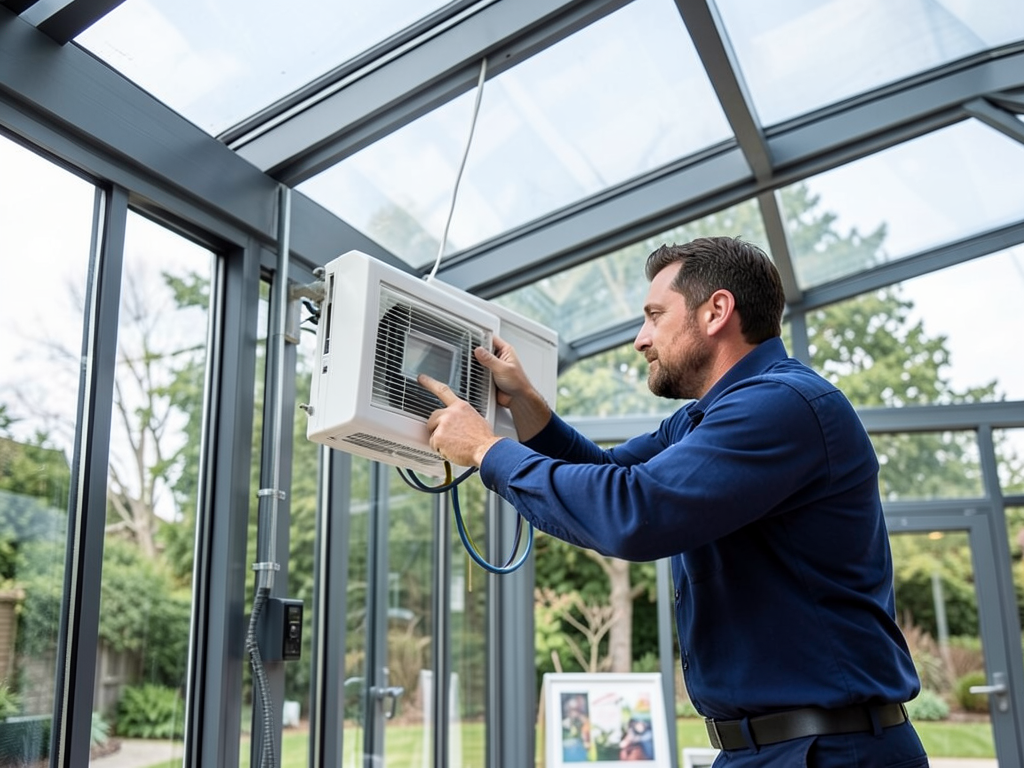
When it comes to cooling a sunroom in Kirkwood, ductless mini-split systems stand out as the most effective solution. These systems consist of an outdoor compressor unit connected to one or more indoor air handlers mounted on your sunroom walls or ceiling. Air Purification Systems.
The beauty of mini-splits lies in their zoning capability. Unlike central air that cools your entire house, a mini-split lets you cool only the sunroom when needed. This targeted approach saves energy and provides precise temperature control. Modern units offer SEER2 ratings up to 22, meaning they use significantly less electricity than older cooling methods. Energy Department Mini-Split Guide.
Installation is straightforward since mini-splits don’t require ductwork. A small refrigerant line runs through a three-inch hole in your exterior wall, connecting the indoor and outdoor units. This makes them perfect for Kirkwood’s older homes where adding ducts would be expensive or impossible. Top Rated AC Installation Companies Serving Ladue and Clayton.
Cost considerations vary, but expect to invest between $3,500 and $6,000 for a complete system including installation. The energy savings and comfort level typically justify the upfront cost within a few summers.
Extending Your Existing HVAC System: When It Works and When It Doesn’t
Some homeowners consider extending their current ductwork into the sunroom. While this might seem like the most straightforward approach, it often creates more problems than it solves.
The main issue is capacity. Your existing air conditioner was sized for your home’s original square footage. Adding a sunroom increases the cooling load, and your current system might not have the capacity to handle it. This leads to poor cooling performance, higher energy bills, and potential system strain.
Additionally, ductwork in sunrooms faces unique challenges. The extreme temperature swings in glass rooms can cause condensation on ducts, leading to mold growth and reduced efficiency. Without proper insulation and vapor barriers, you’re fighting an uphill battle.. Read more about Why Your Berkeley Attic Insulation Is Making Your AC Work Twice as Hard.
If you’re determined to extend your ductwork, a professional Manual J load calculation is essential. This calculation determines the exact cooling capacity needed for your sunroom based on its size, orientation, glass type, and local climate factors. Without this analysis, you’re guessing and likely to be disappointed. The Best Local Furnace Replacement Options for Kirkwood Families.
Alternative Cooling Options: PTAC Units and Window Air Conditioners
For budget-conscious homeowners, packaged terminal air conditioners (PTAC) or window units offer lower-cost alternatives. PTAC units, commonly found in hotels, mount through the wall and provide both heating and cooling. Window air conditioners are the most affordable option but come with significant drawbacks. Commercial Heating Services.
Window units struggle with the high solar heat gain in sunrooms. They work by removing heat from inside air and expelling it outside, but when sunlight is constantly heating the glass walls, these units run continuously without ever catching up. This leads to high electricity bills and shortened equipment life.
Aesthetic concerns also matter. Window units block your view and create an eyesore, while PTAC units require a large wall sleeve and protrude into your living space. Both options also tend to be noisier than mini-splits, disrupting the peaceful atmosphere you want in a sunroom.
If you choose this route, select units with at least 10,000 BTUs for a typical 200-square-foot sunroom. However, be prepared for higher operating costs and potentially inadequate cooling during the hottest St. Louis afternoons.
Passive Cooling Strategies to Supplement Your System
Even with mechanical cooling, passive strategies can significantly improve your sunroom comfort and reduce energy costs. These approaches work by blocking or reflecting heat before it enters your space.
Heat-control window films are among the most effective passive solutions. These films can block up to 80% of solar heat while still allowing natural light to pass through. They’re particularly valuable in Kirkwood where afternoon sun can make glass rooms unbearable. Professional installation costs around $5-8 per square foot of glass. Why Professional Air Duct Cleaning is Essential for Wildwood Homes.
Thermal blinds and cellular shades add another layer of insulation. When closed during the hottest parts of the day, they can reduce heat gain by 40-60%. Look for products with reflective backing and tight-fitting edges for maximum effectiveness.
Ceiling fans improve comfort by creating air movement that makes you feel cooler through evaporative cooling. In summer, set fans to rotate counterclockwise to push air downward. This allows you to set your thermostat 4-5 degrees higher while maintaining the same comfort level.
Consider planting deciduous trees on the south and west sides of your sunroom. In summer, the leaves block direct sunlight, while in winter the bare branches allow warming rays to enter. This natural approach takes time to develop but provides excellent long-term benefits.
Understanding St. Louis Humidity: The Hidden Comfort Killer
Kirkwood’s summer humidity is often more uncomfortable than the heat itself. When relative humidity exceeds 60%, your body can’t cool itself effectively through perspiration, making even moderate temperatures feel oppressive.
Many cooling systems focus solely on temperature, ignoring humidity levels. This is a critical mistake in St. Louis where high humidity can make a 75-degree room feel like 85 degrees. Your cooling solution must address both temperature and moisture removal.
Mini-split systems excel at dehumidification, removing 2-3 pints of moisture per hour while cooling. This dual action is why they’re superior to window units for St. Louis sunrooms. The dry air feels cooler at higher temperatures, allowing you to save energy while improving comfort.
For existing systems that struggle with humidity, consider adding a whole-house dehumidifier or using portable dehumidifiers in your sunroom. These units typically remove 30-70 pints of moisture daily and can make a dramatic difference in comfort levels.
Cost Comparison and Local Rebates
Understanding the true cost of sunroom cooling requires looking beyond initial installation prices. Operating costs over a typical St. Louis summer can exceed the equipment cost within 3-5 years.
Here’s how different options compare for a 200-square-foot sunroom:
| Cooling Method | Initial Cost | Annual Operating Cost | Expected Lifespan | Best For |
|---|---|---|---|---|
| Ductless Mini-Split | $3,500-6,000 | $150-250 | 15-20 years | Year-round comfort |
| Extended Ductwork | $2,000-4,000 | $200-350 | 10-15 years | Existing system capacity |
| PTAC Unit | $1,500-2,500 | $300-450 | 10-12 years | Budget installations |
| Window AC | $300-800 | $350-500 | 5-8 years | Temporary use |
Local utility rebates can significantly reduce your costs. Ameren Missouri offers rebates up to $500 for high-efficiency cooling equipment, while Spire Energy provides incentives for heat pump installations. These programs change annually, so check current offerings before making your decision. Ameren Missouri 2026 Energy Rebates.
Energy Star certified equipment qualifies for additional rebates and typically uses 15-20% less electricity than standard models. Over a 15-year lifespan, this efficiency difference can save you $2,000-3,000 in electricity costs.
Making the Right Choice for Your Kirkwood Sunroom
The best cooling solution depends on your specific situation, budget, and how you use your sunroom. Consider these factors when making your decision:
- How many months per year will you use the space?
- Do you need heating capability for spring and fall use?
- What’s your budget for both installation and operating costs?
- How important is quiet operation and aesthetics?
- Do you have existing HVAC capacity to extend?
For most Kirkwood homeowners, ductless mini-splits provide the best balance of comfort, efficiency, and long-term value. They handle our humid climate effectively, offer precise temperature control, and don’t require major home modifications.
Window film and thermal treatments are excellent supplements regardless of your primary cooling method. They reduce the load on your cooling system and can extend the life of your equipment.
Remember that proper sizing is crucial. An undersized unit will run constantly and never achieve comfortable temperatures, while an oversized unit will short-cycle, leading to poor humidity control and higher energy bills. Always insist on a professional load calculation before purchasing any cooling equipment.
Ready to transform your sunroom from a summer sauna into a comfortable retreat? Call (314) 417-7771 today to schedule your free consultation. Our St. Louis HVAC experts will evaluate your space and recommend the perfect cooling solution for your Kirkwood home.
Frequently Asked Questions
What size cooling unit do I need for my sunroom?
The cooling capacity needed depends on your sunroom’s size, glass area, and sun exposure. A professional Manual J calculation provides the most accurate sizing, but most 200-square-foot sunrooms require 9,000-12,000 BTUs. South-facing rooms with large glass areas may need up to 18,000 BTUs.
Can I use my existing central air to cool my sunroom?
Extending your ductwork might work if your current system has excess capacity, but most don’t. Adding a sunroom increases your home’s cooling load, and your existing AC was sized for the original square footage. Without a professional load calculation, you risk poor performance and system strain.
How much does it cost to cool a sunroom in Kirkwood?
Operating costs vary by cooling method and usage. Mini-splits typically cost $150-250 per summer to operate, while window units can cost $350-500 due to lower efficiency. Passive strategies like window film can reduce these costs by 15-30%.
Do I need heating in my sunroom too?
If you want year-round use, heating is essential. Mini-split heat pumps provide both heating and cooling in one unit, making them ideal for sunrooms. They work efficiently down to about 20°F, which covers most Kirkwood spring and fall weather.
What about humidity control in my sunroom?
Humidity control is crucial in St. Louis. Look for cooling equipment with good dehumidification capabilities. Mini-splits remove 2-3 pints of moisture per hour while cooling. For existing systems, consider adding a dehumidifier or using portable units during peak humidity periods.
Are there any rebates available for sunroom cooling upgrades?
Yes, Ameren Missouri and Spire Energy offer rebates for high-efficiency cooling equipment. Ameren provides up to $500 for qualifying systems, while Spire offers incentives for heat pump installations. Check current programs before purchasing, as offerings change annually.
How long does sunroom cooling installation take?
Most mini-split installations take 1-2 days, including equipment mounting and refrigerant line installation. Window unit installation is typically same-day, while ductwork extensions can take 3-5 days depending on complexity. Professional installation ensures proper sizing and optimal performance.
Can I install cooling equipment myself to save money?
DIY installation is not recommended for most cooling systems. Mini-splits require refrigerant handling certification, proper load calculations, and precise installation for optimal performance. Improper installation can lead to poor cooling, high energy bills, and equipment failure. Professional installation also maintains warranty coverage.
What’s the difference between a three-season and four-season sunroom?
Three-season sunrooms lack insulation and dedicated HVAC, making them uncomfortable in extreme temperatures. Four-season sunrooms have proper insulation and climate control for year-round use. If you’re investing in cooling, you’re likely aiming for four-season functionality.
How do I maintain my sunroom cooling system?
Regular maintenance includes cleaning or replacing filters monthly during heavy use, keeping outdoor units clear of debris, and scheduling annual professional tune-ups. Mini-splits require less maintenance than window units but benefit from professional cleaning every 2-3 years to maintain efficiency.
Will cooling my sunroom increase my home’s value?
Yes, a properly cooled sunroom adds usable living space and can increase your home’s value by $15,000-25,000. Buyers value year-round functionality, and energy-efficient cooling systems are particularly attractive in today’s market.
What about noise levels from cooling equipment?
Noise varies significantly by equipment type. Mini-splits operate at 25-40 decibels, about as loud as a whisper. Window units typically produce 50-60 decibels, similar to normal conversation. Consider noise levels if you plan to use your sunroom for quiet activities like reading or sleeping.
Don’t let another summer pass with an uncomfortable sunroom. Call (314) 417-7771 now to schedule your free consultation. Our St. Louis HVAC experts understand Kirkwood’s unique climate challenges and will recommend the perfect cooling solution for your home. Stop sweating and start enjoying your sunroom today.
You may also find this helpful. Why Your Overland Windows Are Fogging Up Every Winter (And How to Stop It).
{
“@context”: “https://schema.org”,
“@type”: “BlogPosting”,
“headline”: “How to Keep Your Year Round Sunroom Comfortable in Kirkwood During the Summer”,
“description”: “Discover how to cool your Kirkwood sunroom this summer with expert HVAC solutions. Learn about ductless mini-splits, humidity control, and energy rebates from St. Louis pros.”,
“wordCount”: 2090,
“datePublished”: “2026-04-14T09:04:00.000Z”,
“dateModified”: “2026-04-14T09:04:00.000Z”,
“inLanguage”: “en-US”,
“mainEntityOfPage”: {
“@type”: “WebPage”,
“@id”: “https://keystonehvacstlouis.com”
},
“publisher”: {
“@type”: “LocalBusiness”,
“name”: “Keystone HVAC St. Louis”,
“url”: “https://keystonehvacstlouis.com”
},
“author”: {
“@type”: “Organization”,
“name”: “Keystone HVAC St. Louis”,
“url”: “https://keystonehvacstlouis.com”
},
“image”: {
“@type”: “ImageObject”,
“url”: “https://keystonehvacstlouis.com/wp-content/uploads/2026/03/how-to-keep-your-year-round-sunroom-comfortable-in-1.png”
}
}
{
“@context”: “https://schema.org”,
“@type”: “HVACBusiness”,
“name”: “Keystone HVAC St. Louis”,
“url”: “https://keystonehvacstlouis.com”,
“address”: {
“@type”: “PostalAddress”,
“addressLocality”: “St. Louis”
},
“areaServed”: {
“@type”: “City”,
“name”: “St. Louis”
}
}
{
“@context”: “https://schema.org”,
“@type”: “FAQPage”,
“mainEntity”: [
{
“@type”: “Question”,
“name”: “What size cooling unit do I need for my sunroom?”,
“acceptedAnswer”: {
“@type”: “Answer”,
“text”: “The cooling capacity needed depends on your sunroom’s size, glass area, and sun exposure. A professional Manual J calculation provides the most accurate sizing, but most 200-square-foot sunrooms require 9,000-12,000 BTUs. South-facing rooms with large glass areas may need up to 18,000 BTUs.”
}
},
{
“@type”: “Question”,
“name”: “Can I use my existing central air to cool my sunroom?”,
“acceptedAnswer”: {
“@type”: “Answer”,
“text”: “Extending your ductwork might work if your current system has excess capacity, but most don’t. Adding a sunroom increases your home’s cooling load, and your existing AC was sized for the original square footage. Without a professional load calculation, you risk poor performance and system strain.”
}
},
{
“@type”: “Question”,
“name”: “How much does it cost to cool a sunroom in Kirkwood?”,
“acceptedAnswer”: {
“@type”: “Answer”,
“text”: “Operating costs vary by cooling method and usage. Mini-splits typically cost $150-250 per summer to operate, while window units can cost $350-500 due to lower efficiency. Passive strategies like window film can reduce these costs by 15-30%.”
}
},
{
“@type”: “Question”,
“name”: “Do I need heating in my sunroom too?”,
“acceptedAnswer”: {
“@type”: “Answer”,
“text”: “If you want year-round use, heating is essential. Mini-split heat pumps provide both heating and cooling in one unit, making them ideal for sunrooms. They work efficiently down to about 20°F, which covers most Kirkwood spring and fall weather.”
}
},
{
“@type”: “Question”,
“name”: “What about humidity control in my sunroom?”,
“acceptedAnswer”: {
“@type”: “Answer”,
“text”: “Humidity control is crucial in St. Louis. Look for cooling equipment with good dehumidification capabilities. Mini-splits remove 2-3 pints of moisture per hour while cooling. For existing systems, consider adding a dehumidifier or using portable units during peak humidity periods.”
}
},
{
“@type”: “Question”,
“name”: “Are there any rebates available for sunroom cooling upgrades?”,
“acceptedAnswer”: {
“@type”: “Answer”,
“text”: “Yes, Ameren Missouri and Spire Energy offer rebates for high-efficiency cooling equipment. Ameren provides up to $500 for qualifying systems, while Spire offers incentives for heat pump installations. Check current programs before purchasing, as offerings change annually.”
}
},
{
“@type”: “Question”,
“name”: “How long does sunroom cooling installation take?”,
“acceptedAnswer”: {
“@type”: “Answer”,
“text”: “Most mini-split installations take 1-2 days, including equipment mounting and refrigerant line installation. Window unit installation is typically same-day, while ductwork extensions can take 3-5 days depending on complexity. Professional installation ensures proper sizing and optimal performance.”
}
},
{
“@type”: “Question”,
“name”: “Can I install cooling equipment myself to save money?”,
“acceptedAnswer”: {
“@type”: “Answer”,
“text”: “DIY installation is not recommended for most cooling systems. Mini-splits require refrigerant handling certification, proper load calculations, and precise installation for optimal performance. Improper installation can lead to poor cooling, high energy bills, and equipment failure. Professional installation also maintains warranty coverage.”
}
},
{
“@type”: “Question”,
“name”: “What’s the difference between a three-season and four-season sunroom?”,
“acceptedAnswer”: {
“@type”: “Answer”,
“text”: “Three-season sunrooms lack insulation and dedicated HVAC, making them uncomfortable in extreme temperatures. Four-season sunrooms have proper insulation and climate control for year-round use. If you’re investing in cooling, you’re likely aiming for four-season functionality.”
}
},
{
“@type”: “Question”,
“name”: “How do I maintain my sunroom cooling system?”,
“acceptedAnswer”: {
“@type”: “Answer”,
“text”: “Regular maintenance includes cleaning or replacing filters monthly during heavy use, keeping outdoor units clear of debris, and scheduling annual professional tune-ups. Mini-splits require less maintenance than window units but benefit from professional cleaning every 2-3 years to maintain efficiency.”
}
},
{
“@type”: “Question”,
“name”: “Will cooling my sunroom increase my home’s value?”,
“acceptedAnswer”: {
“@type”: “Answer”,
“text”: “Yes, a properly cooled sunroom adds usable living space and can increase your home’s value by $15,000-25,000. Buyers value year-round functionality, and energy-efficient cooling systems are particularly attractive in today’s market.”
}
},
{
“@type”: “Question”,
“name”: “What about noise levels from cooling equipment?”,
“acceptedAnswer”: {
“@type”: “Answer”,
“text”: “Noise varies significantly by equipment type. Mini-splits operate at 25-40 decibels, about as loud as a whisper. Window units typically produce 50-60 decibels, similar to normal conversation. Consider noise levels if you plan to use your sunroom for quiet activities like reading or sleeping.”
}
}
]
}
{
“@context”: “https://schema.org”,
“@type”: “BreadcrumbList”,
“itemListElement”: [
{
“@type”: “ListItem”,
“position”: 1,
“name”: “Home”,
“item”: “https://keystonehvacstlouis.com”
},
{
“@type”: “ListItem”,
“position”: 2,
“name”: “Blog”,
“item”: “https://keystonehvacstlouis.com/blog”
},
{
“@type”: “ListItem”,
“position”: 3,
“name”: “How to Keep Your Year Round Sunroom Comfortable in Kirkwood During the Summer”
}
]
}
{
“@context”: “https://schema.org”,
“@type”: “Service”,
“serviceType”: “HVAC”,
“provider”: {
“@type”: “LocalBusiness”,
“name”: “Keystone HVAC St. Louis”,
“url”: “https://keystonehvacstlouis.com”
},
“areaServed”: {
“@type”: “City”,
“name”: “St. Louis”
},
“description”: “Discover how to cool your Kirkwood sunroom this summer with expert HVAC solutions. Learn about ductless mini-splits, humidity control, and energy rebates from St. Louis pros.”
}