
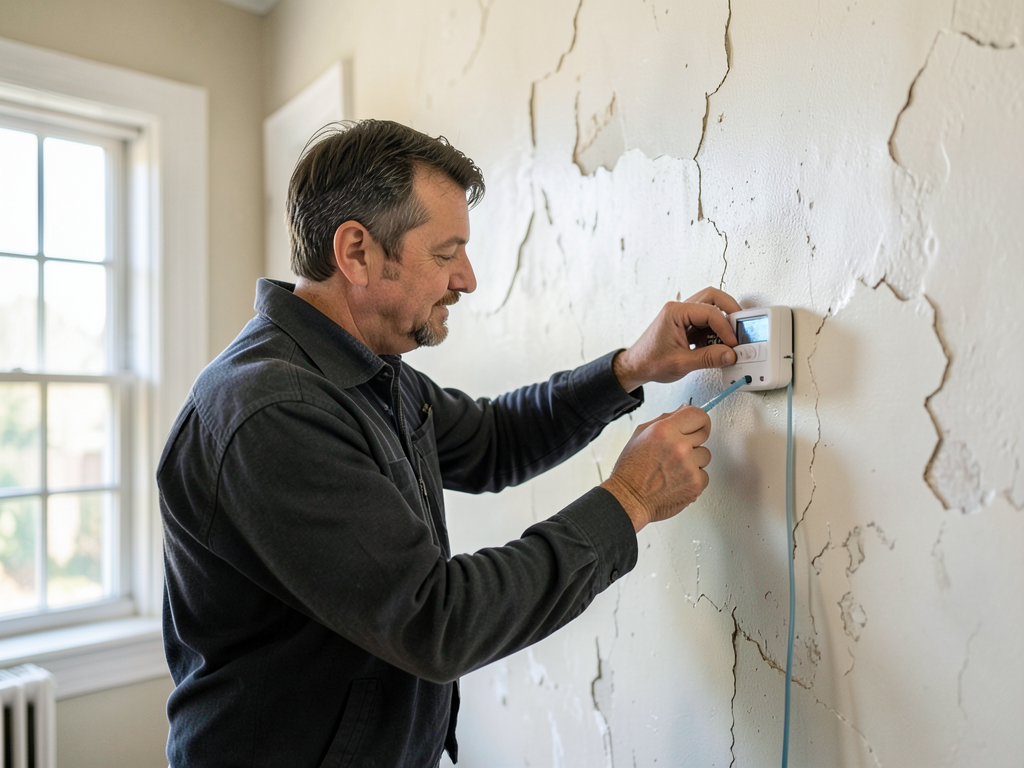
Balancing Indoor Humidity to Protect Original Plaster in Compton Heights Homes
Compton Heights’ historic homes face a unique battle against St. Louis humidity. Original plaster walls, lath construction, and red brick foundations require precise humidity control between 35-50% to prevent cracking, efflorescence, and structural damage. This guide covers St. Louis-specific solutions for preserving your historic home’s integrity. St. Louis Historic Preservation Tax Credits.
Why Compton Heights Plaster Demands Specialized Humidity Control
Compton Heights’ Victorian and Federal-style homes feature original lime plaster over wood lath—a breathable system that expands and contracts with moisture changes. St. Louis summers push humidity above 80%, causing plaster to absorb moisture and swell. Winter heating dries the air to 20-30% RH, making plaster contract and crack. Commercial Heating Services.
Red brick foundations in these homes act like sponges. During July and August, when dew points hover around 70°F, moisture migrates through brick walls. Without proper HVAC humidity control, you’ll see white efflorescence deposits—mineral salts pushed to the surface as water evaporates.
The solution isn’t just cooling. It’s managing moisture at the molecular level. St. Louis’ climate creates a 50-60% RH swing between seasons. Your HVAC system must maintain equilibrium to protect plaster, woodwork, and antiques.. Read more about Small Duct High Velocity Cooling for Historic Mansions in the West End.
The Science of Plaster Preservation: Psychrometrics in Action
Wood and plaster reach equilibrium moisture content (EMC) at specific humidity levels. At 35-50% RH, wood EMC stabilizes around 7-9%. Outside this range, dimensional changes occur.
During St. Louis’ July heat, a 90°F day at 85% RH contains 130 grains of moisture per pound of dry air. Your AC removes sensible heat but may not extract enough moisture if cycling too quickly. The result: cool, damp air that feels clammy and damages plaster.
Winter presents the opposite problem. A 20°F January day at 70% RH contains only 30 grains of moisture. Heating this air to 70°F drops RH to 15-20%, causing plaster to shrink and crack. Static electricity, nosebleeds, and wood splitting follow.
High-Velocity HVAC Systems: The Historic Home Solution
Traditional ductwork won’t fit Compton Heights’ 12-inch wall cavities. High-velocity systems use 2-inch flexible ducts that snake through existing walls without demolition. Unico and SpacePak systems deliver 2,000 CFM through small outlets, providing both cooling and dehumidification. Air Purification Systems.
These systems excel at moisture removal. A 3-ton high-velocity unit extracts 15-18 pints of water per hour—3-4 times more than standard AC. The key: longer run times at lower airflow create colder coil temperatures, wringing out humidity.
Installation requires careful planning. Outlets must be placed to avoid drafts on plaster walls. Return air pathways prevent pressure imbalances that could force moisture through brick. Professional sizing considers Compton Heights’ 8,000+ heating degree days and 3,500 cooling degree days. Why Professional Air Duct Cleaning is Essential for Wildwood Homes.
Whole-Home Dehumidification: Year-Round Protection
Standalone dehumidifiers can’t handle Compton Heights’ square footage. Aprilaire, Honeywell, and Ultra-Aire whole-home units integrate with your HVAC, removing 70-135 pints daily while maintaining temperature.. Read more about Maintaining Custom Wine Cellar Cooling Systems in St. Louis Hills.
Set points matter. For plaster preservation, target 45% RH in summer, 35% in winter. This prevents mold growth above 60% RH while avoiding the contraction cracks below 30%.
Energy recovery ventilators (ERVs) provide fresh air without humidity spikes. In Compton Heights’ tight historic homes, ERVs exchange 100-200 CFM with minimal energy loss, maintaining indoor air quality without compromising humidity control.
Winter Humidification: Preventing Seasonal Damage
Steam humidifiers outperform bypass units in historic homes. Aprilaire 800 and Honeywell HE360 produce 11-34 gallons daily, raising RH 15-25% in 2,500 square feet. Evaporative pads require frequent cleaning in St. Louis’ hard water—steam units avoid this maintenance.
Smart humidistats prevent over-humidification. Set outdoor sensors to reduce output below 20°F, preventing window condensation and moisture migration into walls. Some models integrate with thermostats, adjusting based on indoor/outdoor temperature differentials.
Proper humidification protects more than plaster. Original hardwood floors, pocket doors, and built-in cabinetry all benefit from stable moisture levels. Musical instruments, artwork, and antiques in Compton Heights homes require the same 35-50% RH range.
St. Louis Historic District Compliance
Compton Heights falls under St. Louis Cultural Resources Office (CRO) guidelines. Exterior HVAC equipment must meet visibility standards. High-velocity air handlers can install in basements or attics—compressors require screening or strategic placement.
The Landmarks Association of St. Louis provides pre-approval consultations. They’ll review your plans for compliance with the Secretary of the Interior’s Standards for Rehabilitation. Some modifications need 30-day review periods before installation. Top Rated AC Installation Companies Serving Ladue and Clayton.
Tax incentives exist. Missouri’s Historic Preservation Tax Credit offers 25% back on qualifying improvements, including HVAC upgrades that preserve historic fabric. Federal credits provide another 20% for income-producing properties.
Diagnostic Testing: The Screwdriver Test for Moisture
Before recommending solutions, technicians perform moisture mapping. Using pin-type meters, they test plaster at 1/4-inch intervals across walls. Readings above 16% MC indicate active moisture problems.
Infrared cameras reveal temperature differentials showing moisture pathways. Cold spots on exterior walls often indicate air leaks or missing insulation—both humidity culprits in historic homes.
Dew point calculators determine condensation risk. When surface temperature drops below dew point, moisture forms. This calculation guides insulation placement and vapor barrier decisions.
Cost-Benefit Analysis: Repair vs. Prevention
Plaster repair costs $20-40 per square foot in Compton Heights. A 12×15 foot room requires $3,600-7,200 to restore. High-velocity HVAC installation runs $12,000-18,000 but prevents repeated damage. Emergency AC Repair in Creve Coeur That Won’t Break the Bank.
Whole-home dehumidifiers cost $2,500-4,500 installed. Operating costs average $30-50 monthly during peak season. Compare this to $5,000-10,000 for mold remediation if humidity exceeds 60% RH.. Read more about Why Whole Home Dehumidifiers Beat Portable Units for Damp Basements in Northampton.
Energy savings offset some costs. High-velocity systems operate 30% more efficiently than window units. Proper humidity control allows higher thermostat settings in summer while maintaining comfort.
Maintenance Schedule for Optimal Performance
Seasonal maintenance prevents failures. Spring: clean coils, check refrigerant levels, calibrate humidistats. Summer: inspect condensate drains, verify dehumidification rates. Fall: test heating components, clean humidifiers. Winter: check freeze protection, verify humidity output.
Monthly tasks include replacing high-efficiency filters and cleaning intake grilles. Quarterly: inspect duct connections, verify system balance. Annual: professional tune-up, combustion analysis for gas equipment.
Compton Heights’ mature trees drop leaves into outdoor units. Quarterly debris removal prevents airflow restrictions. Foundation plantings should maintain 24-inch clearance from equipment.
Smart Home Integration for Historic Preservation
Wi-Fi thermostats monitor humidity trends. Ecobee and Nest models track 1% increments, alerting you to dangerous swings. Some integrate with weather services, anticipating humidity changes.
Remote sensors in problem areas provide early warnings. Place them in north-facing rooms where plaster cracks first. Data logging helps identify patterns—perhaps afternoon sun drives afternoon humidity spikes.
Voice control offers convenience without wall damage. Smart speakers control settings without installing additional switches or thermostats in plaster walls.
Common Mistakes to Avoid
Over-cooling creates condensation. Setting thermostats to 65°F on humid days causes supply vents to sweat, dripping water onto floors and furniture.
Undersized equipment short-cycles. A 2-ton unit in a 2,500 square foot home runs 10 minutes per hour, never removing sufficient moisture. Proper Manual J calculations prevent this error.
Ignoring ventilation causes indoor air quality issues. Tightening historic homes without ERVs traps pollutants and moisture. Balanced ventilation maintains healthy indoor environments.
Using portable units creates uneven conditions. Window ACs cool one room while others remain humid. Whole-home systems maintain consistent conditions throughout.
Case Study: Compton Heights Victorian Restoration
A 1904 Compton Heights home suffered recurring plaster damage. Previous owners installed multiple window units, creating temperature stratification and high humidity in un-conditioned spaces.
Solution: High-velocity system with dedicated dehumidification. Installation required fishing 2-inch ducts through existing wall cavities—no plaster demolition. Outdoor compressor mounted on rear addition, screened from street view per CRO guidelines.
Results: 18-month follow-up showed no new plaster cracks. Energy bills decreased 23% despite year-round operation. The homeowners reported improved comfort and preserved architectural integrity.
Frequently Asked Questions
What humidity level damages plaster?
Humidity below 30% causes shrinkage cracking. Above 60% promotes mold growth and efflorescence. The safe range for historic plaster is 35-50% RH.
How long do high-velocity systems last?
Air handlers last 15-20 years. Compressors typically need replacement at 12-15 years. Proper maintenance extends service life significantly.
Are whole-home dehumidifiers noisy?
Modern units operate at 50-60 dB—similar to a refrigerator. Proper location in basements or utility rooms minimizes perceived noise.
Can I install this myself?
High-velocity and whole-home systems require professional installation. Improper sizing, refrigerant handling, and electrical work create safety hazards and void warranties.
What about historic tax credits?
Missouri offers 25% tax credits for qualifying HVAC improvements in historic properties. Federal credits provide additional savings. Consult a preservation tax specialist.
Protecting Your Investment
Compton Heights’ historic homes represent significant investments. Original plaster, woodwork, and architectural details can’t be replaced. Proper humidity control preserves these features while providing modern comfort.
St. Louis’ climate creates year-round challenges. Summer humidity threatens plaster expansion and mold growth. Winter dryness causes contraction cracks. Only integrated systems address both extremes.
Professional assessment determines your specific needs. Factors include home size, existing conditions, occupancy patterns, and preservation requirements. One-size-fits-all solutions fail in historic homes.
Don’t wait for damage to appear. Preventive humidity control costs less than plaster repair and preserves your home’s historic character.
Call (314) 417-7771 today to schedule your Compton Heights humidity assessment. Our specialists understand the unique needs of historic St. Louis homes and can recommend solutions that protect your plaster while maintaining architectural integrity.
Pick up the phone and call (314) 417-7771 before the next humidity spike damages your plaster walls. Our 24/7 emergency service handles humidity-related plaster damage throughout St. Louis. For more information, visit National Park Service Preservation Brief 23.
{
“@context”: “https://schema.org”,
“@type”: “BlogPosting”,
“headline”: “Balancing Indoor Humidity to Protect Original Plaster in Compton Heights Homes”,
“description”: “Protect your Compton Heights historic home’s original plaster with expert HVAC humidity control. Learn St. Louis-specific solutions for maintaining 35-50% RH year-round.”,
“wordCount”: 1584,
“datePublished”: “2026-04-09T09:20:00.000Z”,
“dateModified”: “2026-04-09T09:20:00.000Z”,
“inLanguage”: “en-US”,
“mainEntityOfPage”: {
“@type”: “WebPage”,
“@id”: “https://keystonehvacstlouis.com”
},
“publisher”: {
“@type”: “LocalBusiness”,
“name”: “Keystone HVAC St. Louis”,
“url”: “https://keystonehvacstlouis.com”
},
“author”: {
“@type”: “Organization”,
“name”: “Keystone HVAC St. Louis”,
“url”: “https://keystonehvacstlouis.com”
},
“image”: {
“@type”: “ImageObject”,
“url”: “https://keystonehvacstlouis.com/wp-content/uploads/2026/03/balancing-indoor-humidity-to-protect-original-plas-1.png”
}
}
{
“@context”: “https://schema.org”,
“@type”: “HVACBusiness”,
“name”: “Keystone HVAC St. Louis”,
“url”: “https://keystonehvacstlouis.com”,
“address”: {
“@type”: “PostalAddress”,
“addressLocality”: “St. Louis”
},
“areaServed”: {
“@type”: “City”,
“name”: “St. Louis”
}
}
{
“@context”: “https://schema.org”,
“@type”: “FAQPage”,
“mainEntity”: [
{
“@type”: “Question”,
“name”: “What humidity level damages plaster?”,
“acceptedAnswer”: {
“@type”: “Answer”,
“text”: “Humidity below 30% causes shrinkage cracking. Above 60% promotes mold growth and efflorescence. The safe range for historic plaster is 35-50% RH.”
}
},
{
“@type”: “Question”,
“name”: “How long do high-velocity systems last?”,
“acceptedAnswer”: {
“@type”: “Answer”,
“text”: “Air handlers last 15-20 years. Compressors typically need replacement at 12-15 years. Proper maintenance extends service life significantly.”
}
},
{
“@type”: “Question”,
“name”: “Are whole-home dehumidifiers noisy?”,
“acceptedAnswer”: {
“@type”: “Answer”,
“text”: “Modern units operate at 50-60 dB—similar to a refrigerator. Proper location in basements or utility rooms minimizes perceived noise.”
}
},
{
“@type”: “Question”,
“name”: “Can I install this myself?”,
“acceptedAnswer”: {
“@type”: “Answer”,
“text”: “High-velocity and whole-home systems require professional installation. Improper sizing, refrigerant handling, and electrical work create safety hazards and void warranties.”
}
},
{
“@type”: “Question”,
“name”: “What about historic tax credits?”,
“acceptedAnswer”: {
“@type”: “Answer”,
“text”: “Missouri offers 25% tax credits for qualifying HVAC improvements in historic properties. Federal credits provide additional savings. Consult a preservation tax specialist.”
}
}
]
}
{
“@context”: “https://schema.org”,
“@type”: “BreadcrumbList”,
“itemListElement”: [
{
“@type”: “ListItem”,
“position”: 1,
“name”: “Home”,
“item”: “https://keystonehvacstlouis.com”
},
{
“@type”: “ListItem”,
“position”: 2,
“name”: “Blog”,
“item”: “https://keystonehvacstlouis.com/blog”
},
{
“@type”: “ListItem”,
“position”: 3,
“name”: “Balancing Indoor Humidity to Protect Original Plaster in Compton Heights Homes”
}
]
}
{
“@context”: “https://schema.org”,
“@type”: “Service”,
“serviceType”: “HVAC”,
“provider”: {
“@type”: “LocalBusiness”,
“name”: “Keystone HVAC St. Louis”,
“url”: “https://keystonehvacstlouis.com”
},
“areaServed”: {
“@type”: “City”,
“name”: “St. Louis”
},
“description”: “Protect your Compton Heights historic home’s original plaster with expert HVAC humidity control. Learn St. Louis-specific solutions for maintaining 35-50% RH year-round.”
}