
Maintaining Custom Wine Cellar Cooling Systems in St. Louis Hills
Your wine collection represents years of careful selection and significant financial investment. In St. Louis Hills, where historic brick homes often feature converted basement wine cellars, maintaining proper cooling systems is critical for protecting your bottles from temperature fluctuations and humidity swings that can ruin even the finest vintages. Air Purification Systems.
Wine cellar cooling systems differ fundamentally from standard air conditioning units. These specialized refrigeration systems maintain precise temperature ranges between 55-58°F and humidity levels of 60-70%, creating the ideal environment for wine aging. The challenge in St. Louis Hills becomes even more complex due to our region’s dramatic seasonal temperature swings and high summer humidity levels.
Most wine cellars in the area use either self-contained cooling units or split-system configurations. Self-contained units resemble oversized refrigerators mounted through cellar walls, while split systems separate the evaporator inside the cellar from the condenser unit outside, similar to central air conditioning but with specialized controls for wine storage conditions. EPA Section 608 Certification.
Common issues we encounter in St. Louis Hills wine cellars include refrigerant leaks that cause temperature instability, compressor failures during peak summer heat, and humidity control malfunctions that lead to mold growth or cork drying. The clay soil composition in this area can also cause foundation shifts that affect cellar wall integrity and vapor barrier effectiveness.
Regular maintenance prevents these problems and extends system life. A typical wine cellar cooling unit operates 8-12 hours daily, accumulating wear that standard HVAC systems might not experience. Without proper care, systems can fail during critical periods, potentially damaging thousands of dollars worth of wine.
Understanding Wine Cellar Cooling System Types
Self-contained cooling units represent the most common solution for St. Louis Hills wine cellars. These all-in-one systems mount through an exterior wall, with the evaporator inside the cellar and the condenser on the opposite side. They work well for cellars up to 500 cubic feet but struggle with larger spaces or cellars requiring precise temperature zoning.
Split-system wine cooling units separate the evaporator and condenser components, allowing greater flexibility in installation and typically providing better temperature stability. The condenser can be located up to 30 feet away, making these ideal for cellars where wall mounting isn’t practical or where noise reduction is important. Top Rated AC Installation Companies Serving Ladue and Clayton.
Ducted systems represent the premium option for larger cellars or those integrated into finished living spaces. These units connect to ductwork that distributes cooled air throughout the cellar, eliminating the need for visible equipment inside the storage area. They offer the most precise temperature control but require professional installation and regular duct cleaning. Why Professional Air Duct Cleaning is Essential for Wildwood Homes.
Through-the-wall units provide a budget-friendly option for smaller cellars but often lack the durability and temperature stability of more sophisticated systems. They work best in cellars under 200 cubic feet where absolute precision isn’t critical.
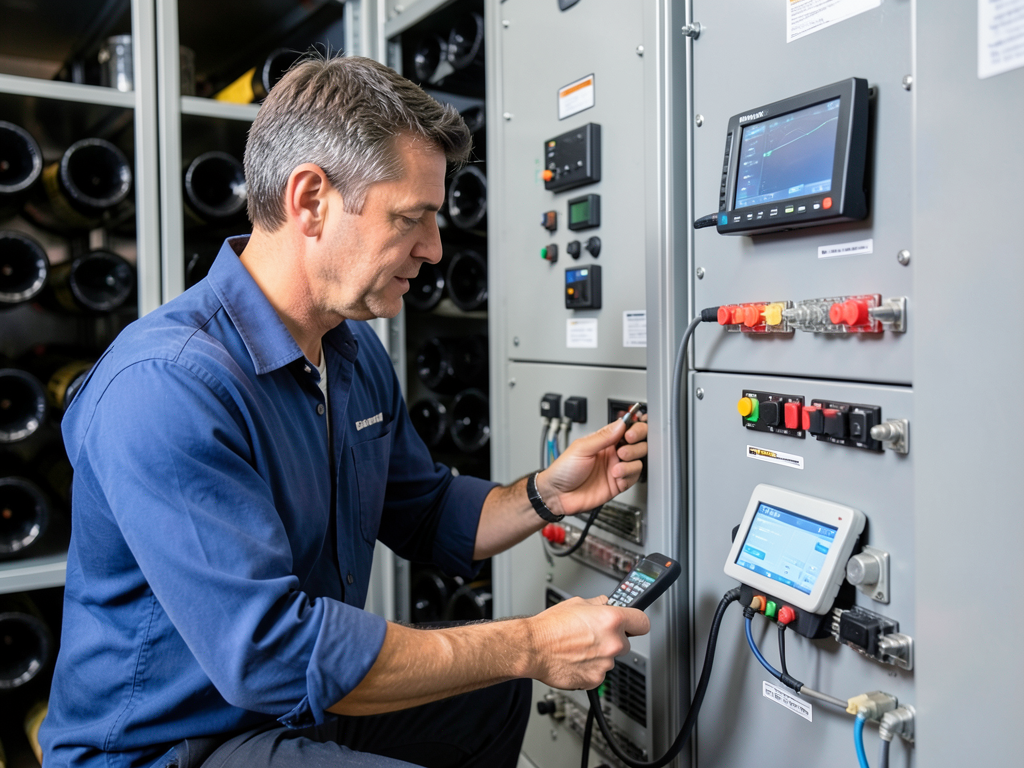
Diagram comparing wine cellar cooling system configurations: self-contained, split-system, ducted, and through-the-wall units with key components labeled.
Common Wine Cellar Cooling Problems in St. Louis Hills
Refrigerant leaks represent one of the most frequent issues we encounter. These systems use R-134a or R-404A refrigerants, and even small leaks can cause significant temperature fluctuations. You might notice your cellar running warmer than usual, the compressor cycling more frequently, or ice buildup on the evaporator coil.
Compressor failure often occurs during extreme heat waves when the system works hardest to maintain cool temperatures. The compressor contains the motor that circulates refrigerant through the system. When it fails, the entire cooling system stops working, potentially causing rapid temperature rises that can damage wine.
Humidity control problems manifest in two ways: excessive humidity causing mold growth and label damage, or insufficient humidity causing corks to dry out and allow oxygen intrusion. The ideal range of 60-70% relative humidity prevents both issues but requires precise control and regular calibration of humidistats.
Evaporator coil icing occurs when airflow becomes restricted or refrigerant levels drop too low. You might hear the fan running but feel no cool air coming from the unit. This condition can cause the system to shut down completely until the ice melts, leaving your wine vulnerable to temperature swings.
Electrical control failures can cause erratic behavior including random cycling, failure to start, or inability to maintain set temperatures. These issues often stem from power surges common during summer thunderstorms in the St. Louis area.
Maintenance Schedule for Optimal Performance
Monthly inspections should include checking temperature and humidity readings against your setpoints. Use a separate digital hygrometer to verify your system’s accuracy. Even small calibration errors can compound over time, leading to conditions that damage wine.
Quarterly maintenance involves cleaning the evaporator and condenser coils. Dust and debris accumulation reduces efficiency by up to 30%, forcing the system to work harder and potentially shortening its lifespan. Use a soft brush and vacuum to remove buildup, being careful not to bend the delicate fins.
Semi-annual service should include checking refrigerant levels, testing electrical components, and inspecting the condensate drain line. In St. Louis Hills, where summer humidity is high, condensate lines can become clogged with algae growth, causing water damage to your cellar floor or walls.
Annual professional maintenance includes deep cleaning, refrigerant pressure testing, electrical safety checks, and calibration of all controls. This service typically takes 2-3 hours and can identify potential problems before they cause system failure.
Filter replacement depends on your specific system but generally occurs every 3-6 months. Some through-the-wall units use washable filters that require cleaning rather than replacement.
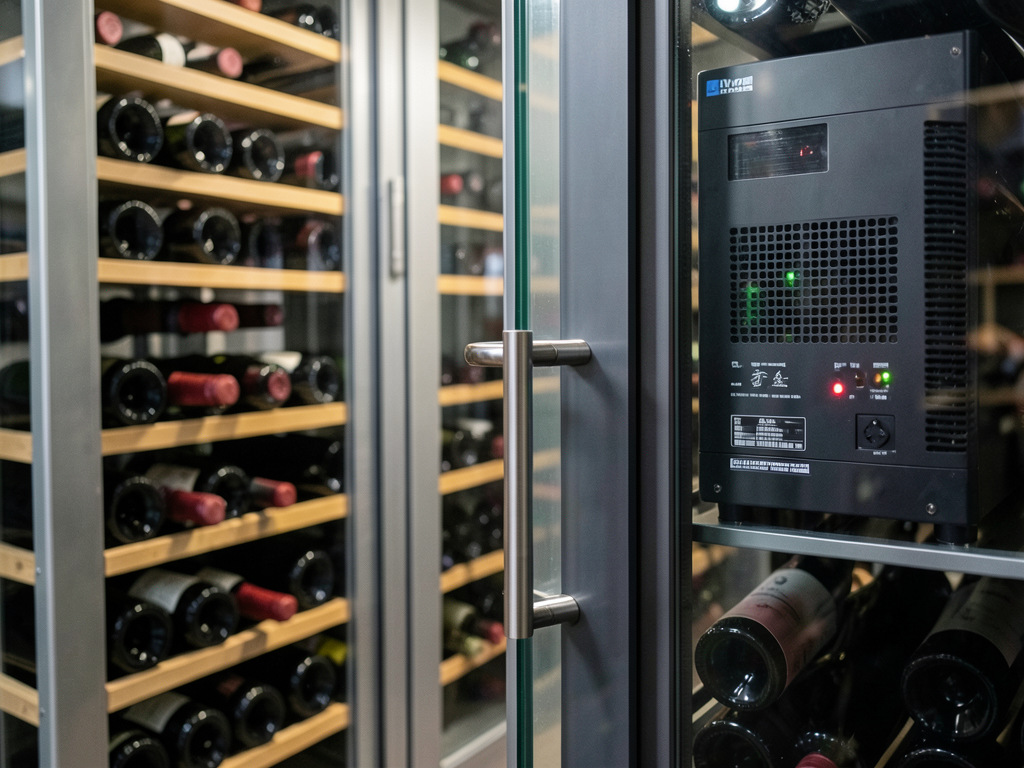
Photo showing technician cleaning wine cellar cooling unit evaporator coils with specialized brushes and vacuum equipment.
Climate Considerations for St. Louis Hills Wine Cellars
St. Louis Hills experiences significant temperature variations throughout the year, with summer highs often exceeding 95°F and winter lows occasionally dropping below 0°F. These extremes stress cooling systems that must maintain constant internal temperatures regardless of outdoor conditions.
Humidity levels in the area typically range from 45% in winter to over 75% in summer. This variation affects both wine storage conditions and cooling system performance. High summer humidity increases the cooling load as the system must remove both heat and moisture from the air.
The clay soil prevalent in St. Louis Hills can cause foundation movement that affects cellar wall integrity and vapor barrier effectiveness. Even small shifts can create gaps that allow temperature exchange with surrounding soil, forcing cooling systems to work harder.
Power reliability in the area, while generally good, can experience brief outages during summer storms. These interruptions can cause temperature spikes that, if prolonged, may affect wine quality. Consider battery backup systems for critical cooling components.
Ventilation requirements for wine cellars differ from standard rooms due to the need to prevent mold growth while maintaining proper humidity. Passive ventilation through foundation walls often proves insufficient, requiring mechanical ventilation integrated with the cooling system.
Professional vs. DIY Maintenance Considerations
Basic maintenance tasks like cleaning coils and replacing filters fall within most homeowners’ capabilities. However, refrigerant handling requires EPA Section 608 certification, making it illegal for unlicensed individuals to purchase or handle refrigerants. This restriction exists because refrigerants can damage the ozone layer and contribute to global warming.
Electrical troubleshooting presents safety risks beyond simple maintenance. Wine cellar cooling units operate on 120V or 240V circuits, and improper handling can cause serious injury or fire hazards. Professional technicians use specialized test equipment to diagnose electrical issues safely.
System diagnostics often require experience to interpret correctly. Symptoms like unusual noises or temperature fluctuations can have multiple causes, and incorrect assumptions lead to wasted time and money. Professional technicians use systematic diagnostic procedures to identify root causes efficiently.
Warranty considerations may require professional service to remain valid. Many manufacturers require annual professional maintenance to honor warranty claims, and DIY repairs can void coverage even for minor issues. Emergency AC Repair in Creve Coeur That Won’t Break the Bank.
Time investment for proper maintenance often exceeds DIY expectations. What seems like a simple task can expand into hours of work when problems arise, making professional service cost-effective for busy homeowners.
Cost Factors for Wine Cellar Cooling Service
Service call fees typically range from $75-150, depending on your location within St. Louis Hills and the time of service request. Emergency calls during evenings or weekends often incur additional charges of 25-50%.
Repair costs vary significantly based on the problem. Simple fixes like replacing a capacitor might cost $150-250, while compressor replacement can exceed $1,000 including parts and labor. Refrigerant recharging typically costs $100-300 depending on the amount needed.
Preventive maintenance contracts offer cost savings for regular service. Annual contracts typically cost $200-400 and include 2-4 service visits, priority scheduling, and discounts on repairs. These contracts often pay for themselves through improved efficiency and prevented failures.
System replacement costs depend on the type and size of unit needed. Self-contained units for small cellars start around $1,500 installed, while premium ducted systems for large cellars can exceed $10,000. Energy efficiency ratings affect both upfront costs and long-term operating expenses.
Energy consumption varies by system type and local utility rates. A typical wine cellar cooling unit might use 500-1,500 kWh annually, costing $60-180 per year at current St. Louis electricity rates. The Best Local Furnace Replacement Options for Kirkwood Families.
Before and after photo showing the difference between a dirty and cleaned wine cellar cooling unit condenser coil, highlighting efficiency improvements.
Emergency Response for Wine Cellar Cooling Failures
Temperature monitoring systems provide early warning of cooling failures. Install a separate thermometer with alarm capabilities that alerts you when temperatures exceed safe ranges. Many modern systems connect to smartphone apps for remote monitoring.
Backup cooling options become critical during system failures. Portable air conditioners can provide temporary cooling but lack the precise temperature and humidity control of dedicated wine cellar units. Battery-powered fans can help circulate air and slow temperature rises.
Insulation quality affects how quickly temperatures change during failures. Well-insulated cellars might maintain safe temperatures for 24-48 hours without active cooling, while poorly insulated spaces can reach dangerous levels within hours.
Emergency service availability varies by provider. Some companies offer 24/7 emergency response for wine cellar systems, while others might not service these specialized units at all. Verify emergency service capabilities before problems occur.
Insurance coverage for wine collections often requires specific riders that cover temperature-related damage. Review your policy to understand coverage limits and requirements for maintaining proper storage conditions.
Frequently Asked Questions
How often should I have my wine cellar cooling system serviced?
Professional service should occur annually, with basic maintenance tasks performed monthly. Systems in St. Louis Hills may require more frequent service due to high humidity and temperature extremes that stress cooling equipment.
What temperature range is ideal for wine storage?
The optimal range is 55-58°F with 60-70% relative humidity. This range allows proper aging while preventing cork drying or mold growth. Some wine types have specific requirements within this range.
How long can wine safely remain at room temperature if the cooling system fails?
Wine can typically withstand 72-75°F for 24-48 hours without permanent damage, though this varies by wine type and bottle age. Higher temperatures or longer exposure times increase the risk of heat damage.
Can I use a regular air conditioner for my wine cellar?
Standard air conditioners lack the precise temperature and humidity control needed for wine storage. They also remove too much moisture from the air, potentially drying out corks and affecting wine quality.
What are signs that my wine cellar cooling system needs repair?
Warning signs include temperature fluctuations beyond ±2°F, unusual noises from the unit, ice buildup on coils, water leaks, or the system running constantly without reaching setpoints.
Protecting Your Investment
Your wine collection represents both financial and emotional investment. Proper cooling system maintenance protects this investment by maintaining the conditions necessary for wine to age properly and retain its value.
Documentation of maintenance and temperature records can prove valuable for insurance purposes and when selling wine. Keep logs of service dates, temperature readings, and any repairs performed.
System upgrades might become necessary as your collection grows or as technology improves. Modern cooling units offer better efficiency, quieter operation, and more precise controls than older models.
Integration with smart home systems allows remote monitoring and control of your wine cellar environment. These systems can send alerts to your phone when conditions deviate from optimal ranges.
Professional consultation helps ensure your cooling system matches your collection size and storage goals. An undersized system struggles to maintain proper conditions, while an oversized unit cycles too frequently, reducing efficiency and lifespan.
Call (314) 417-7771 today to schedule your wine cellar cooling system inspection. Our experienced technicians understand the unique challenges of maintaining wine storage environments in St. Louis Hills and can help protect your valuable collection.
Don’t wait for a system failure to discover problems with your wine cellar cooling. Regular maintenance prevents costly repairs and protects your wine investment. Contact us now to ensure your collection remains properly stored year-round. For more information, visit NATE Certification.
{
“@context”: “https://schema.org”,
“@type”: “BlogPosting”,
“headline”: “Maintaining Custom Wine Cellar Cooling Systems in St. Louis Hills”,
“description”: “Expert St. Louis Hills wine cellar cooling maintenance. Protect your collection with specialized HVAC care for local climate conditions. Call (314) 417-7771.”,
“wordCount”: 2180,
“datePublished”: “2026-03-13T07:32:00.000Z”,
“dateModified”: “2026-03-13T07:32:00.000Z”,
“inLanguage”: “en-US”,
“mainEntityOfPage”: {
“@type”: “WebPage”,
“@id”: “https://keystonehvacstlouis.com”
},
“publisher”: {
“@type”: “LocalBusiness”,
“name”: “Keystone HVAC St. Louis”,
“url”: “https://keystonehvacstlouis.com”
},
“author”: {
“@type”: “Organization”,
“name”: “Keystone HVAC St. Louis”,
“url”: “https://keystonehvacstlouis.com”
},
“image”: {
“@type”: “ImageObject”,
“url”: “https://keystonehvacstlouis.com/wp-content/uploads/2026/03/maintaining-custom-wine-cellar-cooling-systems-in-1.png”
}
}
{
“@context”: “https://schema.org”,
“@type”: “HVACBusiness”,
“name”: “Keystone HVAC St. Louis”,
“url”: “https://keystonehvacstlouis.com”,
“address”: {
“@type”: “PostalAddress”,
“addressLocality”: “St. Louis”
},
“areaServed”: {
“@type”: “City”,
“name”: “St. Louis”
}
}
{
“@context”: “https://schema.org”,
“@type”: “FAQPage”,
“mainEntity”: [
{
“@type”: “Question”,
“name”: “How often should I have my wine cellar cooling system serviced?”,
“acceptedAnswer”: {
“@type”: “Answer”,
“text”: “Professional service should occur annually, with basic maintenance tasks performed monthly. Systems in St. Louis Hills may require more frequent service due to high humidity and temperature extremes that stress cooling equipment.”
}
},
{
“@type”: “Question”,
“name”: “What temperature range is ideal for wine storage?”,
“acceptedAnswer”: {
“@type”: “Answer”,
“text”: “The optimal range is 55-58°F with 60-70% relative humidity. This range allows proper aging while preventing cork drying or mold growth. Some wine types have specific requirements within this range.”
}
},
{
“@type”: “Question”,
“name”: “How long can wine safely remain at room temperature if the cooling system fails?”,
“acceptedAnswer”: {
“@type”: “Answer”,
“text”: “Wine can typically withstand 72-75°F for 24-48 hours without permanent damage, though this varies by wine type and bottle age. Higher temperatures or longer exposure times increase the risk of heat damage.”
}
},
{
“@type”: “Question”,
“name”: “Can I use a regular air conditioner for my wine cellar?”,
“acceptedAnswer”: {
“@type”: “Answer”,
“text”: “Standard air conditioners lack the precise temperature and humidity control needed for wine storage. They also remove too much moisture from the air, potentially drying out corks and affecting wine quality.”
}
},
{
“@type”: “Question”,
“name”: “What are signs that my wine cellar cooling system needs repair?”,
“acceptedAnswer”: {
“@type”: “Answer”,
“text”: “Warning signs include temperature fluctuations beyond ±2°F, unusual noises from the unit, ice buildup on coils, water leaks, or the system running constantly without reaching setpoints.”
}
}
]
}
{
“@context”: “https://schema.org”,
“@type”: “BreadcrumbList”,
“itemListElement”: [
{
“@type”: “ListItem”,
“position”: 1,
“name”: “Home”,
“item”: “https://keystonehvacstlouis.com”
},
{
“@type”: “ListItem”,
“position”: 2,
“name”: “Blog”,
“item”: “https://keystonehvacstlouis.com/blog”
},
{
“@type”: “ListItem”,
“position”: 3,
“name”: “Maintaining Custom Wine Cellar Cooling Systems in St. Louis Hills”
}
]
}
{
“@context”: “https://schema.org”,
“@type”: “Service”,
“serviceType”: “HVAC”,
“provider”: {
“@type”: “LocalBusiness”,
“name”: “Keystone HVAC St. Louis”,
“url”: “https://keystonehvacstlouis.com”
},
“areaServed”: {
“@type”: “City”,
“name”: “St. Louis”
},
“description”: “Expert St. Louis Hills wine cellar cooling maintenance. Protect your collection with specialized HVAC care for local climate conditions. Call (314) 417-7771.”
}