
What to Do If You Smell Gas Near Your Furnace in Bellefontaine Neighbors
If you smell gas near your furnace in Bellefontaine Neighbors you face a dangerous situation that requires immediate action. Evacuate everyone from your home including pets. Do not flip light switches use your phone or try to find the leak source. Once outside call Spire Energy at 800-887-4173 or 911 if you suspect immediate danger. Your safety matters most until professionals confirm the area is safe. Spire Energy Gas Safety Information.
Bellefontaine Neighbors sits in North County where many homes built in the 1960s and 1970s still use original gas furnaces. These aging systems can develop heat exchanger cracks allow gas to escape or suffer from corroded gas valves. The older your equipment the higher your risk of a dangerous leak. That rotten egg smell warns you to get out and call for help immediately. The Best Local Furnace Replacement Options for Kirkwood Families.
Immediate Safety Steps for a Gas Leak in Bellefontaine Neighbors
When you smell gas near your furnace every second counts. Follow these steps without delay.
- Get Out Immediately
Leave the house right away. Do not waste time gathering belongings.
- Avoid Sparks
Do not use light switches phones or anything that could create a spark.
- Shut Off Gas If Safe
If you know where the main gas shutoff valve is and can reach it safely turn it off.
- Call for Help
Once outside call Spire Energy at 800-887-4173 or 911.
- Wait for Clearance
Do not reenter the home until emergency responders or a licensed HVAC technician gives the all clear. Emergency AC Repair in Creve Coeur That Won’t Break the Bank.
How to Identify a Furnace Gas Leak in Your Bellefontaine Neighbors Home
Beyond the rotten egg smell several warning signs can indicate a gas leak near your furnace. Recognizing these symptoms early can prevent a dangerous situation from escalating.
Physical Signs
- Hissing or whistling sounds near the furnace or gas line
- Dying houseplants near the furnace area
- White cloud or dust cloud near a gas line
- Bubbles in standing water near gas lines
Health Symptoms
- Dizziness or lightheadedness
- Nausea or vomiting
- Headaches that clear up when you leave the house
- Difficulty breathing or chest pain
Equipment Indicators
- Yellow or flickering pilot light instead of blue
- Unusual soot or scorch marks around the furnace
- Condensation on windows near the furnace
If you notice any of these signs evacuate immediately and call for professional help. Gas leaks do not fix themselves and can lead to fires explosions or carbon monoxide poisoning. Why Professional Air Duct Cleaning is Essential for Wildwood Homes.
Common Causes of Gas Leaks in Bellefontaine Neighbors Furnaces
Understanding what causes gas leaks can help you prevent them. Here are the most frequent culprits in older North County homes.
Cracked Heat Exchanger
Heat exchangers in gas furnaces separate the combustion process from the air you breathe. Over time metal fatigue corrosion or thermal stress creates cracks. A cracked heat exchanger allows carbon monoxide and unburned gas to escape into your home. This happens often in furnaces over 15 years old.
Failed Gas Valve
The gas valve controls the flow of natural gas to your furnace. Corrosion debris or manufacturing defects can cause it to stick open or leak. A faulty valve requires immediate replacement by a licensed technician.
Corroded Gas Lines
Older homes in Bellefontaine Neighbors often have black iron gas pipes that corrode over decades. Moisture soil conditions and age weaken the metal leading to pinhole leaks. Modern corrugated stainless steel tubing CSST resists corrosion better but still requires proper bonding and grounding per National Fuel Gas Code. National Fuel Gas Code NFPA 54.
Pilot Light Problems
A malfunctioning pilot light can allow gas to accumulate if it goes out and the safety thermocouple fails. While modern furnaces use electronic ignition this remains a risk in older units.
Our St. Louis Gas Leak Detection and Repair Process
When you call Keystone HVAC for a gas leak we follow a proven process to find and fix the problem safely and efficiently.
Step 1: Safety Assessment
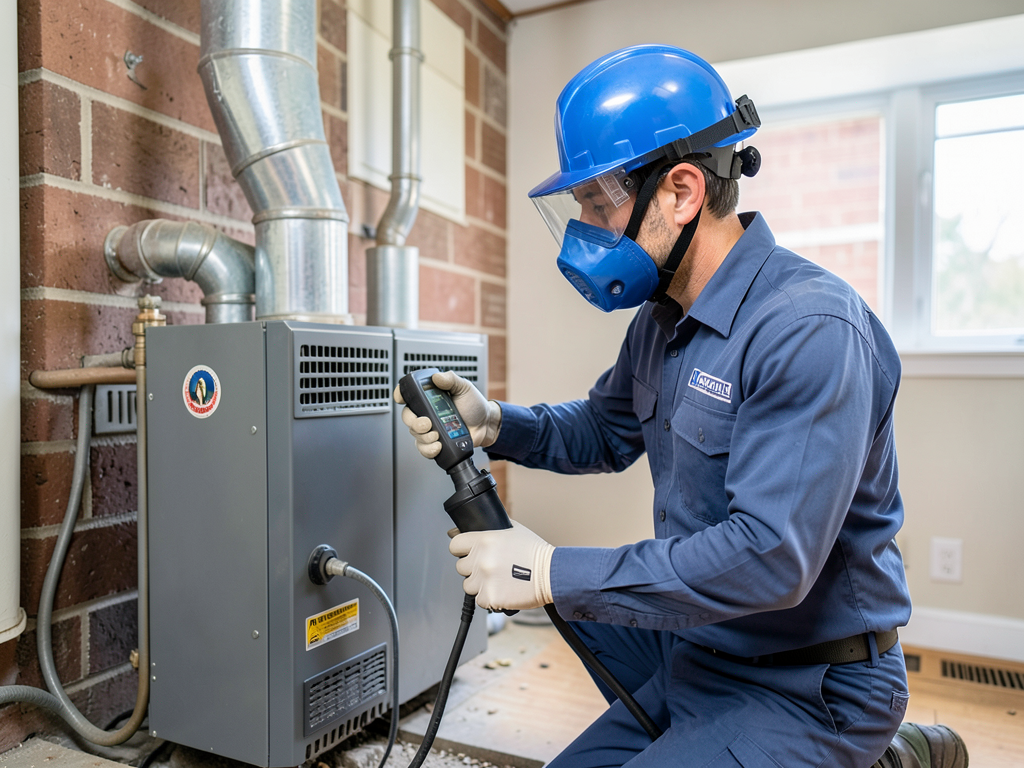
Our technicians arrive equipped with combustible gas detectors and personal protective equipment. We verify the area is safe before beginning any diagnostic work.
Step 2: Pressure Testing
We perform a gas pressure test to identify if the system holds pressure. A drop in pressure indicates a leak somewhere in the gas line or furnace.
Step 3: Electronic Leak Detection
Using specialized combustible gas detectors we scan all gas connections valves and the heat exchanger. These tools can pinpoint leaks as small as a few parts per million.
Step 4: Heat Exchanger Inspection
If the leak source is unclear we perform a visual inspection using mirrors and high-intensity lights. For hidden cracks we use combustion analysis to detect carbon monoxide levels that indicate a compromised heat exchanger.
Step 5: Repair or Replacement
Depending on the severity we either repair the specific component or recommend replacement. For cracked heat exchangers replacement is usually the safest and most cost-effective option.
Step 6: Code Compliance and Testing
All repairs meet St. Louis County mechanical code requirements. We perform a final pressure test and combustion analysis to verify the system operates safely.
Understanding Spire Energy Red Tags and Gas Shutoffs
When Spire Energy finds a gas leak they may red tag your furnace and shut off the gas supply. This protects you but leaves you without heat until a licensed contractor clears the issue.
Red Tag Process
- Spire technician identifies the hazard
- Red tag is placed on the equipment
- Gas supply is shut off at the meter
- Customer receives a notice explaining the hazard
Clearance Requirements
- Missouri licensed HVAC contractor must inspect and repair
- Repair must meet all mechanical codes
- Contractor submits clearance documentation to Spire
- Spire technician returns to restore gas service
The entire process typically takes 24 to 48 hours depending on contractor availability and the complexity of repairs. During winter this can leave your family without heat so we prioritize emergency red tag clearances.
Carbon Monoxide vs. Natural Gas: Understanding the Difference
Both carbon monoxide and natural gas can leak from your furnace but they pose different dangers.
| Characteristic | Natural Gas | Carbon Monoxide |
|---|---|---|
| Odor | Rotten egg smell | None |
| Visibility | Visible as a cloud | Colorless |
| Immediate Danger | Explosion risk | Asphyxiation risk |
| Detection | Smell mercaptan | CO detector required |
| Health Effects | Dizziness nausea | Headache confusion |
Natural gas requires the rotten egg smell to alert you. Carbon monoxide is silent and requires a working detector on every level of your home. Both demand immediate evacuation if suspected.
Preventing Gas Leaks in Your Bellefontaine Neighbors Home
Prevention is always better than emergency repair. Here are practical steps to reduce your risk.
Annual Furnace Maintenance
A professional tune up includes heat exchanger inspection gas pressure testing and safety control verification. This catches problems before they become emergencies.
Install Carbon Monoxide Detectors
Place detectors on every level near sleeping areas and within 15 feet of fuel burning appliances. Test batteries monthly and replace units every 5 to 7 years.
Know Your Gas Shutoff
Locate the main gas shutoff valve near your gas meter. Make sure all adults in the home know how to turn it off in an emergency.
Watch for Warning Signs
Yellow pilot light soot around the furnace or unusual odors warrant immediate professional inspection. Do not wait for a full emergency.
Replace Aging Equipment
Furnaces over 15 years old have higher failure rates. Modern high efficiency units include better safety controls and lower operating costs.
Why Bellefontaine Neighbors Homes Face Unique Gas Safety Challenges
Bellefontaine Neighbors developed rapidly in the post World War II era. Many homes built between 1960 and 1980 still have original HVAC equipment. These aging systems combined with the area’s clay soil which shifts foundations create perfect conditions for gas line stress and equipment failure.
The neighborhood’s proximity to the Missouri River means higher humidity levels which accelerate corrosion in metal gas components. Additionally many homes have finished basements where gas equipment sits in confined spaces increasing the risk of gas accumulation if a leak occurs.
St. Louis County mechanical code requires specific venting and combustion air provisions for gas equipment. Older installations may not meet current standards making professional inspection critical for safety. Top Rated AC Installation Companies Serving Ladue and Clayton.
Frequently Asked Questions
How much does it cost to repair a gas leak in a furnace?
Repair costs vary based on the source of the leak. Simple gas valve replacements might cost 300 to 500 while heat exchanger replacement can range from 1200 to 2500. Emergency service calls typically include a 75 to 125 trip charge plus repair costs.
Can I stay in my house if I smell gas but the odor is faint?
No. Any gas odor requires immediate evacuation. Gas can accumulate to explosive levels without obvious signs. Your safety is not worth the risk of waiting to see if the smell intensifies.
How long does it take to repair a gas leak?
Simple repairs like tightening a fitting can take under an hour. Complex issues like heat exchanger replacement may require several hours plus parts ordering time. Emergency services prioritize safety over speed but aim to restore heat within 24 hours when possible.
Will my insurance cover gas leak repairs?
Most homeowners insurance policies cover sudden and accidental damage but not normal wear and tear. Gas leaks from aging equipment typically fall under maintenance responsibility. Check your specific policy for coverage details.
What should I do if my carbon monoxide detector goes off?
Evacuate immediately call 911 and do not reenter until emergency responders clear the home. Carbon monoxide is odorless and can be fatal within minutes at high concentrations.
How can I tell if my furnace is safe after a gas leak repair?
A licensed technician should perform a combustion analysis verify proper venting and conduct a final gas leak check. Ask for documentation showing the system meets all safety standards before resuming normal operation.
Call Now for 24/7 Emergency Gas Leak Repair in Bellefontaine Neighbors
Gas leaks do not wait for business hours and neither do we. Keystone HVAC provides 24/7 emergency response throughout Bellefontaine Neighbors and all of St. Louis County. Our licensed technicians arrive with the tools and expertise to diagnose and repair gas leaks safely and efficiently.
Do not risk your family’s safety with DIY repairs or waiting until morning. Call (314) 417-7771 now for immediate emergency service. We will get your furnace operating safely and restore your peace of mind.
Pick up the phone and call (314) 417-7771 before the next storm hits.
Keystone HVAC serves Bellefontaine Neighbors with fast reliable emergency service. Our technicians understand the unique challenges of older North County homes and provide repairs that meet all St. Louis County mechanical codes. When you smell gas near your furnace trust the local experts who put your safety first. Finding a Reliable 24 Hour HVAC Technician in Chesterfield.
{
“@context”: “https://schema.org”,
“@type”: “BlogPosting”,
“headline”: “What to Do If You Smell Gas Near Your Furnace in Bellefontaine Neighbors”,
“description”: “If you smell gas near your furnace in Bellefontaine Neighbors evacuate immediately and call 911. Learn the safety steps warning signs and how to prevent dangerous leaks.”,
“wordCount”: 1829,
“datePublished”: “2026-03-29T14:11:00.000Z”,
“dateModified”: “2026-03-29T14:11:00.000Z”,
“inLanguage”: “en-US”,
“mainEntityOfPage”: {
“@type”: “WebPage”,
“@id”: “https://keystonehvacstlouis.com”
},
“publisher”: {
“@type”: “LocalBusiness”,
“name”: “Keystone HVAC St. Louis”,
“url”: “https://keystonehvacstlouis.com”
},
“author”: {
“@type”: “Organization”,
“name”: “Keystone HVAC St. Louis”,
“url”: “https://keystonehvacstlouis.com”
},
“image”: {
“@type”: “ImageObject”,
“url”: “https://keystonehvacstlouis.com/wp-content/uploads/2026/03/what-to-do-if-you-smell-gas-near-your-furnace-in-b-1.png”
}
}
{
“@context”: “https://schema.org”,
“@type”: “HVACBusiness”,
“name”: “Keystone HVAC St. Louis”,
“url”: “https://keystonehvacstlouis.com”,
“address”: {
“@type”: “PostalAddress”,
“addressLocality”: “St. Louis”
},
“areaServed”: {
“@type”: “City”,
“name”: “St. Louis”
}
}
{
“@context”: “https://schema.org”,
“@type”: “FAQPage”,
“mainEntity”: [
{
“@type”: “Question”,
“name”: “How much does it cost to repair a gas leak in a furnace?”,
“acceptedAnswer”: {
“@type”: “Answer”,
“text”: “Repair costs vary based on the source of the leak. Simple gas valve replacements might cost 300 to 500 while heat exchanger replacement can range from 1200 to 2500. Emergency service calls typically include a 75 to 125 trip charge plus repair costs.”
}
},
{
“@type”: “Question”,
“name”: “Can I stay in my house if I smell gas but the odor is faint?”,
“acceptedAnswer”: {
“@type”: “Answer”,
“text”: “No. Any gas odor requires immediate evacuation. Gas can accumulate to explosive levels without obvious signs. Your safety is not worth the risk of waiting to see if the smell intensifies.”
}
},
{
“@type”: “Question”,
“name”: “How long does it take to repair a gas leak?”,
“acceptedAnswer”: {
“@type”: “Answer”,
“text”: “Simple repairs like tightening a fitting can take under an hour. Complex issues like heat exchanger replacement may require several hours plus parts ordering time. Emergency services prioritize safety over speed but aim to restore heat within 24 hours when possible.”
}
},
{
“@type”: “Question”,
“name”: “Will my insurance cover gas leak repairs?”,
“acceptedAnswer”: {
“@type”: “Answer”,
“text”: “Most homeowners insurance policies cover sudden and accidental damage but not normal wear and tear. Gas leaks from aging equipment typically fall under maintenance responsibility. Check your specific policy for coverage details.”
}
},
{
“@type”: “Question”,
“name”: “What should I do if my carbon monoxide detector goes off?”,
“acceptedAnswer”: {
“@type”: “Answer”,
“text”: “Evacuate immediately call 911 and do not reenter until emergency responders clear the home. Carbon monoxide is odorless and can be fatal within minutes at high concentrations.”
}
},
{
“@type”: “Question”,
“name”: “How can I tell if my furnace is safe after a gas leak repair?”,
“acceptedAnswer”: {
“@type”: “Answer”,
“text”: “A licensed technician should perform a combustion analysis verify proper venting and conduct a final gas leak check. Ask for documentation showing the system meets all safety standards before resuming normal operation.”
}
}
]
}
{
“@context”: “https://schema.org”,
“@type”: “HowTo”,
“name”: “Gas Leak Emergency Steps”,
“step”: [
{
“@type”: “HowToStep”,
“position”: 1,
“name”: “Get Out Immediately”,
“text”: “Leave the house right away. Do not waste time gathering belongings.”
},
{
“@type”: “HowToStep”,
“position”: 2,
“name”: “Avoid Sparks”,
“text”: “Do not use light switches phones or anything that could create a spark.”
},
{
“@type”: “HowToStep”,
“position”: 3,
“name”: “Shut Off Gas If Safe”,
“text”: “If you know where the main gas shutoff valve is and can reach it safely turn it off.”
},
{
“@type”: “HowToStep”,
“position”: 4,
“name”: “Call for Help”,
“text”: “Once outside call Spire Energy at 800-887-4173 or 911.”
},
{
“@type”: “HowToStep”,
“position”: 5,
“name”: “Wait for Clearance”,
“text”: “Do not reenter the home until emergency responders or a licensed HVAC technician gives the all clear. Emergency AC Repair in Creve Coeur That Won’t Break the Bank.”
}
],
“image”: “https://keystonehvacstlouis.com/wp-content/uploads/2026/03/what-to-do-if-you-smell-gas-near-your-furnace-in-b-1.png”
}
{
“@context”: “https://schema.org”,
“@type”: “BreadcrumbList”,
“itemListElement”: [
{
“@type”: “ListItem”,
“position”: 1,
“name”: “Home”,
“item”: “https://keystonehvacstlouis.com”
},
{
“@type”: “ListItem”,
“position”: 2,
“name”: “Blog”,
“item”: “https://keystonehvacstlouis.com/blog”
},
{
“@type”: “ListItem”,
“position”: 3,
“name”: “What to Do If You Smell Gas Near Your Furnace in Bellefontaine Neighbors”
}
]
}
{
“@context”: “https://schema.org”,
“@type”: “Service”,
“serviceType”: “HVAC”,
“provider”: {
“@type”: “LocalBusiness”,
“name”: “Keystone HVAC St. Louis”,
“url”: “https://keystonehvacstlouis.com”
},
“areaServed”: {
“@type”: “City”,
“name”: “St. Louis”
},
“description”: “If you smell gas near your furnace in Bellefontaine Neighbors evacuate immediately and call 911. Learn the safety steps warning signs and how to prevent dangerous leaks.”
}