
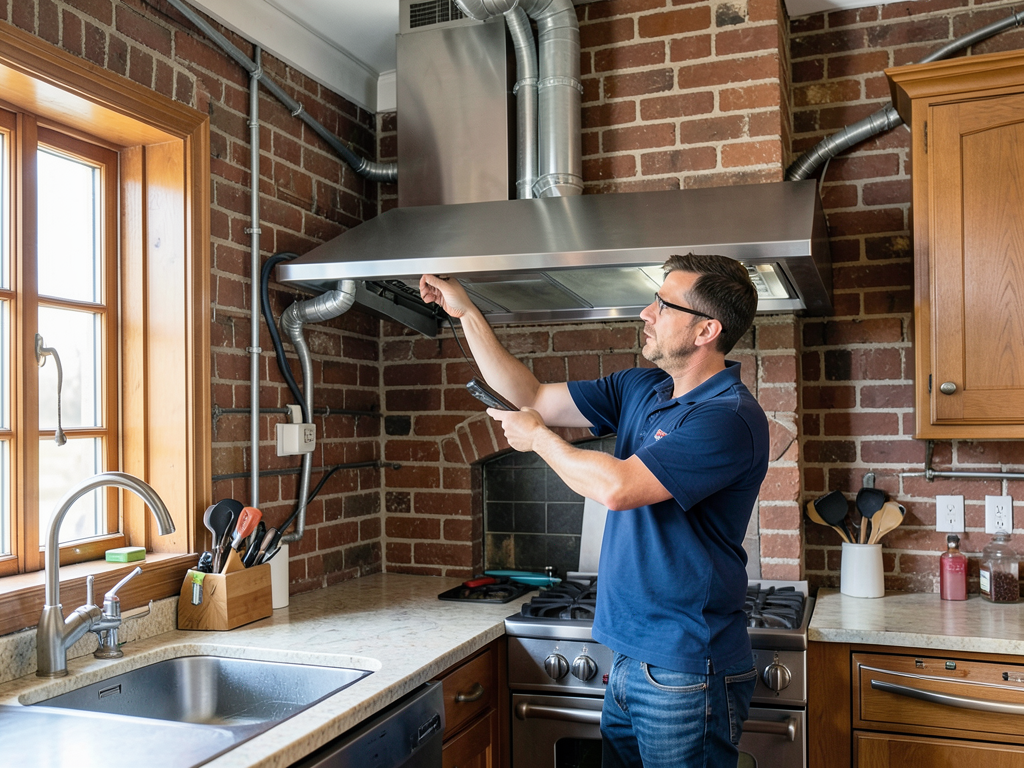
The Best Ventilation Strategies for Your High End Kitchen Remodel in Shaw
When planning a high-end kitchen remodel in Shaw, proper ventilation often gets overlooked until the last minute. The historic brick homes in this St. Louis neighborhood present unique challenges that require careful planning from the start. A powerful range hood can remove up to 1,200 cubic feet of air per minute, but without proper makeup air systems, you risk backdrafting, negative pressure, and even dangerous carbon monoxide buildup in your tightly sealed Missouri home. Air Purification Systems.
The key to successful kitchen ventilation in Shaw lies in understanding local building codes, calculating the right CFM for your cooking appliances, and designing a system that works with your home’s architecture rather than against it. Let’s explore the essential strategies that will keep your kitchen comfortable, safe, and code-compliant. The Best Local Furnace Replacement Options for Kirkwood Families.
Understanding Shaw’s Unique Ventilation Challenges
Shaw’s historic homes built between 1900 and 1930 feature solid brick construction with plaster walls and original wood windows. These structures were never designed for modern high-BTU gas ranges or powerful ventilation systems. The tight building envelope that makes these homes energy efficient also creates ventilation problems when you install a 900+ CFM hood.
The Missouri climate adds another layer of complexity. Summer humidity levels often exceed 80%, which means moisture-laden air gets pulled into your home through any available opening when the hood is running. In winter, the temperature differential between inside and outside can create strong stack effects that reverse airflow through your chimney or water heater vent.
Local building inspectors in the 63110 zip code area are particularly strict about makeup air requirements for residential kitchen ventilation. The St. Louis County mechanical code mandates makeup air systems when exhaust exceeds 400 CFM, and many Shaw homes require systems for even lower CFM ratings due to their airtight construction.
Calculating the Right CFM for Your Cooking Appliances
The first step in designing your ventilation system is determining the proper CFM rating. For gas ranges, the standard calculation is 100 CFM per 10,000 BTU of burner output. A typical 60,000 BTU range needs at least 600 CFM, but most high-end installations in Shaw use 900-1,200 CFM hoods for optimal smoke and odor removal. Top Rated AC Installation Companies Serving Ladue and Clayton.
Electric cooktops require a different approach. The 100 CFM per linear foot rule applies here, so a 36-inch electric cooktop needs at least 300 CFM. However, many Shaw homeowners upgrade to higher CFM ratings for better performance, especially when installing commercial-style induction cooktops. Commercial Heating Services.
Here’s a comparison of common ventilation requirements:. Read more about Common HVAC Mistakes Homeowners Make When Finishing a Basement in Ballwin.
| Cooking Appliance Type | BTU Output | Minimum CFM Required | Recommended CFM for Shaw Homes |
|---|---|---|---|
| Standard Gas Range | 45,000 | 450 | 600 |
| Professional Gas Range | 90,000 | 900 | 1,200 |
| Electric Cooktop | N/A | 300 (36") | 600 |
| Induction Cooktop | N/A | 300 (36") | 600 |
The calculation becomes more complex when you factor in duct length and bends. Each 90-degree elbow adds approximately 20 feet of equivalent duct length, reducing your effective CFM. For a typical Shaw home with a 25-foot duct run and two elbows, you’ll need to oversize your hood by 150-200 CFM to compensate.
Makeup Air Systems: The Critical Component
Makeup air systems are non-negotiable for high-end kitchen remodels in Shaw. When your range hood removes air from the house, that same volume must be replaced from somewhere. Without a dedicated makeup air system, your home will pull air through any available opening – often through the chimney, water heater vent, or even creating dangerous backdraft conditions.
The International Residential Code (IRC) Section M1503.4 requires makeup air when exhaust exceeds 400 CFM. In Shaw’s historic homes, many building inspectors require makeup air for systems as low as 300 CFM due to the tight construction. The makeup air unit must be interlocked with the range hood so it activates simultaneously. International Residential Code Section M1503.4.
Makeup air systems typically include:
- Damper assembly that opens when hood is activated
- Heating element to temper incoming air (crucial in Missouri winters)
- Filter to prevent dust and pollen infiltration
- Thermostat control for automatic operation
For Shaw’s climate, we recommend electric heating elements rather than gas-fired units. Electric makeup air heaters respond faster and don’t introduce combustion byproducts into your kitchen. The heating capacity should be sized to raise incoming air by at least 40 degrees Fahrenheit to prevent uncomfortable drafts.
Ductwork Design for Historic Shaw Homes
The brick construction of Shaw homes presents unique ductwork challenges. Unlike modern homes with open floor joists, historic homes often have solid wood flooring over plaster ceilings. This means your duct route must be carefully planned during the remodeling phase.
Rigid metal ductwork is mandatory for high-CFM applications. Flexible ducting creates too much air resistance and can collapse under the suction of a powerful range hood. We typically use 8-inch diameter rigid duct for systems up to 900 CFM, stepping up to 10-inch for 1,200+ CFM installations.
The ideal duct route in a Shaw home often involves:
- Running through an interior wall cavity to avoid exterior brick
- Using fire-rated duct through any floor penetrations
- Installing backdraft dampers at both ends of the run
- Adding sound insulation to minimize noise transmission
Roof termination is usually preferable to wall termination in Shaw. The brick exterior makes wall penetrations difficult and prone to leaks. A roof cap with a backdraft damper prevents downdrafts while providing easy access for cleaning and maintenance. Why Professional Air Duct Cleaning is Essential for Wildwood Homes.
Sound Control Strategies
High-CFM ventilation systems can be surprisingly loud, which is problematic in the open-concept kitchens popular in modern remodels. The sone rating of your hood becomes crucial – aim for 1.5 sones or less on low speed and no more than 6 sones on high.
Sound reduction strategies include:
- Centrifugal blowers mounted remotely in attic space
- Sound-absorbing duct liner for the first 10 feet of duct
- Variable speed controls that allow low-speed operation for light cooking
- Acoustic insulation around the duct where it passes through walls
For Shaw homes, we often recommend external blowers located in the attic. This keeps the noise out of the living space while still providing adequate ventilation. The additional cost is typically offset by the improved comfort and the ability to run the hood at higher speeds when needed.
Fire Safety and Clearance Requirements
Commercial-style ranges in residential settings require careful attention to fire safety clearances. The National Fire Protection Association (NFPA) 96 standards, while written for commercial kitchens, provide excellent guidance for high-end residential installations. NFPA 96 Standards.
Key fire safety considerations include:
- Minimum 30-inch clearance from combustible materials above the cooking surface
- Fire-rated materials for any cabinetry within 24 inches of the burners
- Automatic fire suppression systems for high-BTU installations
- Heat-resistant ducting where it passes through combustible materials
Many Shaw homeowners install commercial-style ranges without realizing these units can produce flames up to 24 inches high. The standard 18-inch clearance above residential ranges is insufficient for professional equipment. We recommend fire-resistant backsplashes extending at least 30 inches above the cooking surface.
Permit Requirements and Local Code Compliance
St. Louis County requires permits for all kitchen ventilation work exceeding 100 CFM. The permit process includes plans review by the mechanical inspector, who will verify your makeup air calculations and duct sizing. In the 63110 zip code, expect additional scrutiny due to the historic district regulations.
Permit requirements typically include:
- Mechanical permit application with detailed plans
- Makeup air calculations showing compliance with IRC M1503.4
- Electrical permit if new circuits are required
- Possible historic district approval if your home is designated
The inspection process usually involves two visits: one during rough-in to verify duct routing and another final inspection after installation. Failing to obtain permits can result in fines and complications when selling your home.
Energy Efficiency Considerations
High-CFM ventilation systems can significantly impact your home’s energy efficiency. In Missouri’s climate, where heating and cooling costs are substantial, proper system design becomes critical for long-term operating costs.
Energy-saving features to consider:
- Variable speed controls that reduce power consumption during low-load cooking
- Heat recovery ventilators that capture energy from exhaust air
- Demand-controlled ventilation that adjusts based on cooking activity
- Energy-efficient blower motors with ECM technology
The heating load from makeup air can be substantial. In winter, bringing in 1,200 CFM of 20-degree outside air requires approximately 30,000 BTU of heating capacity. This is why proper sizing of the makeup air heater is essential – an undersized unit will cause uncomfortable drafts and overwork your furnace.
Installation Timeline and Process
Proper kitchen ventilation installation in a Shaw home typically requires 2-3 days for a straightforward project and up to a week for complex installations. The timeline includes:
- Day 1: Rough-in of ductwork and electrical connections
- Day 2: Installation of makeup air system and hood mounting
- Day 3: Final connections, testing, and adjustments
- Day 4-5: Optional (fire suppression, custom finishes)
The most time-consuming aspect is often routing the ductwork through the historic structure. We use thermal imaging cameras to locate optimal paths through walls and ceilings without damaging original plaster or woodwork.
Common Mistakes to Avoid
Based on our experience with Shaw kitchen remodels, here are the most common ventilation mistakes homeowners make:
- Undersizing the makeup air system, leading to negative pressure
- Using flexible ducting for high-CFM applications
- Ignoring local code requirements for makeup air
- Mounting the hood too high above the cooking surface
- Neglecting sound control in open-concept designs
Another frequent error is failing to account for the additional electrical load. A 1,200 CFM system with makeup air can draw 15-20 amps, often requiring a dedicated 240-volt circuit. This should be factored into your electrical planning from the start.
Maintenance Requirements
High-end ventilation systems require regular maintenance to perform optimally. The frequency depends on your cooking habits, but most systems need annual service at minimum.
Maintenance tasks include:
- Cleaning or replacing grease filters monthly
- Inspecting and cleaning ductwork annually
- Checking and lubricating blower motor bearings
- Testing makeup air system operation
- Verifying backdraft damper function
Neglecting maintenance can reduce your system’s effectiveness by up to 50% and create fire hazards from grease accumulation. Many homeowners schedule maintenance during their annual HVAC service to ensure everything is inspected together.
Cost Considerations
The total cost for a high-end kitchen ventilation system in Shaw typically ranges from $3,500 to $8,000, depending on complexity. This includes the hood unit, makeup air system, ductwork, and professional installation.
Cost breakdown:
- Range hood unit: $800 – $2,500
- Makeup air system: $1,200 – $2,500
- Ductwork and installation: $1,200 – $2,500
- Permits and inspections: $300 – $600
While this represents a significant investment, proper ventilation protects your home from moisture damage, improves indoor air quality, and enhances your cooking experience. The energy savings from an efficient system often offset the additional cost over time.
Working with Your Kitchen Designer
Successful ventilation installation requires coordination between your HVAC contractor, kitchen designer, and possibly a structural engineer. The design phase should address:
- Placement of the range hood relative to windows and doors
- Clearance requirements for combustible materials
- Integration of ductwork with other mechanical systems
- Aesthetic considerations for visible components
Early involvement of your HVAC contractor can prevent costly changes later. We often discover during the design phase that the planned hood location won’t work due to structural constraints or code requirements.
Future-Proofing Your System
Kitchen technology continues to evolve, with induction cooking becoming more popular and commercial-style features entering the residential market. When designing your ventilation system, consider future upgrades by:
- Oversizing the duct system slightly to accommodate higher CFM needs
- Installing a larger makeup air system than currently required
- Running extra electrical capacity to the hood location
- Using modular components that can be upgraded individually
The trend toward more powerful cooking appliances means today’s overkill might be tomorrow’s minimum requirement. Planning ahead can save significant costs if you upgrade your cooking equipment in the future.
Frequently Asked Questions
How do I know if my kitchen needs makeup air?
Any kitchen ventilation system over 400 CFM requires makeup air per the International Residential Code. In Shaw’s historic homes, many building inspectors require makeup air for systems as low as 300 CFM due to the tight construction. Signs you need makeup air include difficulty opening doors when the hood is running, backdrafting from your fireplace, or cold drafts near windows.
Can I install the ventilation system myself?
While DIY installation is possible, professional installation is strongly recommended for high-CFM systems. The complexity of proper duct sizing, makeup air integration, and code compliance makes this a job for experienced HVAC professionals. Improper installation can create safety hazards and may violate local building codes.
How long does installation take?
A straightforward installation typically takes 2-3 days. Complex installations involving extensive ductwork routing or structural modifications may take up to a week. The timeline includes rough-in, installation, testing, and final inspections.
Ready to Upgrade Your Kitchen Ventilation?
Proper kitchen ventilation is essential for your comfort, safety, and the longevity of your Shaw home. The unique challenges of historic brick construction, combined with Missouri’s climate, require careful planning and professional installation.
Don’t wait until your kitchen remodel is complete to address ventilation. The best time to plan your system is during the design phase, before walls are closed up and structural decisions are finalized.
Call (314) 417-7771 today to schedule your ventilation consultation. Our experienced technicians understand the specific requirements for Shaw homes and can design a system that meets your needs while complying with all local codes.
Pick up the phone and call (314) 417-7771 before the next storm hits. Your kitchen remodel deserves ventilation that works as beautifully as your new space looks.
{
“@context”: “https://schema.org”,
“@type”: “BlogPosting”,
“headline”: “The Best Ventilation Strategies for Your High End Kitchen Remodel in Shaw”,
“description”: “Discover expert ventilation strategies for high-end kitchen remodels in Shaw. Learn about makeup air, duct sizing, and St. Louis code compliance for optimal performance.”,
“wordCount”: 2272,
“datePublished”: “2026-05-29T08:32:00.000Z”,
“dateModified”: “2026-05-29T08:32:00.000Z”,
“inLanguage”: “en-US”,
“mainEntityOfPage”: {
“@type”: “WebPage”,
“@id”: “https://keystonehvacstlouis.com”
},
“publisher”: {
“@type”: “LocalBusiness”,
“name”: “Keystone HVAC St. Louis”,
“url”: “https://keystonehvacstlouis.com”
},
“author”: {
“@type”: “Organization”,
“name”: “Keystone HVAC St. Louis”,
“url”: “https://keystonehvacstlouis.com”
},
“image”: {
“@type”: “ImageObject”,
“url”: “https://keystonehvacstlouis.com/wp-content/uploads/2026/03/the-best-ventilation-strategies-for-your-high-end-1.png”
}
}
{
“@context”: “https://schema.org”,
“@type”: “HVACBusiness”,
“name”: “Keystone HVAC St. Louis”,
“url”: “https://keystonehvacstlouis.com”,
“address”: {
“@type”: “PostalAddress”,
“addressLocality”: “St. Louis”
},
“areaServed”: {
“@type”: “City”,
“name”: “St. Louis”
}
}
{
“@context”: “https://schema.org”,
“@type”: “FAQPage”,
“mainEntity”: [
{
“@type”: “Question”,
“name”: “How do I know if my kitchen needs makeup air?”,
“acceptedAnswer”: {
“@type”: “Answer”,
“text”: “Any kitchen ventilation system over 400 CFM requires makeup air per the International Residential Code. In Shaw’s historic homes, many building inspectors require makeup air for systems as low as 300 CFM due to the tight construction. Signs you need makeup air include difficulty opening doors when the hood is running, backdrafting from your fireplace, or cold drafts near windows.”
}
},
{
“@type”: “Question”,
“name”: “Can I install the ventilation system myself?”,
“acceptedAnswer”: {
“@type”: “Answer”,
“text”: “While DIY installation is possible, professional installation is strongly recommended for high-CFM systems. The complexity of proper duct sizing, makeup air integration, and code compliance makes this a job for experienced HVAC professionals. Improper installation can create safety hazards and may violate local building codes.”
}
},
{
“@type”: “Question”,
“name”: “How long does installation take?”,
“acceptedAnswer”: {
“@type”: “Answer”,
“text”: “A straightforward installation typically takes 2-3 days. Complex installations involving extensive ductwork routing or structural modifications may take up to a week. The timeline includes rough-in, installation, testing, and final inspections.”
}
},
{
“@type”: “Question”,
“name”: “Ready to Upgrade Your Kitchen Ventilation?”,
“acceptedAnswer”: {
“@type”: “Answer”,
“text”: “Proper kitchen ventilation is essential for your comfort, safety, and the longevity of your Shaw home. The unique challenges of historic brick construction, combined with Missouri’s climate, require careful planning and professional installation.”
}
}
]
}
{
“@context”: “https://schema.org”,
“@type”: “BreadcrumbList”,
“itemListElement”: [
{
“@type”: “ListItem”,
“position”: 1,
“name”: “Home”,
“item”: “https://keystonehvacstlouis.com”
},
{
“@type”: “ListItem”,
“position”: 2,
“name”: “Blog”,
“item”: “https://keystonehvacstlouis.com/blog”
},
{
“@type”: “ListItem”,
“position”: 3,
“name”: “The Best Ventilation Strategies for Your High End Kitchen Remodel in Shaw”
}
]
}
{
“@context”: “https://schema.org”,
“@type”: “Service”,
“serviceType”: “HVAC”,
“provider”: {
“@type”: “LocalBusiness”,
“name”: “Keystone HVAC St. Louis”,
“url”: “https://keystonehvacstlouis.com”
},
“areaServed”: {
“@type”: “City”,
“name”: “St. Louis”
},
“description”: “Discover expert ventilation strategies for high-end kitchen remodels in Shaw. Learn about makeup air, duct sizing, and St. Louis code compliance for optimal performance.”
}