
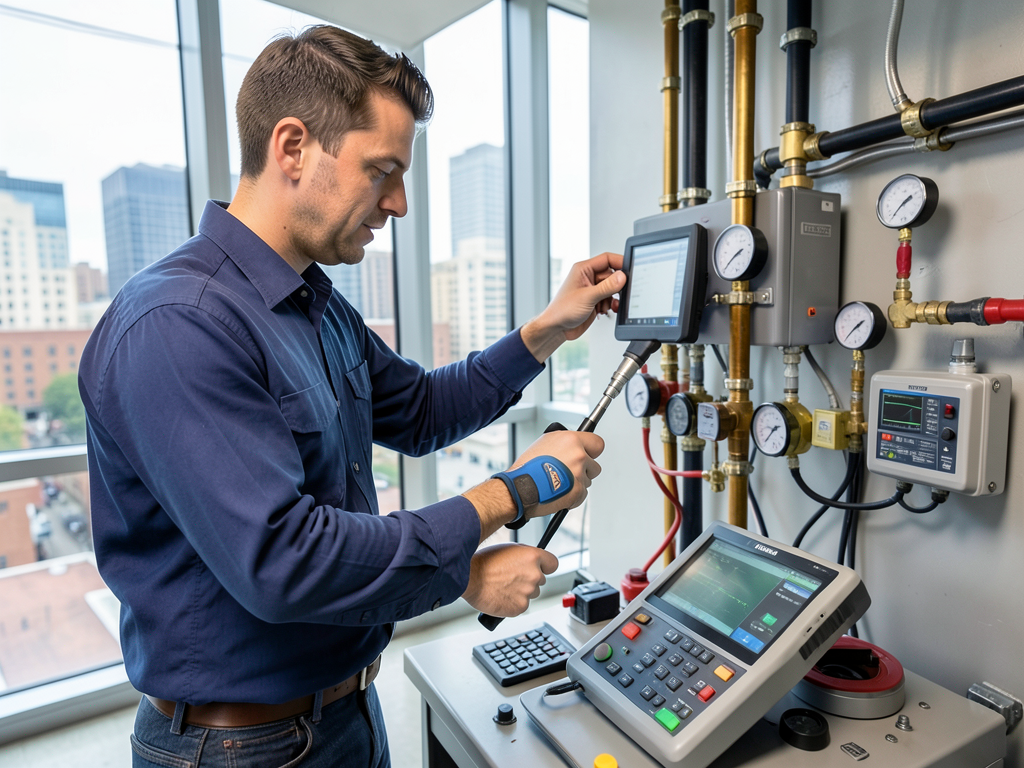
Maintenance Checklist for High Rise HVAC Systems in Downtown St. Louis
Downtown St. Louis high-rise buildings rely on specialized HVAC systems that differ dramatically from single-family homes. Water-source heat pumps, PTAC units, and vertical stack configurations dominate the landscape, each requiring precise maintenance protocols to handle the extreme Missouri humidity and rapid seasonal temperature swings that stress downtown mechanical systems. St. Louis County Mechanical Code.
Condo owners in the Central West End and Downtown loft districts face unique challenges. Narrow mechanical closets, shared water loops, and HOA regulations create a complex maintenance environment where a single neglected condensate line can flood multiple units below. The Gateway Arch area’s historic high-rises often contain aging PTAC units that struggle with St. Louis’s notorious summer heat indexes exceeding 100°F.. Read more about Choosing Durable and Low Maintenance HVAC Systems for Your Rental Properties in Dutchtown.
Professional maintenance for these systems goes beyond basic filter changes. Technicians must navigate building security, coordinate with property managers, and understand the specific failure patterns of water-source heat pump loops that serve entire floors. The clay soil foundation of downtown St. Louis can cause building settling that misaligns rooftop units, creating vibration that damages compressor mounts over time. Why Professional Air Duct Cleaning is Essential for Wildwood Homes.
Annual maintenance contracts for downtown condo associations typically include quarterly inspections, coil cleaning, and water chemistry testing for closed-loop systems. These preventative measures prevent the emergency calls that spike during Missouri’s first 95-degree day when neglected systems fail simultaneously across multiple buildings. Emergency AC Repair in Creve Coeur That Won’t Break the Bank.
Essential Maintenance Tasks for Downtown Condo HVAC Systems
PTAC units in downtown St. Louis lofts require specific attention to condensate drainage. The units often drain through exterior walls where freeze-thaw cycles common to the Missouri climate can crack drain pans. Technicians must check for algae buildup in the condensate lines using a borescope camera, a diagnostic tool that reveals blockages before they cause ceiling damage in units below.
Water-source heat pump systems demand water chemistry analysis. The closed-loop systems circulating through downtown buildings accumulate minerals from St. Louis’s hard water supply, reducing heat transfer efficiency by up to 15%. Annual water testing and chemical treatment prevent scale buildup on heat exchanger tubes, maintaining the system’s designed COP (Coefficient of Performance).. Read more about Integrating Your HVAC System with Google Home or Alexa in Your Clayton Condo.
Fan coil units in vertical stacks experience unique wear patterns. The continuous operation in downtown office-to-residential conversions creates bearing wear that produces a distinctive high-pitched whine before failure. Experienced technicians recognize this sound during routine inspections and replace bearings before the motor seizes, preventing the cascade failure that affects multiple units on a single floor.
Thermostat calibration proves critical in downtown buildings where glass curtain walls create solar heat gain that tricks standard sensors. Professional maintenance includes checking thermostat placement, verifying temperature accuracy with a calibrated digital thermometer, and programming setback schedules that account for downtown St. Louis’s urban heat island effect. Top Rated AC Installation Companies Serving Ladue and Clayton.
Navigating Downtown St. Louis HOA Requirements
Downtown condo associations enforce strict maintenance protocols under St. Louis County mechanical codes. The 2021 St. Louis County Mechanical Code Section 1101.4 requires annual certification for water-source heat pump systems serving multiple units. This certification must be filed with the building management and includes pressure testing of the closed-loop system to detect leaks that could affect neighboring units.. Read more about How to Prepare Your HVAC System for a Long Vacation Away from Chesterfield.
Insurance requirements add another layer of complexity. Downtown condo associations typically require HVAC contractors to carry $1 million liability coverage and provide certificates of insurance naming the association as additionally insured. This protects the building from liability when technicians access mechanical rooms in high-rise structures where fall hazards exist.
Noise ordinances affect maintenance scheduling in downtown areas. The City of St. Louis noise control ordinance prohibits mechanical equipment operation above 70 decibels between 10 PM and 7 AM in residential zones. This restricts maintenance windows for rooftop units, requiring technicians to complete compressor tests and vibration analysis during daytime hours when building occupants are less sensitive to operational noise.
Documentation requirements for downtown condo boards often exceed those for single-family homes. Maintenance records must include before-and-after photos of cleaned coils, temperature differential readings across heat exchangers, and refrigerant charge verification reports. These documents satisfy board requirements for warranty compliance and help track system degradation over time.
Common High-Rise HVAC Systems in Downtown St. Louis
Packaged Terminal Air Conditioners (PTACs) dominate the downtown loft conversion market. These through-wall units, manufactured by brands like Amana and Friedrich, handle both cooling and heating through electric resistance strips or heat pump configurations. The units excel in buildings where individual temperature control matters more than centralized efficiency. Commercial Heating Services.
Water-source heat pumps represent the premium solution for downtown high-rives. These systems circulate water through a common loop, with individual units adding or removing heat as needed. The approach maximizes energy efficiency but requires sophisticated controls and water treatment. Major manufacturers like Trane and Carrier produce rooftop-mounted heat pump systems specifically designed for downtown St. Louis’s climate extremes.
Vertical fan coil units serve many downtown office-to-residential conversions. These ceiling-mounted or closet-located units connect to a central plant providing chilled and hot water. The configuration reduces individual unit maintenance but central plant failures affect entire floors. Regular testing of the central plant’s pumps, chillers, and boilers becomes critical for building-wide comfort.
Ductless mini-split systems gain popularity in downtown historic buildings where preserving architectural integrity matters. These systems eliminate the need for extensive ductwork while providing zoned cooling. Mitsubishi and Daikin lead the market with units designed for high-rise applications, featuring condensate pumps that lift drainage to roof-level drainage systems.
Seasonal Maintenance Considerations for Downtown Buildings
Spring maintenance in downtown St. Louis focuses on preparing for summer humidity. Technicians clean evaporator coils using foaming coil cleaners that penetrate deep into the fin pack, removing the accumulated dust and pollen that reduce heat transfer. The process includes checking superheat and subcooling readings to verify proper refrigerant charge after cleaning. EPA Water Treatment Guidelines.
Fall maintenance addresses the rapid temperature drops characteristic of Missouri autumns. Heat strips in PTAC units require amp draw testing to ensure they’ll provide emergency heat when outdoor temperatures plummet. The test involves measuring current draw with a clamp meter while the strips operate, comparing results to manufacturer specifications for the specific unit model.
Winter maintenance targets freeze protection for water-source systems. Technicians verify antifreeze concentration in closed-loop systems using a refractometer, ensuring protection against temperatures that can drop below zero in downtown St. Louis. The test takes minutes but prevents the catastrophic freeze damage that can destroy heat exchangers and require complete system replacement.
Summer maintenance emphasizes condensate management. The extreme humidity downtown creates gallons of condensation daily, overwhelming systems with clogged drains. Maintenance includes pouring algaecide tablets into drain pans, flushing lines with pressurized water, and installing secondary drain pans with float switches that shut down the system before overflow occurs.
Indoor Air Quality Solutions for High-Rise Living
Downtown condo units face unique air quality challenges. The urban environment introduces particulate matter from traffic on Market Street and construction dust from ongoing downtown development projects. Professional maintenance includes installing high-MERV filters (rated 11-13) that capture particles as small as 1 micron without restricting airflow in older PTAC units.. Read more about HEPA Filters vs Media Cleaners (Which One Actually Helps St. Louis Allergies?).
Humidity control becomes critical in downtown buildings where stack effect creates negative pressure at upper floors. This pressure differential draws humid outdoor air through gaps in the building envelope, overwhelming standard cooling systems. Maintenance may include installing whole-building dehumidification systems or upgrading to units with enhanced latent cooling capacity.
Ventilation requirements for downtown condos often exceed standard residential codes. The International Mechanical Code Section 403 mandates mechanical ventilation in spaces where natural ventilation proves insufficient. Maintenance includes testing fresh air intake dampers, cleaning intake screens, and verifying that exhaust fans maintain proper negative pressure to prevent mold growth in mechanical spaces.
Air purification options for downtown units range from portable HEPA filters to whole-building UV-C light installations. The latter mounts in the return air duct, neutralizing airborne pathogens and preventing biofilm growth on cooling coils. This technology proves especially valuable in buildings with centralized ventilation systems where one unit’s air quality affects many others.
Emergency Response Protocols for Downtown HVAC Failures
Emergency response for downtown high-rise HVAC failures requires specialized coordination. Technicians must coordinate with building security for after-hours access, navigate freight elevators with equipment, and work in mechanical rooms where space constraints limit movement. The response time goal for downtown St. Louis is typically 90 minutes, compared to 2-3 hours for suburban areas.
Diagnostic procedures for emergency calls follow a specific sequence. Technicians first verify power at the unit, then check thermostat operation, and finally examine the most common failure points: capacitors, contactors, and condensate pumps. This systematic approach identifies the problem within the first 15 minutes, allowing immediate repair or parts ordering if needed.
Parts availability becomes critical during downtown emergency calls. Service vehicles carry the most common PTAC and water-source heat pump components, but unique failures may require rush delivery from distributors in Earth City or Maryland Heights. The technician’s experience with downtown building layouts helps determine whether repair or temporary cooling solutions better serve the client while waiting for parts.
Communication protocols with condo associations during emergencies include providing status updates every 30 minutes, documenting all actions taken, and offering temporary solutions like portable cooling units for critical applications. This professional approach maintains trust with building management and ensures continued access for future maintenance work.
Cost Factors for Downtown Condo HVAC Maintenance
Maintenance pricing for downtown high-rise systems reflects the additional complexity. Service calls include a building access fee covering coordination with security and property management. This fee typically ranges from $50 to $150 depending on the building’s requirements and the time of service.
Parts pricing for downtown units often exceeds standard residential rates. PTAC units use specialized components designed for through-wall installation, and water-source heat pump parts must meet specific pressure ratings for closed-loop systems. The markup reflects inventory carrying costs and the risk of stocking obsolete parts for older downtown buildings.
Annual maintenance contracts for downtown condos typically cost 20-30% more than single-family home contracts. The premium covers the additional time required for building access, the complexity of working in confined mechanical spaces, and the documentation requirements of condo associations. However, these contracts often include priority emergency service and discounted repair rates.
Energy efficiency improvements for downtown units can offset maintenance costs through reduced utility bills. Upgrades like variable-speed blower motors, smart thermostats, and high-efficiency coils can reduce energy consumption by 15-25%. Many downtown condo associations now require proof of energy efficiency improvements as part of their sustainability initiatives.
Choosing the Right HVAC Contractor for Downtown Properties
Experience with downtown building systems proves essential when selecting an HVAC contractor. The contractor should demonstrate familiarity with water-source heat pump loops, PTAC unit servicing, and the specific challenges of high-rise mechanical rooms. Ask for references from other downtown condo associations and verify their experience with buildings similar to yours.
Licensing requirements for downtown St. Louis HVAC work exceed standard residential requirements. Contractors must hold Missouri state licenses and often require additional certifications for refrigerant handling and high-pressure systems. Verify current licensing through the Missouri Department of Higher Education and verify insurance coverage meets your building’s requirements.
Response time commitments matter significantly for downtown properties. A contractor promising 24-hour service may not provide the 90-minute emergency response that downtown condo owners need. Review service level agreements carefully, noting response time guarantees, after-hours availability, and the process for escalating unresolved issues to management.
Technology adoption indicates a contractor’s commitment to modern HVAC service. Look for companies using digital maintenance records, online scheduling, and diagnostic software that can predict failures before they occur. These tools improve service quality and provide the documentation condo boards increasingly require for maintenance verification.
Frequently Asked Questions
How often should PTAC units in downtown condos be serviced?
PTAC units require professional maintenance twice annually, typically in spring before cooling season and fall before heating season. Units in downtown buildings with high dust levels or near construction may need quarterly service to maintain efficiency and prevent neighbor complaints about noise or vibration.
What causes water-source heat pump systems to fail in downtown buildings?
The most common failures involve water chemistry issues that cause scale buildup on heat exchangers, pump failures in the closed-loop system, and control board malfunctions in individual units. Regular water testing and chemical treatment prevent the scale problems that reduce system efficiency by up to 30% over five years.
Are maintenance records required for downtown condo board approval?
Yes, most downtown condo associations require annual maintenance documentation including coil cleaning photos, refrigerant charge verification, and water chemistry test results for systems with closed loops. These records must be submitted to the property manager and may be reviewed during annual building inspections required by St. Louis County.
How do I know if my downtown HVAC system needs replacement?
Systems typically need replacement when repair costs exceed 50% of replacement cost, when energy bills increase dramatically despite maintenance, or when the system uses obsolete refrigerant like R-22 that’s being phased out. For downtown buildings, consider replacement if the unit is over 15 years old and requires frequent repairs.
Can I perform any maintenance on my downtown condo’s HVAC system myself?
Basic maintenance like filter changes and keeping the outdoor area clear of debris is acceptable, but most downtown condo associations prohibit DIY repairs due to liability concerns and the complexity of high-rise systems. Always check your association’s rules and consult with building management before attempting any service work.
What should I do if my unit is causing water damage to the unit below?
Immediately shut off the system at the circuit breaker and contact both building management and a licensed HVAC contractor. Water damage from HVAC systems often involves condensate line blockages or cracked drain pans. Document the damage with photos for insurance purposes and obtain repair estimates in writing.
How do downtown HVAC maintenance costs compare to single-family homes?
Maintenance costs for downtown condo HVAC systems typically run 20-40% higher than single-family homes due to building access fees, specialized equipment needs, and the complexity of high-rise systems. However, the individual unit’s share of these costs is often lower than maintaining an entire single-family system.
Call (314) 417-7771 for Expert Downtown Condo HVAC Service
Downtown St. Louis condo owners trust our team for reliable HVAC maintenance that keeps systems running efficiently through Missouri’s extreme seasons. We understand the unique requirements of water-source heat pumps, PTAC units, and high-rise service protocols that downtown buildings demand. Finding a Reliable 24 Hour HVAC Technician in Chesterfield.
Our technicians carry the proper insurance, maintain current Missouri licenses, and provide the documentation your condo association requires. We offer 24/7 emergency service with 90-minute response times for downtown locations, ensuring you’re never left without heating or cooling when systems fail.
Don’t wait for emergency repairs that disrupt your life and potentially damage neighboring units. Call (314) 417-7771 today to schedule your comprehensive HVAC inspection. Our preventative maintenance plans include quarterly check-ups, priority service, and detailed documentation that satisfies even the most demanding condo boards.
Pick up the phone and call (314) 417-7771 before the next heat wave or cold snap hits downtown St. Louis. Your comfort and your neighbors’ safety depend on properly maintained HVAC systems that only experienced professionals can provide.
{
“@context”: “https://schema.org”,
“@type”: “BlogPosting”,
“headline”: “Maintenance Checklist for High Rise HVAC Systems in Downtown St. Louis”,
“description”: “Expert condo HVAC maintenance in Downtown St. Louis. Water-source heat pumps, PTAC units, and high-rise service protocols. Call (314) 417-7771 for 24/7 support.”,
“wordCount”: 2546,
“datePublished”: “2026-03-27T10:55:00.000Z”,
“dateModified”: “2026-03-27T10:55:00.000Z”,
“inLanguage”: “en-US”,
“mainEntityOfPage”: {
“@type”: “WebPage”,
“@id”: “https://keystonehvacstlouis.com”
},
“publisher”: {
“@type”: “LocalBusiness”,
“name”: “Keystone HVAC St. Louis”,
“url”: “https://keystonehvacstlouis.com”
},
“author”: {
“@type”: “Organization”,
“name”: “Keystone HVAC St. Louis”,
“url”: “https://keystonehvacstlouis.com”
},
“image”: {
“@type”: “ImageObject”,
“url”: “https://keystonehvacstlouis.com/wp-content/uploads/2026/03/maintenance-checklist-for-high-rise-hvac-systems-i-1.png”
}
}
{
“@context”: “https://schema.org”,
“@type”: “HVACBusiness”,
“name”: “Keystone HVAC St. Louis”,
“url”: “https://keystonehvacstlouis.com”,
“address”: {
“@type”: “PostalAddress”,
“addressLocality”: “St. Louis”
},
“areaServed”: {
“@type”: “City”,
“name”: “St. Louis”
}
}
{
“@context”: “https://schema.org”,
“@type”: “FAQPage”,
“mainEntity”: [
{
“@type”: “Question”,
“name”: “How often should PTAC units in downtown condos be serviced?”,
“acceptedAnswer”: {
“@type”: “Answer”,
“text”: “PTAC units require professional maintenance twice annually, typically in spring before cooling season and fall before heating season. Units in downtown buildings with high dust levels or near construction may need quarterly service to maintain efficiency and prevent neighbor complaints about noise or vibration.”
}
},
{
“@type”: “Question”,
“name”: “What causes water-source heat pump systems to fail in downtown buildings?”,
“acceptedAnswer”: {
“@type”: “Answer”,
“text”: “The most common failures involve water chemistry issues that cause scale buildup on heat exchangers, pump failures in the closed-loop system, and control board malfunctions in individual units. Regular water testing and chemical treatment prevent the scale problems that reduce system efficiency by up to 30% over five years.”
}
},
{
“@type”: “Question”,
“name”: “Are maintenance records required for downtown condo board approval?”,
“acceptedAnswer”: {
“@type”: “Answer”,
“text”: “Yes, most downtown condo associations require annual maintenance documentation including coil cleaning photos, refrigerant charge verification, and water chemistry test results for systems with closed loops. These records must be submitted to the property manager and may be reviewed during annual building inspections required by St. Louis County.”
}
},
{
“@type”: “Question”,
“name”: “How do I know if my downtown HVAC system needs replacement?”,
“acceptedAnswer”: {
“@type”: “Answer”,
“text”: “Systems typically need replacement when repair costs exceed 50% of replacement cost, when energy bills increase dramatically despite maintenance, or when the system uses obsolete refrigerant like R-22 that’s being phased out. For downtown buildings, consider replacement if the unit is over 15 years old and requires frequent repairs.”
}
},
{
“@type”: “Question”,
“name”: “Can I perform any maintenance on my downtown condo’s HVAC system myself?”,
“acceptedAnswer”: {
“@type”: “Answer”,
“text”: “Basic maintenance like filter changes and keeping the outdoor area clear of debris is acceptable, but most downtown condo associations prohibit DIY repairs due to liability concerns and the complexity of high-rise systems. Always check your association’s rules and consult with building management before attempting any service work.”
}
},
{
“@type”: “Question”,
“name”: “What should I do if my unit is causing water damage to the unit below?”,
“acceptedAnswer”: {
“@type”: “Answer”,
“text”: “Immediately shut off the system at the circuit breaker and contact both building management and a licensed HVAC contractor. Water damage from HVAC systems often involves condensate line blockages or cracked drain pans. Document the damage with photos for insurance purposes and obtain repair estimates in writing.”
}
},
{
“@type”: “Question”,
“name”: “How do downtown HVAC maintenance costs compare to single-family homes?”,
“acceptedAnswer”: {
“@type”: “Answer”,
“text”: “Maintenance costs for downtown condo HVAC systems typically run 20-40% higher than single-family homes due to building access fees, specialized equipment needs, and the complexity of high-rise systems. However, the individual unit’s share of these costs is often lower than maintaining an entire single-family system.”
}
}
]
}
{
“@context”: “https://schema.org”,
“@type”: “BreadcrumbList”,
“itemListElement”: [
{
“@type”: “ListItem”,
“position”: 1,
“name”: “Home”,
“item”: “https://keystonehvacstlouis.com”
},
{
“@type”: “ListItem”,
“position”: 2,
“name”: “Blog”,
“item”: “https://keystonehvacstlouis.com/blog”
},
{
“@type”: “ListItem”,
“position”: 3,
“name”: “Maintenance Checklist for High Rise HVAC Systems in Downtown St. Louis”
}
]
}
{
“@context”: “https://schema.org”,
“@type”: “Service”,
“serviceType”: “HVAC”,
“provider”: {
“@type”: “LocalBusiness”,
“name”: “Keystone HVAC St. Louis”,
“url”: “https://keystonehvacstlouis.com”
},
“areaServed”: {
“@type”: “City”,
“name”: “St. Louis”
},
“description”: “Expert condo HVAC maintenance in Downtown St. Louis. Water-source heat pumps, PTAC units, and high-rise service protocols. Call (314) 417-7771 for 24/7 support.”
}