
Is Leasing a New HVAC System Actually a Good Deal for St. Louis Homeowners?
Replacing an HVAC system in St. Louis can cost anywhere from $7,000 to $15,000 or more. For many homeowners facing a sudden breakdown, the high upfront cost creates a painful decision. Leasing offers a $0-down alternative with monthly payments between $75 and $150, but does it really save money over time? The answer depends on your plans, the St. Louis climate, and available rebates.
St. Louis summers push humidity above 80%, and winter temperatures can drop below zero. These extremes mean your HVAC system runs harder and longer than in milder climates. That extra strain affects both the lifespan of the equipment and the total cost of ownership. When comparing leasing versus buying, you need to factor in not just the monthly payment but also maintenance, repairs, energy efficiency, and local financial incentives. Emergency AC Repair in Creve Coeur That Won’t Break the Bank.
Upfront Costs vs. Long-Term Value
Buying an HVAC system requires a significant upfront investment. You pay the full price plus installation, which can range from $7,000 to $15,000 depending on system size and efficiency. Leasing eliminates that initial barrier with $0 down and predictable monthly payments. But those payments add up over time. Top Rated AC Installation Companies Serving Ladue and Clayton.
Over a 15-year lifespan, a $100 monthly lease totals $18,000. A purchased system might cost $10,000 upfront but could save $8,000 in lease payments. The break-even point typically occurs around year 7 to 9. If you plan to stay in your home longer than that, buying usually provides better long-term value.
However, leasing includes maintenance and repairs at no extra cost. A broken compressor or failed blower motor won’t result in a surprise $1,500 repair bill. For homeowners who value predictable expenses and can’t afford large repairs, leasing offers peace of mind that’s hard to quantify.
The Impact of St. Louis Climate on System Longevity
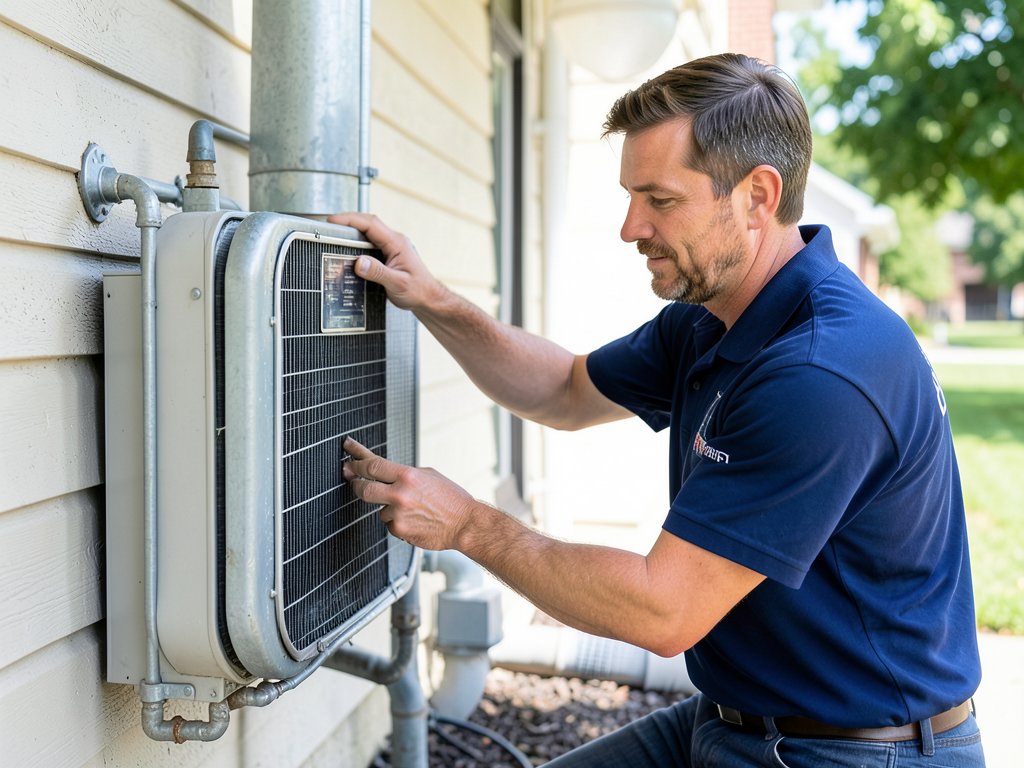
St. Louis sits in a unique climate zone where summer humidity regularly exceeds 80% and winter temperatures can plunge below zero. This combination creates specific challenges for HVAC systems. High humidity causes evaporator coils to ice up more frequently, reducing efficiency and increasing wear. The freeze-thaw cycles stress outdoor units and can cause refrigerant line cracks.
According to the International Energy Conservation Code (IECC) climate zone map, St. Louis falls in zone 4, requiring systems to handle both extreme heat and cold. The Missouri Department of Natural Resources recommends SEER2 ratings of 15 or higher for new installations to meet state efficiency standards. Systems that can’t handle these demands often fail prematurely.
Leased systems typically include bi-annual maintenance visits to clean coils, check refrigerant levels, and calibrate thermostats. This proactive care can extend system life by 2 to 3 years compared to neglected owned units. In St. Louis’s harsh climate, that maintenance difference becomes a critical factor in total cost calculations.
Pros and Cons: Buying Your HVAC System
Buying gives you complete ownership and control. You can choose any brand, efficiency rating, or feature set. Most manufacturers offer 10-year parts warranties on new systems, and you own any equity in the equipment. If you sell your home, a new HVAC system can increase property value by $3,000 to $5,000 according to local real estate data. The Best Local Furnace Replacement Options for Kirkwood Families.
The downside is responsibility. You pay for all maintenance, repairs, and eventual replacement. A single major repair like a compressor replacement can cost $1,500 to $2,500. Over 15 years, typical repair costs average $2,000 to $3,000 for well-maintained systems. You also need to budget for seasonal tune-ups at $100 to $200 each.. Read more about Ways to Budget for an Unexpected Furnace Replacement Without Tapping Your Savings.
Buying makes sense if you plan to stay in your home for more than 10 years, have savings for emergencies, and want maximum control over your system. It’s also better if you want to take advantage of federal tax credits under the Inflation Reduction Act, which can cover up to 30% of installation costs for qualifying high-efficiency systems.
Pros and Cons: Leasing Your HVAC System
Leasing provides immediate relief from high upfront costs. You get a new, efficient system without touching your savings. Monthly payments are predictable, and all maintenance and repairs are included. Many lease agreements offer priority service, meaning faster response times when your system fails during a heatwave or cold snap.
The trade-offs include higher long-term costs and limited control. Lease agreements typically lock you into 10 to 15-year terms. You can’t easily upgrade or modify the system without penalties. Some agreements require you to maintain specific thermostat settings or use approved filters. When the lease ends, you either renew, buy out the system, or return it.
Leasing works well for homeowners who need immediate replacement but lack savings, value predictable monthly expenses, or expect to move within 5 to 7 years. It’s also attractive if you want to avoid the hassle of finding and vetting HVAC contractors for repairs. Finding a Reliable 24 Hour HVAC Technician in Chesterfield.
Local Financial Incentives and Rebates
St. Louis homeowners can access several local and federal incentives that significantly impact the buy vs. lease decision. Ameren Missouri offers rebates up to $900 for high-efficiency air conditioners and heat pumps. Spire Energy provides similar incentives for gas furnace upgrades, with rebates ranging from $200 to $600 depending on efficiency ratings. Ameren Missouri HVAC rebates.
The federal 25C tax credit allows you to claim 30% of installation costs up to $2,000 for qualifying high-efficiency HVAC systems. For a $10,000 installation, that’s $2,000 back at tax time. These incentives don’t apply to most lease agreements, which is a major cost difference.
St. Louis County also participates in the Missouri Energy Efficiency Investment Act (MEEIA), which provides additional rebates for commercial properties but has limited residential programs. However, some local HVAC contractors bundle manufacturer rebates with utility incentives to create package deals that can reduce purchase costs by 15% to 25%.
When you lease, the leasing company typically captures these rebates, not you. This is a hidden cost that many homeowners don’t consider. Over a 10-year lease, the lost rebates could equal $2,000 to $3,000 in potential savings.
Which is Right for Your St. Louis Home?
Deciding between leasing and buying comes down to your timeline, budget, and risk tolerance. Use this checklist to evaluate your situation:
- Timeline: Do you plan to stay in your home more than 10 years?
- Budget: Can you afford $7,000 to $15,000 upfront or secure financing?
- Risk: Are you comfortable handling unexpected $1,500+ repair bills?
- Rebates: Will you actively pursue utility and tax incentives?
- Maintenance: Do you have time and knowledge to maintain the system properly?
If you answered yes to most questions, buying likely provides better value. If you answered no to several, leasing might be the safer choice despite higher long-term costs.
Consider your home’s specific needs too. Historic homes in neighborhoods like Lafayette Square or Soulard often have unique ductwork challenges that affect system efficiency. Modern homes in Chesterfield or Wildwood might benefit more from high-efficiency systems where rebates have bigger impacts.
Also factor in your comfort priorities. Leased systems often include smart thermostats and air quality upgrades that would cost extra if you bought separately. These features can improve comfort and energy efficiency, potentially offsetting some of the higher lease costs.
Making the Final Decision
The best way to decide is to get quotes for both options from local HVAC contractors. Compare the total cost over your expected ownership period, including all maintenance, repairs, and energy costs. Don’t forget to factor in the value of your time and stress levels.
Ask specific questions about lease terms: What happens if you move? Can you buy the system early? Are there penalties for late payments? What brands and efficiency ratings are available? For purchases, ask about warranty terms, maintenance requirements, and available financing options.
Remember that St. Louis’s climate demands reliable heating and cooling year-round. Whether you lease or buy, choose a system with appropriate capacity for your home size and insulation levels. An undersized system will run constantly and wear out quickly. An oversized system will cycle too frequently, reducing efficiency and comfort.
The decision ultimately comes down to your personal financial situation and how much control you want over your home’s biggest mechanical system. Both options can work well when matched to the right homeowner’s needs.
Frequently Asked Questions
Can I buy my leased HVAC system later?
Most lease agreements include a buyout option, typically available after 24 to 36 months. The buyout price is usually the remaining lease payments plus a small processing fee. Some agreements also offer early buyout discounts. Check your specific contract terms before signing.
Do leased systems qualify for tax credits?
Generally no. Tax credits and most utility rebates require system ownership. The leasing company typically claims these incentives as part of their business model. This is a key financial difference between leasing and buying that affects long-term costs.
How long do HVAC systems last in St. Louis?
With proper maintenance, most systems last 12 to 15 years in St. Louis’s climate. Harsh humidity and temperature extremes can reduce lifespan to 10 years for neglected systems. Regular maintenance, including coil cleaning and refrigerant checks, is essential for reaching maximum lifespan regardless of ownership model. Why Professional Air Duct Cleaning is Essential for Wildwood Homes.
Can I transfer a lease if I sell my home?
Most lease agreements are transferable to new homeowners, but you need to check the specific terms. The new owner must qualify for the lease assumption, which may require credit checks. Some homeowners negotiate lease buyouts as part of home sale agreements.
What happens at the end of a lease term?
At lease end, you typically have three options: renew the lease with a new system, buy the existing system at a predetermined price, or return the equipment. Some companies also offer lease-to-own programs where payments automatically convert to ownership after the term ends.
Ready to make the right choice for your St. Louis home? Call (314) 417-7771 today to schedule your inspection. Our local technicians will evaluate your current system, explain all your options, and help you understand the true costs of leasing versus buying. Don’t wait until your system fails on the hottest or coldest day of the year.
Pick up the phone and call (314) 417-7771 before the next storm hits. We’re here to help St. Louis homeowners make smart, informed decisions about their HVAC systems. For more information, visit Spire Energy furnace rebates.
{
“@context”: “https://schema.org”,
“@type”: “BlogPosting”,
“headline”: “Is Leasing a New HVAC System Actually a Good Deal for St. Louis Homeowners?”,
“description”: “Discover if HVAC leasing makes sense in St. Louis. Compare costs, maintenance, and rebates with buying. Get expert advice from local technicians at (314) 417-7771.”,
“wordCount”: 1758,
“datePublished”: “2026-05-17T10:16:00.000Z”,
“dateModified”: “2026-05-17T10:16:00.000Z”,
“inLanguage”: “en-US”,
“mainEntityOfPage”: {
“@type”: “WebPage”,
“@id”: “https://keystonehvacstlouis.com”
},
“publisher”: {
“@type”: “LocalBusiness”,
“name”: “Keystone HVAC St. Louis”,
“url”: “https://keystonehvacstlouis.com”
},
“author”: {
“@type”: “Organization”,
“name”: “Keystone HVAC St. Louis”,
“url”: “https://keystonehvacstlouis.com”
},
“image”: {
“@type”: “ImageObject”,
“url”: “https://keystonehvacstlouis.com/wp-content/uploads/2026/03/is-leasing-a-new-hvac-system-actually-a-good-deal-1.png”
}
}
{
“@context”: “https://schema.org”,
“@type”: “HVACBusiness”,
“name”: “Keystone HVAC St. Louis”,
“url”: “https://keystonehvacstlouis.com”,
“address”: {
“@type”: “PostalAddress”,
“addressLocality”: “St. Louis”
},
“areaServed”: {
“@type”: “City”,
“name”: “St. Louis”
}
}
{
“@context”: “https://schema.org”,
“@type”: “FAQPage”,
“mainEntity”: [
{
“@type”: “Question”,
“name”: “Which is Right for Your St. Louis Home?”,
“acceptedAnswer”: {
“@type”: “Answer”,
“text”: “Deciding between leasing and buying comes down to your timeline, budget, and risk tolerance. Use this checklist to evaluate your situation:”
}
},
{
“@type”: “Question”,
“name”: “Can I buy my leased HVAC system later?”,
“acceptedAnswer”: {
“@type”: “Answer”,
“text”: “Most lease agreements include a buyout option, typically available after 24 to 36 months. The buyout price is usually the remaining lease payments plus a small processing fee. Some agreements also offer early buyout discounts. Check your specific contract terms before signing.”
}
},
{
“@type”: “Question”,
“name”: “Do leased systems qualify for tax credits?”,
“acceptedAnswer”: {
“@type”: “Answer”,
“text”: “Generally no. Tax credits and most utility rebates require system ownership. The leasing company typically claims these incentives as part of their business model. This is a key financial difference between leasing and buying that affects long-term costs.”
}
},
{
“@type”: “Question”,
“name”: “How long do HVAC systems last in St. Louis?”,
“acceptedAnswer”: {
“@type”: “Answer”,
“text”: “With proper maintenance, most systems last 12 to 15 years in St. Louis’s climate. Harsh humidity and temperature extremes can reduce lifespan to 10 years for neglected systems. Regular maintenance, including coil cleaning and refrigerant checks, is essential for reaching maximum lifespan regardless of ownership model. Why Professional Air Duct Cleaning is Essential for Wildwood Homes.”
}
},
{
“@type”: “Question”,
“name”: “Can I transfer a lease if I sell my home?”,
“acceptedAnswer”: {
“@type”: “Answer”,
“text”: “Most lease agreements are transferable to new homeowners, but you need to check the specific terms. The new owner must qualify for the lease assumption, which may require credit checks. Some homeowners negotiate lease buyouts as part of home sale agreements.”
}
},
{
“@type”: “Question”,
“name”: “What happens at the end of a lease term?”,
“acceptedAnswer”: {
“@type”: “Answer”,
“text”: “At lease end, you typically have three options: renew the lease with a new system, buy the existing system at a predetermined price, or return the equipment. Some companies also offer lease-to-own programs where payments automatically convert to ownership after the term ends.”
}
}
]
}
{
“@context”: “https://schema.org”,
“@type”: “BreadcrumbList”,
“itemListElement”: [
{
“@type”: “ListItem”,
“position”: 1,
“name”: “Home”,
“item”: “https://keystonehvacstlouis.com”
},
{
“@type”: “ListItem”,
“position”: 2,
“name”: “Blog”,
“item”: “https://keystonehvacstlouis.com/blog”
},
{
“@type”: “ListItem”,
“position”: 3,
“name”: “Is Leasing a New HVAC System Actually a Good Deal for St. Louis Homeowners?”
}
]
}
{
“@context”: “https://schema.org”,
“@type”: “Service”,
“serviceType”: “HVAC”,
“provider”: {
“@type”: “LocalBusiness”,
“name”: “Keystone HVAC St. Louis”,
“url”: “https://keystonehvacstlouis.com”
},
“areaServed”: {
“@type”: “City”,
“name”: “St. Louis”
},
“description”: “Discover if HVAC leasing makes sense in St. Louis. Compare costs, maintenance, and rebates with buying. Get expert advice from local technicians at (314) 417-7771.”
}