
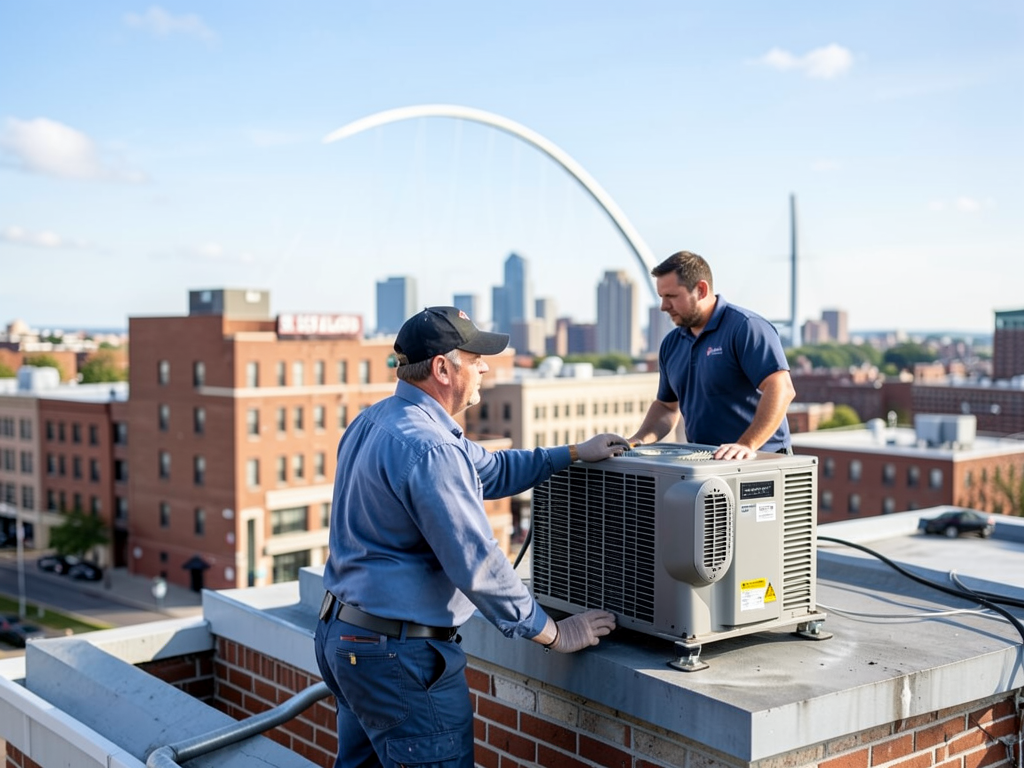
HVAC Service and Maintenance for Midtown Property Managers and Landlords
Managing rental properties in Midtown St. Louis means dealing with extreme seasonal temperature swings that can destroy HVAC systems if not properly maintained. The humid summers and sub-zero winters common to our area create specific failure patterns that require specialized knowledge of local building codes and climate conditions. Property managers need reliable partners who understand both the technical demands and the urgency of keeping tenants comfortable while protecting your investment. St. Louis County Mechanical Code.
Midtown’s mix of historic brick buildings and newer multi-family developments presents unique HVAC challenges. Older properties often have undersized ductwork that restricts airflow during peak demand periods. The clay soil common in St. Louis causes foundation settling that can shift rooftop units and create refrigerant line strain. These local factors make preventative maintenance not just smart but essential for avoiding costly emergency repairs during tenant move-in season. Emergency AC Repair in Creve Coeur That Won’t Break the Bank.
Commercial HVAC systems in Midtown face additional pressure from St. Louis County Mechanical Code requirements and energy efficiency mandates. Property managers who partner with local experts gain access to 24/7 emergency response, detailed maintenance documentation for code compliance, and technicians who understand the specific failure patterns of equipment brands commonly found in our area. The right maintenance program reduces tenant complaints, extends equipment life, and prevents the operational disruptions that hurt your bottom line. The Best Local Furnace Replacement Options for Kirkwood Families.
Common HVAC Issues in Midtown Multi-Family Properties
Property managers in Midtown frequently encounter specific HVAC problems tied to our local climate and building stock. Understanding these patterns helps you anticipate failures before they become emergencies. The Missouri climate creates conditions that stress systems in ways unique to our region.
Humidity levels above 70% during summer months cause evaporator coils to ice over when airflow is restricted. This happens most often in buildings with dirty filters or undersized return air ducts. The ice blocks airflow completely, causing the system to shut down and leaving tenants without cooling during heat waves. Regular filter changes and coil cleaning prevent this common failure. Why Professional Air Duct Cleaning is Essential for Wildwood Homes.
Foundation settling affects many Midtown properties built on the area’s heavy clay soil. As foundations shift, rooftop units become unlevel, causing refrigerant lines to kink or disconnect. This creates refrigerant leaks that reduce cooling capacity and eventually cause compressor failure. Leveling checks during maintenance visits catch these issues early.
Older buildings in the Midtown area often have original ductwork that has deteriorated over decades. Leaks in supply and return ducts reduce system efficiency by up to 30%, causing rooms to heat and cool unevenly. Tenants complain about hot and cold spots, and the HVAC system runs longer than necessary, increasing utility costs and wear on components. Top Rated AC Installation Companies Serving Ladue and Clayton.
Midtown Building Code Requirements for Commercial HVAC
St. Louis County Mechanical Code Section 1303 requires specific ventilation rates for multi-family buildings based on occupancy and square footage. Properties built before 2010 may not meet current standards, creating liability issues for property managers. Regular inspections ensure your systems comply with the latest requirements.. Read more about Specialized HVAC Repair and Ventilation for Soulard Restaurants and Bars.
Energy efficiency standards have become more stringent in recent years. The International Energy Conservation Code now requires minimum SEER ratings for new equipment and specific insulation levels for refrigerant lines. Upgrading older systems to meet these standards can qualify for utility rebates that offset installation costs.
Fire safety regulations require proper clearance around rooftop units and specific access requirements for maintenance personnel. Blocked access can delay emergency repairs and create code violations during inspections. Maintaining clear pathways and proper clearances protects both your property and your tenants.
Permitting requirements for HVAC work in Midtown vary by building age and use type. Historic district properties face additional restrictions on exterior modifications. Understanding these requirements prevents costly delays and ensures all work meets local standards. Professional contractors handle permitting as part of their service.
Preventative Maintenance Programs for Property Managers
Preventative maintenance contracts provide the most cost-effective approach to HVAC management for property managers. These programs include scheduled inspections, cleaning, and minor repairs that prevent major failures. The cost of regular maintenance is typically 30-40% less than emergency repair costs over a five-year period.
Spring maintenance focuses on preparing cooling systems for summer demand. Technicians clean condenser coils, check refrigerant levels, test capacitors, and verify thermostat operation. This prevents the common scenario of systems failing on the first hot day when repair companies are overwhelmed with emergency calls.
Fall maintenance prepares heating systems for winter operation. Furnace inspections include checking heat exchangers for cracks, testing safety controls, cleaning burners, and verifying proper combustion. These checks prevent carbon monoxide risks and ensure reliable heating during cold snaps when temperatures can drop below zero. Finding a Reliable 24 Hour HVAC Technician in Chesterfield.
Filter replacement programs ensure proper airflow throughout the year. Dirty filters reduce system efficiency and cause premature component failure. Scheduled filter changes prevent tenant complaints about poor air quality and reduce the workload on HVAC systems during extreme weather.
Refrigerant leak detection is a critical maintenance task that prevents compressor damage. Small leaks often go unnoticed until system performance drops significantly. Electronic leak detection during maintenance visits catches problems early, preventing the need for expensive refrigerant replacement and compressor repairs.
Emergency Response for Midtown Property Managers
When HVAC systems fail during extreme weather, property managers need immediate response to protect tenants and prevent property damage. Emergency services should guarantee response times under four hours for critical failures during temperature extremes. Fast response prevents frozen pipes in winter and heat-related health issues in summer.
Emergency response teams must carry common replacement parts on service vehicles to complete repairs during the initial visit. This includes capacitors, contactors, fan motors, and control boards for major equipment brands. Having parts available reduces tenant displacement time and prevents the need for temporary housing arrangements.
Communication during emergencies is crucial for property managers. Service providers should offer real-time updates on technician arrival times, repair status, and expected completion. This information helps you manage tenant expectations and coordinate any necessary temporary accommodations.
Documentation of emergency repairs provides liability protection and helps track recurring issues. Detailed reports should include the cause of failure, repairs performed, and recommendations for preventing future problems. This information guides capital planning for system replacements and upgrades.
Backup heating and cooling options may be necessary for properties with elderly or medically fragile tenants. Temporary portable units can maintain safe temperatures while permanent repairs are completed. Having these options available demonstrates your commitment to tenant safety and can prevent liability issues.
Energy Efficiency Upgrades for Midtown Properties
Energy efficiency improvements reduce operating costs and increase property value. Modern HVAC systems can cut energy consumption by 30-50% compared to equipment from the 1990s. These savings directly impact your bottom line through lower utility bills and increased tenant satisfaction.
Smart thermostats provide centralized control of multiple units and allow remote monitoring of system performance. These devices can detect problems before tenants notice them and provide data for optimizing energy usage. Many utility companies offer rebates for installing programmable thermostats in multi-family buildings.
Variable refrigerant flow systems offer superior efficiency for properties with varying heating and cooling needs across different areas. These systems adjust refrigerant flow based on demand, reducing energy waste in rarely used spaces. The initial investment typically pays for itself within three to five years through energy savings.
Building automation systems integrate HVAC control with other building systems for maximum efficiency. These systems can learn occupancy patterns and adjust heating and cooling schedules accordingly. They also provide detailed energy usage data that helps identify optimization opportunities.
Insulation upgrades complement HVAC improvements by reducing the workload on heating and cooling systems. Proper insulation in attics, walls, and around ductwork prevents energy loss and improves system efficiency. These improvements may qualify for tax incentives or utility rebates.
Tenant Communication and HVAC Management
Clear communication with tenants about HVAC maintenance schedules prevents complaints and builds trust. Advance notice of scheduled maintenance allows tenants to prepare and reduces the likelihood of access issues. Regular communication also educates tenants about proper system use and filter changes they can perform.
Establishing clear procedures for reporting HVAC problems ensures issues are addressed promptly. Tenants should know who to contact, what information to provide, and what to expect during the repair process. Quick response to complaints prevents small problems from becoming major emergencies.
Educating tenants about energy conservation helps reduce utility costs and system wear. Simple tips about thermostat settings, filter changes, and keeping vents unobstructed can significantly impact system performance. This education can be provided through welcome packets, newsletters, or online portals.
Handling tenant complaints about temperature requires both technical expertise and customer service skills. Some tenants may have medical conditions requiring specific temperature ranges. Understanding these needs and having solutions available demonstrates your commitment to tenant satisfaction.
Documentation of all tenant communications regarding HVAC issues provides protection in case of disputes. Keep records of complaints, repairs performed, and tenant acknowledgments of system limitations. This documentation can be crucial if liability issues arise.
Cost Factors for HVAC Service in Midtown
Several factors affect HVAC service costs in Midtown properties. Building age impacts both the complexity of repairs and the availability of replacement parts. Older systems may require custom parts or modifications that increase repair costs. Understanding these factors helps you budget appropriately for maintenance and repairs.
System accessibility affects service pricing. Rooftop units require specialized equipment for safe access, while units in tight mechanical rooms may require additional labor time. Properties with difficult access may benefit from preventative maintenance contracts that spread these costs over time.
Brand and model of equipment influence both parts availability and technician familiarity. Common brands typically have lower parts costs and faster repair times due to wider parts availability. Understanding your equipment brands helps you anticipate maintenance costs and plan for eventual replacements.
Seasonal demand affects pricing for emergency services. During extreme weather events, demand for HVAC repairs increases dramatically, potentially affecting response times and pricing. Preventative maintenance helps avoid these peak-demand scenarios and their associated costs.
Energy costs in St. Louis vary by season and can significantly impact operating expenses. Older, inefficient systems may cost 50% more to operate than modern high-efficiency units. Calculating the payback period for efficiency upgrades helps justify capital investments in new equipment.
Choosing the Right HVAC Service Provider
Selecting an HVAC service provider requires evaluating several key factors beyond just price. Experience with multi-family properties in Midtown is crucial, as these buildings present unique challenges not found in single-family homes. Providers should understand local building codes, tenant management issues, and the specific equipment brands common in your area.
Licensing and insurance are non-negotiable requirements for any HVAC service provider. Missouri requires specific licenses for HVAC work, and providers should carry both general liability and workers’ compensation insurance. Request copies of current licenses and insurance certificates before signing any service agreements.
Response time guarantees are essential for emergency services. Providers should clearly state their response time commitments and have systems in place to meet these guarantees. Ask about their after-hours procedures and how they handle multiple simultaneous emergencies.
Maintenance documentation should be comprehensive and easily accessible. Providers should offer online portals where you can view service histories, upcoming maintenance schedules, and recommendations for future work. This documentation is crucial for property management and can be valuable during property evaluations.
Technician qualifications matter more than you might expect. Look for providers who employ NATE-certified technicians and provide ongoing training. Experienced technicians diagnose problems more accurately and perform repairs more efficiently, ultimately saving you money.
Long-Term Planning for HVAC Systems
Developing a long-term HVAC replacement plan helps you budget for major expenses and avoid emergency replacements. Most commercial HVAC systems have a useful life of 15-20 years, though this varies by equipment type and maintenance history. Planning replacements during off-peak seasons can reduce costs and minimize tenant disruption.
Equipment lifecycle analysis should consider both repair costs and energy efficiency. As systems age, repair costs typically increase while efficiency decreases. Calculating the point where replacement becomes more economical than continued repairs helps guide replacement timing decisions.
Phased replacement strategies work well for large properties with multiple HVAC units. Replacing a few units each year spreads capital costs over time and allows you to take advantage of technological improvements in newer equipment. This approach also minimizes the impact on tenants and operations.
Rebate and incentive programs can significantly reduce the cost of system upgrades. Utility companies, government agencies, and equipment manufacturers often offer rebates for high-efficiency equipment installations. Staying informed about these programs can save thousands on major replacements.
Future-proofing your HVAC systems involves considering upcoming code changes and energy efficiency trends. Installing slightly oversized ductwork or planning for potential electrification can prevent costly retrofits later. Working with providers who understand these trends helps you make forward-looking decisions.
Case Studies: Midtown Property Management Success Stories
A 24-unit apartment building in Midtown reduced emergency repair calls by 70% after implementing a comprehensive maintenance program. The property manager worked with a local HVAC company to establish quarterly inspections, filter replacement schedules, and tenant education programs. The result was improved tenant satisfaction and significant cost savings on repairs.
A historic office building in Midtown faced frequent HVAC failures due to its original ductwork and aging equipment. The property management team developed a phased replacement plan that upgraded one floor at a time over three years. This approach maintained operations throughout the renovation while spreading costs over multiple budget cycles.
A mixed-use development in Midtown struggled with inconsistent temperatures across different areas of the building. Smart thermostat installation and zoning modifications solved the problem while reducing energy costs by 25%. The property manager now uses the energy data to optimize building operations and identify potential issues early.
A senior living facility in Midtown required specialized HVAC solutions due to the medical needs of residents. The facility implemented redundant systems and backup power to ensure continuous operation. Regular maintenance and emergency response planning have prevented any temperature-related health issues among residents.
Frequently Asked Questions
How often should commercial HVAC systems be serviced in Midtown properties?
Commercial HVAC systems in Midtown should receive professional maintenance twice yearly, with quarterly filter changes and monthly visual inspections. Spring service prepares cooling systems for summer, while fall service prepares heating systems for winter. Properties with high tenant turnover may benefit from more frequent service.
What are the most common HVAC problems in Midtown’s older buildings?
The most frequent issues include undersized ductwork causing poor airflow, foundation settling affecting rooftop unit alignment, deteriorated insulation on refrigerant lines, and outdated controls that lack modern efficiency features. Many older buildings also have original equipment nearing the end of its useful life.
How can I reduce HVAC energy costs in my Midtown rental properties?
Energy costs can be reduced through regular maintenance, installing programmable thermostats, sealing ductwork leaks, upgrading to high-efficiency equipment, and implementing tenant education programs about energy conservation. Many utility companies offer free energy audits that identify specific cost-saving opportunities.
What should I look for in an HVAC service contract for my property?
Look for contracts that include detailed maintenance schedules, guaranteed response times for emergencies, comprehensive reporting, parts warranties, and clear pricing structures. The contract should specify the qualifications of technicians who will service your property and include provisions for after-hours emergencies.
How do I handle tenant complaints about HVAC temperatures?
Establish clear procedures for tenants to report temperature issues, respond within 24 hours, and document all communications. Some tenants may have medical conditions requiring specific temperatures, so be prepared to make reasonable accommodations. Regular maintenance often prevents many temperature complaints before they occur.
Are there any local incentives for upgrading HVAC systems in Midtown?
Yes, Ameren Missouri offers rebates for high-efficiency HVAC equipment installations, and there may be federal tax credits available for energy-efficient upgrades. The St. Louis County Department of Health also provides information about ventilation requirements that could affect your upgrade plans. Check with your HVAC provider about current incentive programs. Ameren Missouri Energy Efficiency Rebates.
Call to Action
Don’t wait for the next HVAC emergency to test your property management skills. Call (314) 417-7771 today to schedule a comprehensive HVAC assessment of your Midtown properties. Our experienced technicians understand the unique challenges of managing multi-family buildings in St. Louis and can help you develop a maintenance strategy that protects your investment and keeps your tenants comfortable year-round.
Whether you need emergency repairs, preventative maintenance, or system upgrades, we’re ready to help. Pick up the phone and call (314) 417-7771 before the next temperature extreme hits. Your tenants and your bottom line will thank you.
{
“@context”: “https://schema.org”,
“@type”: “BlogPosting”,
“headline”: “HVAC Service and Maintenance for Midtown Property Managers and Landlords”,
“description”: “Expert HVAC maintenance contracts for Midtown property managers. 24/7 emergency service, code compliance, and energy audits to protect your investment and tenants.”,
“wordCount”: 2790,
“datePublished”: “2026-03-07T12:57:00.000Z”,
“dateModified”: “2026-03-07T12:57:00.000Z”,
“inLanguage”: “en-US”,
“mainEntityOfPage”: {
“@type”: “WebPage”,
“@id”: “https://keystonehvacstlouis.com”
},
“publisher”: {
“@type”: “LocalBusiness”,
“name”: “Keystone HVAC St. Louis”,
“url”: “https://keystonehvacstlouis.com”
},
“author”: {
“@type”: “Organization”,
“name”: “Keystone HVAC St. Louis”,
“url”: “https://keystonehvacstlouis.com”
},
“image”: {
“@type”: “ImageObject”,
“url”: “https://keystonehvacstlouis.com/wp-content/uploads/2026/03/hvac-service-and-maintenance-for-midtown-property-1.png”
}
}
{
“@context”: “https://schema.org”,
“@type”: “HVACBusiness”,
“name”: “Keystone HVAC St. Louis”,
“url”: “https://keystonehvacstlouis.com”,
“address”: {
“@type”: “PostalAddress”,
“addressLocality”: “St. Louis”
},
“areaServed”: {
“@type”: “City”,
“name”: “St. Louis”
}
}
{
“@context”: “https://schema.org”,
“@type”: “FAQPage”,
“mainEntity”: [
{
“@type”: “Question”,
“name”: “How often should commercial HVAC systems be serviced in Midtown properties?”,
“acceptedAnswer”: {
“@type”: “Answer”,
“text”: “Commercial HVAC systems in Midtown should receive professional maintenance twice yearly, with quarterly filter changes and monthly visual inspections. Spring service prepares cooling systems for summer, while fall service prepares heating systems for winter. Properties with high tenant turnover may benefit from more frequent service.”
}
},
{
“@type”: “Question”,
“name”: “What are the most common HVAC problems in Midtown’s older buildings?”,
“acceptedAnswer”: {
“@type”: “Answer”,
“text”: “The most frequent issues include undersized ductwork causing poor airflow, foundation settling affecting rooftop unit alignment, deteriorated insulation on refrigerant lines, and outdated controls that lack modern efficiency features. Many older buildings also have original equipment nearing the end of its useful life.”
}
},
{
“@type”: “Question”,
“name”: “What should I look for in an HVAC service contract for my property?”,
“acceptedAnswer”: {
“@type”: “Answer”,
“text”: “Look for contracts that include detailed maintenance schedules, guaranteed response times for emergencies, comprehensive reporting, parts warranties, and clear pricing structures. The contract should specify the qualifications of technicians who will service your property and include provisions for after-hours emergencies.”
}
},
{
“@type”: “Question”,
“name”: “How do I handle tenant complaints about HVAC temperatures?”,
“acceptedAnswer”: {
“@type”: “Answer”,
“text”: “Establish clear procedures for tenants to report temperature issues, respond within 24 hours, and document all communications. Some tenants may have medical conditions requiring specific temperatures, so be prepared to make reasonable accommodations. Regular maintenance often prevents many temperature complaints before they occur.”
}
},
{
“@type”: “Question”,
“name”: “Are there any local incentives for upgrading HVAC systems in Midtown?”,
“acceptedAnswer”: {
“@type”: “Answer”,
“text”: “Yes, Ameren Missouri offers rebates for high-efficiency HVAC equipment installations, and there may be federal tax credits available for energy-efficient upgrades. The St. Louis County Department of Health also provides information about ventilation requirements that could affect your upgrade plans. Check with your HVAC provider about current incentive programs. Ameren Missouri Energy Efficiency Rebates.”
}
}
]
}
{
“@context”: “https://schema.org”,
“@type”: “BreadcrumbList”,
“itemListElement”: [
{
“@type”: “ListItem”,
“position”: 1,
“name”: “Home”,
“item”: “https://keystonehvacstlouis.com”
},
{
“@type”: “ListItem”,
“position”: 2,
“name”: “Blog”,
“item”: “https://keystonehvacstlouis.com/blog”
},
{
“@type”: “ListItem”,
“position”: 3,
“name”: “HVAC Service and Maintenance for Midtown Property Managers and Landlords”
}
]
}
{
“@context”: “https://schema.org”,
“@type”: “Service”,
“serviceType”: “HVAC”,
“provider”: {
“@type”: “LocalBusiness”,
“name”: “Keystone HVAC St. Louis”,
“url”: “https://keystonehvacstlouis.com”
},
“areaServed”: {
“@type”: “City”,
“name”: “St. Louis”
},
“description”: “Expert HVAC maintenance contracts for Midtown property managers. 24/7 emergency service, code compliance, and energy audits to protect your investment and tenants.”
}