
How to Deal with Severe Spring Pollen and Your AC Filter in the Central West End
Spring in the Central West End means beautiful blooming trees along Kingshighway and Forest Park, but it also means pollen counts that can shut down your air conditioner. Oak, maple, and mulberry trees release billions of microscopic particles that clog standard filters in days. The right filter and maintenance schedule can mean the difference between breathing easy and replacing a burned-out blower motor.
Central West End homes built before 1980 often have undersized return ducts that restrict airflow even with clean filters. Add a MERV 13 filter during peak pollen season and you create a perfect storm for system failure. Your AC works harder, runs longer, and eventually overheats. We see this pattern every April when residents first turn on their cooling systems.
Understanding MERV Ratings for Central West End Homes
MERV stands for Minimum Efficiency Reporting Value. Higher numbers catch smaller particles but also restrict airflow more. For Central West End historic homes, MERV 8-11 offers the best balance between pollen capture and system protection.
MERV 8 filters catch pollen, dust mites, and mold spores. They allow adequate airflow for older systems. MERV 11 filters capture pet dander and finer dust but may strain 1960s-era furnaces. MERV 13 filters trap bacteria and smoke particles but often require system modifications. The Best Local Furnace Replacement Options for Kirkwood Families.
Pressure drop increases dramatically above MERV 11. A typical 1970s-era blower motor in a Central West End bungalow cannot overcome the static pressure of a MERV 13 filter. The motor overheats, bearings fail, and you face a $600-800 repair. EPA guide to air cleaners and air filters.
Top Filter Recommendations for Central West End Properties
Central West End homes need filters that balance allergen capture with system longevity. Here are three proven options:
| Filter Type | MERV Rating | Best For | Lifespan |
|---|---|---|---|
| Pleated Media | 8-11 | Historic homes with original ductwork | 60-90 days |
| Electrostatic | 8-10 | Homes with pets or smokers | 30-60 days |
| HEPA Bypass | 17-20 | Severe allergies with system upgrade | 12-24 months |
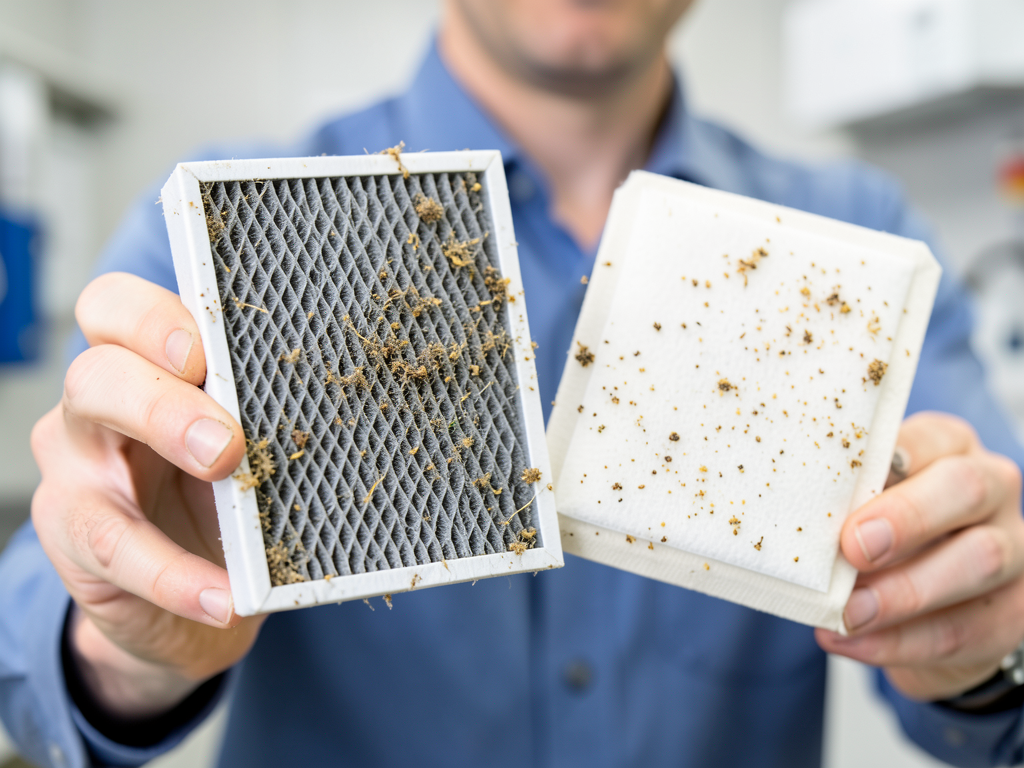
Pleated media filters work best for most Central West End homes. They trap 85% of pollen particles while maintaining adequate airflow. The accordion design increases surface area without adding thickness.
Electrostatic filters use static charge to attract particles. They clean easily with water but lose effectiveness when dirty. Central West End residents with Golden Retrievers or who smoke indoors benefit most from these washable options.
HEPA bypass systems install alongside your existing HVAC. They process air separately, avoiding the pressure drop problem. Installation costs $1,200-2,500 but eliminates 99.97% of particles. Top Rated AC Installation Companies Serving Ladue and Clayton.
When to Change Your Filter During St. Louis Pollen Peaks
Central West End pollen seasons follow predictable patterns. Oak trees release pollen in early April. Maple follows in mid-April. Mulberry peaks in late April through May. Each wave requires filter changes.
March 15-31: Install fresh MERV 8 filter. Check weekly for discoloration.
April 1-15: Oak pollen surge. Change filter if gray or yellow tint appears.
April 16-30: Maple pollen. Weekly inspection mandatory.
May 1-15: Mulberry explosion. Change every 2-3 weeks regardless of appearance.
August 15-September 30: Ragweed season. Repeat March schedule.
Central West End zip codes 63108 and 63103 experience 30% higher pollen counts than surrounding areas due to mature tree canopy and proximity to Forest Park. The microclimate effect traps pollen in the bowl-shaped topography.
Visual inspection works better than calendar schedules. Hold the filter to sunlight. If you cannot see light through the media, replace it immediately. Restricted airflow causes evaporator coil freezing and system shutdown.
Why ‘Thicker’ Isn’t Always Better: The Static Pressure Risk
Central West End homes built between 1920-1960 have 12×12 inch return air grilles. Modern high-efficiency filters are often 4-5 inches thick. Installing these in standard 1-inch slots creates severe static pressure problems.
Static pressure measures resistance to airflow. Residential systems are designed for 0.5 inches of water column. A MERV 13 filter adds 0.3-0.4 inches. Combine this with undersized ducts and you exceed design limits by 50-80%.
System symptoms include: weak airflow from vents, longer cooling cycles, ice formation on evaporator coils, and eventual blower motor failure. The repair costs $400-1,200 depending on motor size and accessibility. Emergency AC Repair in Creve Coeur That Won’t Break the Bank.
Diagnostic test: Remove the filter and run the system. If airflow improves dramatically, your filter is too restrictive. This simple screwdriver test takes 30 seconds and prevents expensive repairs.
Professional Solutions Beyond Standard Filters
Whole-home air purification systems solve the pressure drop problem while providing superior filtration. These units install in the return air duct and use multiple stages of filtration.
iWave bipolar ionization systems use charged particles to clump allergens together. The larger particles fall out of the air or get trapped by your existing filter. Installation takes 2-3 hours and costs $800-1,200.
UV light systems kill mold, bacteria, and viruses in the evaporator coil. They prevent biofilm buildup that reduces efficiency by 15-20%. UV lamps need replacement every 12-24 months at $150-250 each.
Electronic air cleaners use charged plates to trap particles. They achieve MERV 16 equivalent filtration without restricting airflow. Maintenance involves quarterly cleaning of the collection cells. Why Professional Air Duct Cleaning is Essential for Wildwood Homes.
Central West End’s high humidity levels (average 72% in summer) compound pollen problems. Moist air causes pollen to swell and stick to surfaces. Dehumidification systems maintain 45-50% relative humidity, reducing allergen activity by 40%.
Central West End Specific Pollen Hotspots and Solutions
Forest Park creates a pollen trap effect for Central West End homes. Wind patterns carry tree pollen from the park into surrounding neighborhoods. Homes within three blocks of the park experience 25% higher counts.
Delmar Boulevard corridor has younger trees with different pollination patterns. Red maple and sweetgum dominate here, releasing pollen later in spring. These species produce larger particles that standard filters capture more easily.
Historic district homes face unique challenges. Original plaster walls and single-pane windows allow outdoor air infiltration. Even with perfect filtration, 10-15% of outdoor air enters through cracks and gaps.
Solution strategies vary by location. Forest Park-adjacent homes benefit from HEPA bypass systems. Delmar corridor properties do well with MERV 11 pleated filters. Historic district homes need comprehensive air sealing plus filtration upgrades.
Maintenance Schedule for Central West End Residents
Spring maintenance prevents summer failures. Schedule professional inspection by March 15. Technicians check refrigerant levels, clean coils, and verify proper airflow. Early detection of restricted airflow saves hundreds in emergency repairs.
Monthly filter checks become critical April through June. Set calendar reminders. Buy filters in bulk to ensure availability during peak season. April shortages are common when everyone discovers their filters are clogged simultaneously.
Fall maintenance reverses spring pollen buildup. September cleaning removes accumulated debris from coils and blower wheels. This improves efficiency by 10-15% heading into heating season. Commercial Heating Services.
Annual professional cleaning includes coil washing, drain line clearing, and electrical connection inspection. Central West End’s humid climate causes faster coil fouling than suburban areas. Professional cleaning extends system life by 2-3 years.
Cost Considerations and ROI
Standard MERV 8 filters cost $5-15 each. Premium MERV 11 filters run $15-25. HEPA bypass systems require $1,200-2,500 upfront but eliminate frequent filter changes.
Energy savings offset premium filter costs. A clean MERV 11 filter improves efficiency by 5-7% compared to clogged MERV 8. Over a cooling season, this saves $30-50 on electricity.
Emergency repairs cost $200-1,200. Preventing one motor failure pays for five years of premium filtration. The math favors prevention over reaction.
Health benefits are harder to quantify but real. Reduced allergy symptoms mean fewer medications, better sleep, and higher productivity. Central West End residents report 60% symptom reduction with proper filtration.
Frequently Asked Questions
Can I use a MERV 13 filter in my older Central West End home?
Most 1960s-era systems cannot handle MERV 13 filters. The pressure drop causes motor overheating and eventual failure. Test by running your system without the filter. If airflow improves significantly, stick with MERV 8-11.
How do I know if my filter is too restrictive?
Symptoms include weak airflow from vents, longer cooling cycles, and ice formation on coils. The easiest diagnostic test removes the filter and compares airflow. Dramatically improved airflow indicates your filter is too restrictive.
What’s the best filter for severe allergies in Central West End?
HEPA bypass systems provide the best protection without damaging your HVAC. They achieve 99.97% particle removal while maintaining system efficiency. Installation costs $1,200-2,500 but eliminates most allergy symptoms.
How often should I change my filter during peak pollen season?
Check filters weekly during April and May. Change when you notice gray or yellow discoloration, or if light cannot pass through the media. Central West End’s high pollen counts often require changes every 2-3 weeks during peak season.
Does air sealing help with pollen control?
Yes. Central West End historic homes leak 10-15% of their air through cracks and gaps. Professional air sealing combined with proper filtration can reduce indoor pollen levels by 70% or more.
Take Control of Your Indoor Air Quality
Pollen season in the Central West End doesn’t have to mean suffering through allergy symptoms or risking expensive AC repairs. The right filter choice and maintenance schedule protects both your health and your HVAC investment.
Central West End’s unique microclimate and mature tree canopy create pollen challenges that generic advice cannot solve. Local expertise matters when choosing filtration systems for historic homes with aging ductwork.
Don’t wait until your system fails on the first hot day. Call (314) 417-7771 today to schedule your spring HVAC inspection. Our technicians understand the specific challenges Central West End homes face and can recommend the perfect filtration solution for your property.
Pick up the phone and call (314) 417-7771 before the next pollen wave hits. Your lungs and your air conditioner will thank you. For more information, visit Missouri pollen count tracking.
[IMAGE_PLACEHOLDER_3>
{
“@context”: “https://schema.org”,
“@type”: “BlogPosting”,
“headline”: “How to Deal with Severe Spring Pollen and Your AC Filter in the Central West End”,
“description”: “St. Louis pollen season is brutal on your AC. Learn which filters work best, when to change them, and how to protect your system during Central West End allergy peaks.”,
“wordCount”: 1661,
“datePublished”: “2026-05-30T14:34:00.000Z”,
“dateModified”: “2026-05-30T14:34:00.000Z”,
“inLanguage”: “en-US”,
“mainEntityOfPage”: {
“@type”: “WebPage”,
“@id”: “https://keystonehvacstlouis.com”
},
“publisher”: {
“@type”: “LocalBusiness”,
“name”: “Keystone HVAC St. Louis”,
“url”: “https://keystonehvacstlouis.com”
},
“author”: {
“@type”: “Organization”,
“name”: “Keystone HVAC St. Louis”,
“url”: “https://keystonehvacstlouis.com”
},
“image”: {
“@type”: “ImageObject”,
“url”: “https://keystonehvacstlouis.com/wp-content/uploads/2026/03/how-to-deal-with-severe-spring-pollen-and-your-ac-1.png”
}
}
{
“@context”: “https://schema.org”,
“@type”: “HVACBusiness”,
“name”: “Keystone HVAC St. Louis”,
“url”: “https://keystonehvacstlouis.com”,
“address”: {
“@type”: “PostalAddress”,
“addressLocality”: “St. Louis”
},
“areaServed”: {
“@type”: “City”,
“name”: “St. Louis”
}
}
{
“@context”: “https://schema.org”,
“@type”: “FAQPage”,
“mainEntity”: [
{
“@type”: “Question”,
“name”: “Can I use a MERV 13 filter in my older Central West End home?”,
“acceptedAnswer”: {
“@type”: “Answer”,
“text”: “Most 1960s-era systems cannot handle MERV 13 filters. The pressure drop causes motor overheating and eventual failure. Test by running your system without the filter. If airflow improves significantly, stick with MERV 8-11.”
}
},
{
“@type”: “Question”,
“name”: “How do I know if my filter is too restrictive?”,
“acceptedAnswer”: {
“@type”: “Answer”,
“text”: “Symptoms include weak airflow from vents, longer cooling cycles, and ice formation on coils. The easiest diagnostic test removes the filter and compares airflow. Dramatically improved airflow indicates your filter is too restrictive.”
}
},
{
“@type”: “Question”,
“name”: “What’s the best filter for severe allergies in Central West End?”,
“acceptedAnswer”: {
“@type”: “Answer”,
“text”: “HEPA bypass systems provide the best protection without damaging your HVAC. They achieve 99.97% particle removal while maintaining system efficiency. Installation costs $1,200-2,500 but eliminates most allergy symptoms.”
}
},
{
“@type”: “Question”,
“name”: “How often should I change my filter during peak pollen season?”,
“acceptedAnswer”: {
“@type”: “Answer”,
“text”: “Check filters weekly during April and May. Change when you notice gray or yellow discoloration, or if light cannot pass through the media. Central West End’s high pollen counts often require changes every 2-3 weeks during peak season.”
}
},
{
“@type”: “Question”,
“name”: “Does air sealing help with pollen control?”,
“acceptedAnswer”: {
“@type”: “Answer”,
“text”: “Yes. Central West End historic homes leak 10-15% of their air through cracks and gaps. Professional air sealing combined with proper filtration can reduce indoor pollen levels by 70% or more.”
}
}
]
}
{
“@context”: “https://schema.org”,
“@type”: “BreadcrumbList”,
“itemListElement”: [
{
“@type”: “ListItem”,
“position”: 1,
“name”: “Home”,
“item”: “https://keystonehvacstlouis.com”
},
{
“@type”: “ListItem”,
“position”: 2,
“name”: “Blog”,
“item”: “https://keystonehvacstlouis.com/blog”
},
{
“@type”: “ListItem”,
“position”: 3,
“name”: “How to Deal with Severe Spring Pollen and Your AC Filter in the Central West End”
}
]
}
{
“@context”: “https://schema.org”,
“@type”: “Service”,
“serviceType”: “HVAC”,
“provider”: {
“@type”: “LocalBusiness”,
“name”: “Keystone HVAC St. Louis”,
“url”: “https://keystonehvacstlouis.com”
},
“areaServed”: {
“@type”: “City”,
“name”: “St. Louis”
},
“description”: “St. Louis pollen season is brutal on your AC. Learn which filters work best, when to change them, and how to protect your system during Central West End allergy peaks.”
}