
Essential Maintenance Tips for PTAC Units in Central West End Apartments
Living in the Central West End means dealing with St. Louis’s notorious humidity and temperature swings. Your PTAC (Packaged Terminal Air Conditioner) units work overtime to keep apartments comfortable, but without proper maintenance, they can fail when you need them most. These through-the-wall units face unique challenges in our historic district’s older buildings, where wall sleeves and condensate lines often date back decades.. Read more about The Best Ways to Control HVAC Costs in Your St. Louis Short Term Rental Without Annoying Your Guests.
Regular maintenance isn’t just about comfort—it’s about preventing costly emergency repairs during peak summer heat or winter cold snaps. The Central West End’s mix of historic brick buildings and modern conversions creates specific conditions that affect PTAC performance. High humidity levels common to our area can cause condensate drain clogs within weeks, while the freeze-thaw cycles typical of St. Louis winters stress wall sleeve seals and electrical connections. EPA Section 608 Certification.
Most PTAC failures in Central West End apartments stem from neglected maintenance rather than age. A unit that’s two years old can perform worse than one that’s ten if the coils are dirty and filters are clogged. Understanding the specific maintenance needs of your PTAC can extend its life by years and reduce energy costs by up to 20%.
Understanding Your PTAC Unit’s Components
PTAC units contain several critical components that require regular attention. The evaporator coil sits inside your apartment and absorbs heat from the air. The condenser coil, located on the exterior side, releases that heat outside. Between these sits the compressor, the heart of your cooling system. The wall sleeve provides structural support and weather protection, while the condensate drain line removes moisture collected during operation.
In Central West End buildings, wall sleeves often settle over time due to the area’s clay soil composition. This settling can create gaps that let in moisture and pests. The historic nature of many CWE buildings means wall sleeves may lack modern weatherstripping, making them vulnerable to St. Louis’s driving rains and temperature extremes.
Condensate drain lines in our humid climate develop algae and mold growth much faster than in drier regions. What works in Phoenix won’t work here—our summer humidity levels often exceed 80%, creating perfect conditions for biological growth in drain pans and lines. This growth can block drains within a single cooling season, causing water damage and system shutdowns.. Read more about A Guide to Maintaining Water Source Heat Pumps in Downtown St. Louis Condos.
Essential Monthly Maintenance Tasks
Monthly maintenance prevents most PTAC problems before they start. Start with the air filter, which should be checked every 30 days. In the Central West End, where pollen counts can be high during spring and cottonwood seeds blanket the area in early summer, filters may need cleaning or replacement more frequently. A clogged filter reduces airflow by up to 30%, forcing your unit to work harder and increasing energy costs. Why Professional Air Duct Cleaning is Essential for Wildwood Homes.
Clean the filter by removing it from the unit and washing it with mild soap and water. Allow it to dry completely before reinstalling. Never operate a PTAC without a filter, as this allows dirt to accumulate on the evaporator coil, reducing efficiency and potentially causing the unit to freeze up.
Check the condensate drain pan monthly for standing water or debris. Use a flashlight to inspect the drain line opening. If you see algae growth or notice slow drainage, pour a mixture of equal parts water and white vinegar through the drain line to kill biological growth. This simple step prevents the most common cause of PTAC water damage in Central West End apartments.
Inspect the exterior louvers for debris, leaves, or cottonwood seeds. These can block airflow and reduce efficiency by up to 15%. Use a soft brush to remove debris, being careful not to bend the delicate fins on the condenser coil behind the louvers.
Seasonal Deep Cleaning Procedures
Seasonal deep cleaning addresses problems that monthly maintenance can’t fix. Every spring before cooling season begins, schedule a thorough cleaning of both coils. The evaporator coil inside your apartment accumulates dust, skin cells, and other debris that regular filter changes can’t prevent. This buildup insulates the coil, reducing heat transfer and forcing your unit to run longer cycles.. Read more about How to Deal with Severe Spring Pollen and Your AC Filter in the Central West End.
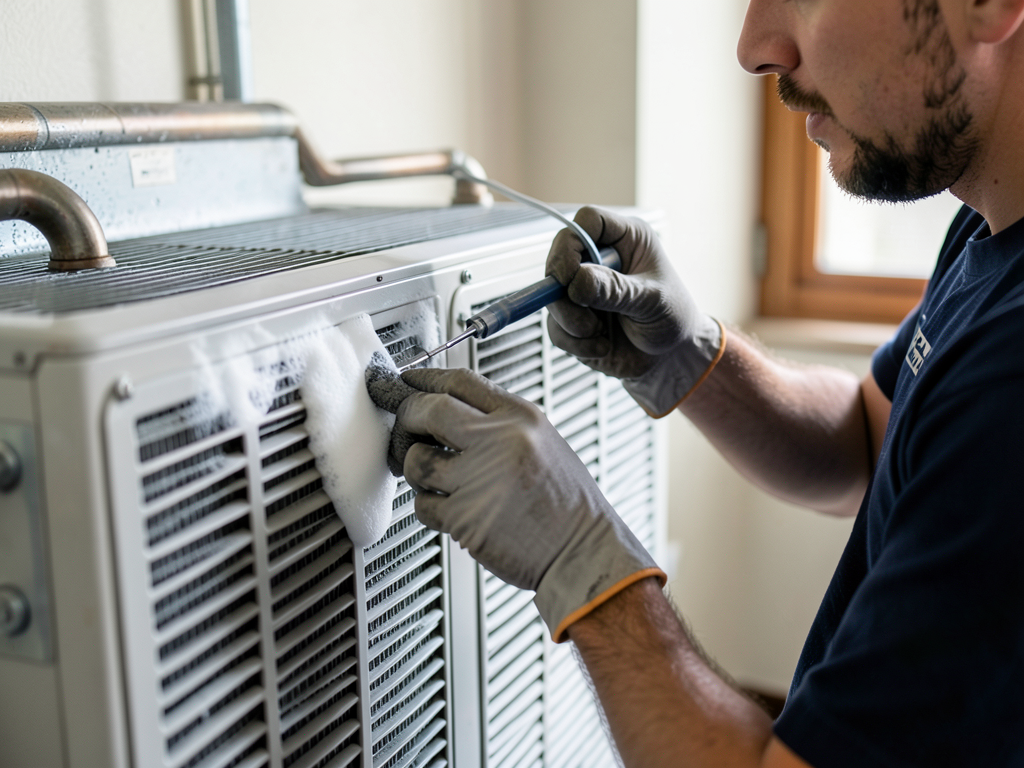
Professional coil cleaning uses specialized foaming cleaners that penetrate deep into the coil’s fin structure. These cleaners break down the biofilm that forms from dust and moisture, restoring the coil’s original efficiency. In the Central West End’s older buildings, where PTAC units often run year-round for both heating and cooling, this annual cleaning is essential.
The condenser coil on the exterior side faces additional challenges from our urban environment. Construction dust, vehicle exhaust, and pollen create a sticky residue that standard cleaning can’t remove. Professional cleaning includes pressure washing with coil-safe detergents that restore the coil’s heat transfer capacity without damaging the delicate aluminum fins.
Wall sleeve inspection should happen during seasonal maintenance. Check for gaps between the sleeve and the wall, signs of water intrusion, and proper insulation. Many Central West End buildings have settled over time, creating gaps that weren’t present when the units were installed. These gaps let in moisture, reduce efficiency, and can lead to mold growth in wall cavities.
Professional Maintenance Checklist
While DIY maintenance handles routine tasks, professional service addresses technical issues that require specialized tools and knowledge. A complete professional maintenance visit includes refrigerant level checks using digital manifold gauges, electrical connection testing with a multimeter, and thermostat calibration using a secondary temperature probe.
Technicians check for proper superheat and subcooling values, which indicate whether your system is operating at peak efficiency. These measurements require specific knowledge of your unit’s design parameters and can’t be performed accurately without proper training and equipment.
Condensate pan treatment involves applying EPA-registered antimicrobial agents that prevent algae and mold growth for up to six months. This treatment is particularly important in the Central West End, where our high humidity creates ideal conditions for biological growth in drain systems.
Electrical component inspection includes checking capacitors for proper microfarad ratings, testing contactors for pitting and arcing, and verifying that all connections meet National Electrical Code requirements. Loose connections can cause voltage drops that reduce efficiency and potentially create fire hazards.
Wall sleeve weatherization may include adding new gaskets, sealing gaps with appropriate sealants, and ensuring proper insulation. In historic Central West End buildings, this work must preserve the building’s exterior appearance while providing modern weather protection.
Common PTAC Problems in Central West End Apartments
Understanding common failure patterns helps you recognize problems early. The most frequent issue we see in Central West End apartments is condensate drain clogging. Our high humidity causes rapid algae growth in drain pans and lines. When drains clog, water backs up into the unit, triggering overflow switches that shut down the system to prevent water damage.
Another common problem is frozen evaporator coils. This occurs when airflow is restricted due to dirty filters, blocked coils, or low refrigerant levels. In our humid climate, even minor restrictions can cause coils to freeze, leading to complete system shutdown and potential compressor damage if the problem persists.. Read more about Preventing Frozen HVAC Pipes and Drainage Lines During a St. Louis Flash Freeze in Wildwood.
Electrical issues plague many older Central West End buildings. Original wiring may not meet current electrical code requirements for modern PTAC units. Voltage fluctuations common in older electrical systems can damage capacitors and control boards. Signs of electrical problems include units that trip breakers, fail to start, or run intermittently.
Wall sleeve deterioration affects many Central West End apartments. Original sleeves may have rusted through, creating gaps that let in moisture and pests. Water intrusion can damage interior walls and create conditions for mold growth. In some cases, sleeves have shifted due to foundation settling, creating gaps that weren’t present during installation. Top Rated AC Installation Companies Serving Ladue and Clayton.
Energy Efficiency Tips for St. Louis Climate
Maximizing your PTAC’s efficiency in our climate requires specific strategies. Set your thermostat to 78°F during cooling season rather than lower temperatures. Each degree below 78°F increases energy consumption by 3-5%. In our humid climate, this setting provides good comfort while minimizing energy use.
Use the unit’s energy-saving mode if available. This feature cycles the compressor on and off to maintain temperature rather than running continuously. While it may cause slight temperature swings, it can reduce energy consumption by 15-20% during peak cooling season.
Keep blinds and curtains closed during the hottest parts of the day, especially on south and west-facing windows common in many Central West End apartments. This simple step can reduce cooling load by up to 25%, allowing your PTAC to maintain comfort with less effort.
Consider using ceiling fans to circulate air. While fans don’t cool rooms, they make you feel cooler by increasing evaporation from your skin. This allows you to set your thermostat 2-3 degrees higher without sacrificing comfort, potentially saving $50-100 per cooling season.
DIY vs. Professional Maintenance: Making the Right Choice
Understanding what you can safely handle versus what requires professional service prevents both wasted effort and dangerous mistakes. DIY maintenance includes filter cleaning, basic coil brushing, drain line flushing with vinegar solution, and visual inspections of accessible components. These tasks require no specialized tools and carry minimal risk of damage.
Professional service becomes necessary for tasks involving refrigerant handling, electrical testing, sealed system repairs, and any work requiring access to internal components. Federal law prohibits anyone without EPA certification from handling refrigerants, and attempting electrical repairs without proper training creates serious safety hazards. Emergency AC Repair in Creve Coeur That Won’t Break the Bank.
The cost-benefit analysis favors professional service for annual maintenance. While a DIY cleaning might save $75-100, professional service includes diagnostic testing that can identify developing problems before they cause expensive failures. Finding a failing capacitor during routine service costs far less than emergency replacement during a July heat wave. Finding a Reliable 24 Hour HVAC Technician in Chesterfield.
For Central West End property managers, professional maintenance contracts often provide the best value. Scheduled service ensures consistent maintenance across all units while providing priority response for any problems that arise. Many contractors offer volume discounts that make professional service surprisingly affordable.
Extending Your PTAC’s Lifespan
Most PTAC units are designed for 7-10 years of service, but with proper maintenance, many Central West End units last 12-15 years or longer. The key is preventing the cascade of problems that leads to premature failure. A dirty coil causes the compressor to work harder, which generates more heat, which stresses electrical components, which leads to failure.
Start with a comprehensive maintenance plan that addresses all system components. Don’t just clean what’s visible—have a professional inspect and test all electrical connections, measure refrigerant levels, and check for developing problems. Early intervention prevents minor issues from becoming major failures.
Consider the operating environment. Central West End apartments often have unique challenges like high pollen counts, construction dust, and variable electrical supply. Units in corner apartments or those facing busy streets may need more frequent cleaning due to increased exposure to airborne contaminants.
Upgrade when necessary. If your unit is over 10 years old, newer models offer significant efficiency improvements. Modern PTACs can reduce energy consumption by 30% compared to units from the early 2000s while providing better humidity control and quieter operation.
Preparing for Seasonal Transitions
St. Louis’s rapid seasonal transitions stress PTAC units. Fall maintenance should include checking heating elements, verifying proper operation of the reversing valve (for heat pump models), and ensuring all controls switch correctly between heating and cooling modes. Many Central West End apartments use PTACs for both functions, making this transition critical.
Spring preparation focuses on cooling components. Clean coils, check refrigerant levels, and verify that condensate drain systems are clear and functional. Test the unit’s ability to maintain set temperatures and listen for unusual noises that might indicate developing problems.
During shoulder seasons when neither heating nor cooling is needed daily, run your PTAC briefly every few weeks. This prevents components from seizing and helps identify problems before they become emergencies. A unit that sits unused for months may fail when you need it most.
Consider programmable thermostats or smart controls that automatically adjust for seasonal changes. These devices can reduce energy consumption by 10-15% while ensuring your apartment is comfortable when you need it to be.
Emergency Troubleshooting Guide
When your PTAC stops working, follow these steps before calling for service. First, check the circuit breaker—tripped breakers are the most common cause of sudden failures. If the breaker trips again immediately, this indicates an electrical problem requiring professional service.
Next, inspect the air filter. A completely clogged filter can cause the unit to shut down as a safety measure. Clean or replace the filter, wait 30 minutes, then try restarting the unit. If it works, schedule a filter replacement reminder for 30 days.
Check for ice buildup on the coils. If you see ice, turn off the unit and allow it to thaw completely—this may take several hours. Once thawed, clean the filter and ensure good airflow around the unit. If icing recurs, this indicates a more serious problem like low refrigerant or a faulty fan motor.
Listen for unusual noises. Clicking sounds often indicate failing capacitors, while grinding noises suggest bearing problems in motors. Buzzing might indicate loose electrical connections. Any unusual sound warrants professional inspection before complete failure occurs.
Check the thermostat settings. Ensure it’s set to the correct mode (cooling vs. heating) and that the set temperature is appropriate. Sometimes thermostats lose calibration or get accidentally switched to the wrong setting.
Cost Considerations and ROI
Regular maintenance costs $75-150 per unit annually, but this investment pays significant dividends. Clean units use 15-20% less energy than dirty ones, potentially saving $50-100 per year on utility bills. More importantly, maintenance prevents the 60% of PTAC failures that result from neglect rather than age-related wear.
Emergency repairs during peak season can cost 2-3 times more than scheduled service due to overtime rates and expedited parts shipping. A simple $100 maintenance visit can prevent a $500 emergency repair and the inconvenience of being without cooling during a July heat wave.
For property managers, the math is compelling. Maintaining 20 units at $100 each costs $2,000 annually but can prevent $10,000-15,000 in emergency repairs and lost rental income from uninhabitable units. Many insurance companies offer premium discounts for properties with documented maintenance programs.
Energy savings provide additional ROI. A 15% reduction in energy consumption on a $2,000 annual cooling bill saves $300 per year. Over a five-year period, this alone covers the cost of maintenance while the prevented repairs represent pure savings.
Environmental Impact and Sustainability
Well-maintained PTAC units have a smaller environmental footprint. Efficient operation reduces electricity consumption, which in St. Louis means less demand on coal-fired power plants that supply much of our region’s electricity. A single efficiently operating PTAC can prevent 500-1,000 pounds of CO2 emissions annually.
Proper refrigerant handling prevents harmful emissions. Older PTAC units may use R-22 refrigerant, which depletes the ozone layer. Professional maintenance includes checking for leaks and ensuring proper charging, preventing the release of these harmful gases into the atmosphere.
Extending unit lifespan reduces waste. Manufacturing new PTAC units requires significant energy and raw materials. Keeping your existing unit running efficiently for 12-15 years instead of replacing it every 7-10 years reduces the environmental impact of your cooling needs by nearly 50%.. Read more about Keeping Wildfire Smoke and Urban Smog Out of Your Downtown St. Louis Loft.
Consider upgrading to units with R-410A or newer refrigerants when replacement becomes necessary. These refrigerants have zero ozone depletion potential and often provide better efficiency, further reducing your environmental impact.
Local Resources and Support
The Central West End community offers several resources for PTAC owners. Local hardware stores on Euclid Avenue carry standard filters and basic maintenance supplies. For specialized parts or professional service, several HVAC contractors maintain offices within the neighborhood, ensuring quick response times. The Best Local Furnace Replacement Options for Kirkwood Families.
The St. Louis County Library system provides access to energy efficiency guides and DIY maintenance resources. Their website includes links to local utility rebate programs that may help offset the cost of professional maintenance or efficiency upgrades.
Neighborhood associations often maintain lists of recommended service providers who understand the unique challenges of maintaining systems in historic Central West End buildings. These contractors understand local building codes, historic district requirements, and the specific needs of through-wall units in older construction.
Ameren Missouri offers energy efficiency rebates for customers who maintain their HVAC equipment according to manufacturer specifications. Documentation of professional maintenance may qualify you for these programs, potentially offsetting 25-50% of maintenance costs. Ameren Missouri HVAC Rebates.
Future Trends in PTAC Technology
PTAC technology continues to evolve, with several trends affecting Central West End apartments. Smart controls are becoming standard, allowing remote monitoring and control via smartphone apps. These systems can alert you to performance issues before they cause failures, potentially saving hundreds in emergency repairs.
Variable-speed compressors are replacing traditional single-speed units in new models. These compressors adjust their output to match demand rather than cycling on and off, providing better humidity control and energy efficiency. In our humid climate, this technology can significantly improve comfort while reducing energy costs.
Improved filtration systems now offer MERV 8 or higher ratings in PTAC units, providing better air quality without significantly restricting airflow. This is particularly beneficial in urban environments like the Central West End, where outdoor air quality can affect indoor conditions.
Integration with building management systems allows for centralized control and monitoring of multiple units. While more common in commercial applications, this technology is becoming available for residential use, particularly in larger apartment buildings common to our area.
Frequently Asked Questions
How often should I clean my PTAC filters?
Check filters monthly and clean or replace them every 30-60 days. In the Central West End’s urban environment with high pollen counts, you may need to clean them more frequently during peak seasons.
Can I use any cleaning solution on my PTAC coils?
No. Use only cleaners specifically designed for HVAC coils. Household cleaners can damage aluminum fins and leave residues that reduce efficiency. Professional coil cleaners are formulated to clean effectively without causing damage.
Why does my PTAC smell musty when I first turn it on?
This indicates biological growth in the drain pan or on the evaporator coil. The smell occurs when the unit sits unused and allows mold or algae to grow. Professional cleaning and antimicrobial treatment can eliminate this problem.
How do I know if my PTAC needs refrigerant?
Signs include reduced cooling capacity, longer run times, ice buildup on coils, and higher energy bills. However, only a professional can accurately test refrigerant levels and add refrigerant if needed, as this requires EPA certification.
Is it normal for my PTAC to make noise?
Some noise is normal, but loud rattling, grinding, or squealing indicates problems. Clicking sounds when starting up are usually normal, but continuous clicking suggests failing capacitors or relays that need professional attention.
How long should a PTAC unit last?
With proper maintenance, PTAC units typically last 10-15 years. Units in the Central West End that receive regular professional maintenance often exceed this lifespan, while neglected units may fail in as little as 5-7 years.
Can I install a larger PTAC for better cooling?
Not necessarily. Oversized units short-cycle, meaning they turn on and off frequently rather than running longer cycles. This reduces efficiency, provides poor humidity control, and can actually make your apartment less comfortable. Always match the unit to your room’s cooling load.
What’s the best temperature setting for energy savings?
Set your thermostat to 78°F when cooling and 68°F when heating. Each degree closer to outdoor temperature can save 3-5% on energy costs. Using ceiling fans allows you to set temperatures 2-3 degrees higher while maintaining comfort.
Conclusion
Proper PTAC maintenance in Central West End apartments isn’t complicated, but it does require consistency and attention to our specific climate challenges. The high humidity, temperature extremes, and urban environment create conditions that can quickly degrade system performance if left unaddressed.
By following the maintenance schedule outlined in this guide, you can extend your unit’s life, reduce energy costs, and prevent the emergency breakdowns that plague neglected systems. Remember that while DIY maintenance handles routine tasks, professional service addresses the technical issues that require specialized knowledge and equipment.
The investment in regular maintenance pays for itself through lower utility bills, prevented repairs, and extended equipment life. More importantly, it ensures your apartment remains comfortable during St. Louis’s most extreme weather, whether that’s July heat or January cold snaps.
Don’t wait for your PTAC to fail on the hottest day of the year. Call (314) 417-7771 today to schedule your professional maintenance visit. Our experienced technicians understand the unique challenges of Central West End buildings and can ensure your units are ready for whatever St. Louis weather brings next.
Pick up the phone and call (314) 417-7771 before the next heat wave hits. Your comfort—and your wallet—will thank you.
{
“@context”: “https://schema.org”,
“@type”: “BlogPosting”,
“headline”: “Essential Maintenance Tips for PTAC Units in Central West End Apartments”,
“description”: “Keep your Central West End PTAC units running efficiently with expert maintenance tips tailored to St. Louis humidity and climate challenges.”,
“wordCount”: 3477,
“datePublished”: “2026-05-14T10:23:00.000Z”,
“dateModified”: “2026-05-14T10:23:00.000Z”,
“inLanguage”: “en-US”,
“mainEntityOfPage”: {
“@type”: “WebPage”,
“@id”: “https://keystonehvacstlouis.com”
},
“publisher”: {
“@type”: “LocalBusiness”,
“name”: “Keystone HVAC St. Louis”,
“url”: “https://keystonehvacstlouis.com”
},
“author”: {
“@type”: “Organization”,
“name”: “Keystone HVAC St. Louis”,
“url”: “https://keystonehvacstlouis.com”
},
“image”: {
“@type”: “ImageObject”,
“url”: “https://keystonehvacstlouis.com/wp-content/uploads/2026/03/essential-maintenance-tips-for-ptac-units-in-centr-1.png”
}
}
{
“@context”: “https://schema.org”,
“@type”: “HVACBusiness”,
“name”: “Keystone HVAC St. Louis”,
“url”: “https://keystonehvacstlouis.com”,
“address”: {
“@type”: “PostalAddress”,
“addressLocality”: “St. Louis”
},
“areaServed”: {
“@type”: “City”,
“name”: “St. Louis”
}
}
{
“@context”: “https://schema.org”,
“@type”: “FAQPage”,
“mainEntity”: [
{
“@type”: “Question”,
“name”: “How often should I clean my PTAC filters?”,
“acceptedAnswer”: {
“@type”: “Answer”,
“text”: “Check filters monthly and clean or replace them every 30-60 days. In the Central West End’s urban environment with high pollen counts, you may need to clean them more frequently during peak seasons.”
}
},
{
“@type”: “Question”,
“name”: “Can I use any cleaning solution on my PTAC coils?”,
“acceptedAnswer”: {
“@type”: “Answer”,
“text”: “No. Use only cleaners specifically designed for HVAC coils. Household cleaners can damage aluminum fins and leave residues that reduce efficiency. Professional coil cleaners are formulated to clean effectively without causing damage.”
}
},
{
“@type”: “Question”,
“name”: “Why does my PTAC smell musty when I first turn it on?”,
“acceptedAnswer”: {
“@type”: “Answer”,
“text”: “This indicates biological growth in the drain pan or on the evaporator coil. The smell occurs when the unit sits unused and allows mold or algae to grow. Professional cleaning and antimicrobial treatment can eliminate this problem.”
}
},
{
“@type”: “Question”,
“name”: “How do I know if my PTAC needs refrigerant?”,
“acceptedAnswer”: {
“@type”: “Answer”,
“text”: “Signs include reduced cooling capacity, longer run times, ice buildup on coils, and higher energy bills. However, only a professional can accurately test refrigerant levels and add refrigerant if needed, as this requires EPA certification.”
}
},
{
“@type”: “Question”,
“name”: “Is it normal for my PTAC to make noise?”,
“acceptedAnswer”: {
“@type”: “Answer”,
“text”: “Some noise is normal, but loud rattling, grinding, or squealing indicates problems. Clicking sounds when starting up are usually normal, but continuous clicking suggests failing capacitors or relays that need professional attention.”
}
},
{
“@type”: “Question”,
“name”: “How long should a PTAC unit last?”,
“acceptedAnswer”: {
“@type”: “Answer”,
“text”: “With proper maintenance, PTAC units typically last 10-15 years. Units in the Central West End that receive regular professional maintenance often exceed this lifespan, while neglected units may fail in as little as 5-7 years.”
}
},
{
“@type”: “Question”,
“name”: “Can I install a larger PTAC for better cooling?”,
“acceptedAnswer”: {
“@type”: “Answer”,
“text”: “Not necessarily. Oversized units short-cycle, meaning they turn on and off frequently rather than running longer cycles. This reduces efficiency, provides poor humidity control, and can actually make your apartment less comfortable. Always match the unit to your room’s cooling load.”
}
},
{
“@type”: “Question”,
“name”: “What’s the best temperature setting for energy savings?”,
“acceptedAnswer”: {
“@type”: “Answer”,
“text”: “Set your thermostat to 78°F when cooling and 68°F when heating. Each degree closer to outdoor temperature can save 3-5% on energy costs. Using ceiling fans allows you to set temperatures 2-3 degrees higher while maintaining comfort.”
}
}
]
}
{
“@context”: “https://schema.org”,
“@type”: “BreadcrumbList”,
“itemListElement”: [
{
“@type”: “ListItem”,
“position”: 1,
“name”: “Home”,
“item”: “https://keystonehvacstlouis.com”
},
{
“@type”: “ListItem”,
“position”: 2,
“name”: “Blog”,
“item”: “https://keystonehvacstlouis.com/blog”
},
{
“@type”: “ListItem”,
“position”: 3,
“name”: “Essential Maintenance Tips for PTAC Units in Central West End Apartments”
}
]
}
{
“@context”: “https://schema.org”,
“@type”: “Service”,
“serviceType”: “HVAC”,
“provider”: {
“@type”: “LocalBusiness”,
“name”: “Keystone HVAC St. Louis”,
“url”: “https://keystonehvacstlouis.com”
},
“areaServed”: {
“@type”: “City”,
“name”: “St. Louis”
},
“description”: “Keep your Central West End PTAC units running efficiently with expert maintenance tips tailored to St. Louis humidity and climate challenges.”
}